
Couriers protect cargo through three interlocking layers: physical security on the vehicle and packaging, procedural controls covering staff vetting and chain of custody, and technical monitoring via GPS, telemetry and tamper sensors. Together, these controls form the security stack that reputable UK operators apply to every consignment, from a motorcycle parcel run to a 26-tonne artic load. Authorities including IATA, ICAO and the UK's NPSA all publish guidance that shapes how operators design these controls. Sddbyaba applies this layered approach across its nationwide same-day and freight services.
The principal security layers shippers should expect from any credible courier are:
- Real-time GPS tracking and geofencing with automated alerts for route deviations or unauthorised stops
- Tamper-evident seals and packaging with photographic evidence at sealing and delivery
- Staff vetting and background checks, including DBS checks and security clearances for sensitive consignments
- Chain of custody documentation, including consignment security declarations (CSD / e-CSD) and proof of delivery
- Screening and inspection at depots using X-ray, metal detectors and handheld scanners
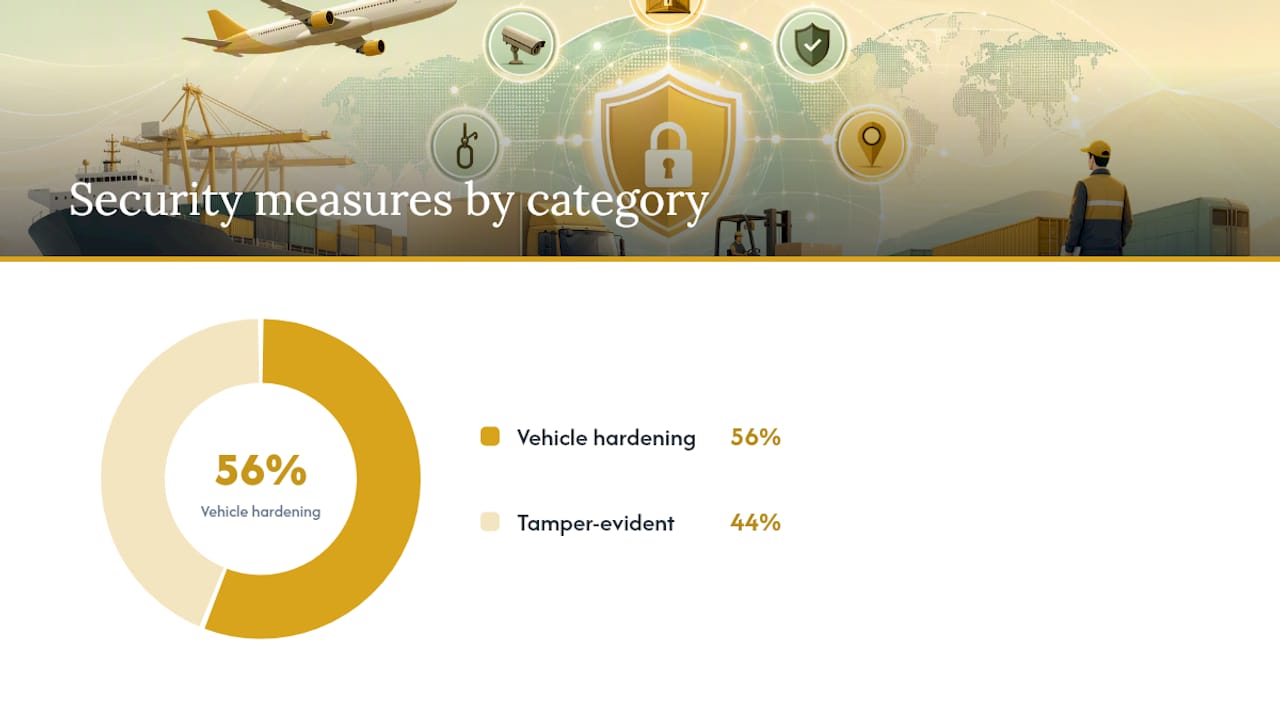
- Vehicle hardening: immobilisers, alarmed doors, CCTV and secure parking policies
- Regulatory compliance with programmes such as ACC3, known consignor and PreDICT/ICS2 where applicable
- Cybersecurity controls to prevent booking fraud, account takeover and deceptive pickup requests
Pro Tip: Before handing over a high-value consignment, ask the courier for a sample chain-of-custody report from a previous job. A credible operator can produce one within minutes.
Key takeaways
Couriers protect cargo through layered physical, procedural and technical controls, and shippers who verify those controls before booking are significantly better protected against loss and dispute.
| Point | Details |
|---|---|
| Verify the tracking stack | Confirm whether parcel-level or vehicle-level GPS is standard, and that geofencing alerts feed a live control room. |
| Demand chain-of-custody records | Timestamped transfer logs, seal photos and signed POD are the minimum evidence set for any claim. |
| Match security to risk profile | Screening, dedicated vehicles and declared value cover should be proportionate to the consignment's value and sensitivity. |
| Check regulatory compliance | For air cargo or cross-border freight, confirm regulated agent status, e-CSD capability and ICS2/PreDICT registration. |
| Sddbyaba for urgent secure loads | Sddbyaba provides dedicated vehicles, real-time tracking and tamper-evident sealing for same-day and freight consignments across the UK. |
Table of Contents
- 1. How tracking and real-time monitoring reduce theft risk
- 2. Staff vetting, training and operational procedures
- 3. Vehicle security, secure parking and tamper-evident packaging
- 4. Screening, detection and cargo securement methods
- 5. Chain of custody, consignment declarations and UK regulatory programmes
- 6. Cybersecurity and protection against booking fraud
- 7. Risk-based security and cargo securement standards
- 8. Incident response, audit trails and insurance
- 9. What shippers should do before booking a courier
- The real trade-off between speed and security in same-day logistics
- Sddbyaba's secure same-day and freight services
- Sources
1. How tracking and real-time monitoring reduce theft risk
Real-time tracking and condition sensors materially reduce response time and allow operators to intervene before a loss escalates. The technology operates at three levels:
- Vehicle telematics: GPS units fitted to the cab report location, speed, idling time and door-open events to a control room in real time.
- Parcel-level trackers: compact IoT devices placed inside or attached to individual consignments record location, shock, tilt, humidity and temperature, creating a sensor log that travels with the goods.
- Geofencing and automated alerts: operators define approved corridors and stop points; any deviation triggers an immediate alert to the control room and, optionally, to the shipper.
Geofencing is particularly effective for high-value loads. If a vehicle lingers at an unscheduled location or leaves a designated route, the system flags it within seconds rather than waiting for a driver check-in. That speed of detection is what separates proactive intervention from a post-loss investigation.
Tracking data also forms the backbone of the audit trail. Every timestamped location ping, door-open event and sensor reading becomes evidence for a claim or a police report if goods go missing. Visibility alone is not enough, though. The data must feed into active monitoring and documented response protocols, otherwise an alert that nobody acts on is no better than no alert at all.
Pro Tip: For high-value consignments, request that the courier confirms parcel-level tracker placement inside the outer packaging rather than on the vehicle only. A vehicle tracker tells you where the lorry is; a parcel tracker tells you where the goods are.
2. Staff vetting, training and operational procedures
Physical locks and GPS units only go so far. Insider theft and opportunistic pilferage are reduced by the procedural controls applied to the people handling goods. Credible UK couriers operate the following safeguards:
- DBS checks: standard Disclosure and Barring Service checks for drivers and warehouse staff, with enhanced checks for roles handling sensitive or high-value consignments.
- Security-cleared staff: for consignments requiring government or defence-grade handling, operators must hold or contract staff with FCDO Services or equivalent clearances.
- Regulated agent and known consignor status: under air cargo rules, shippers and handlers who meet ICAO and IATA criteria can pass security status along the supply chain without repeated screening, reducing delays while maintaining assurance.
- Identity verification at pickup and handover: drivers carry photo ID and confirm consignment references before accepting a load; recipients sign or provide a PIN at delivery.
- Standard operating procedures (SOPs): written protocols for vehicle inspection before loading, seal application, handover documentation and incident reporting.
- Fraud awareness training: staff must be trained to recognise cyber-enabled fraud such as unsolicited pickup requests or unusual routing instructions, and to follow verification procedures before acting on them.
A practical checklist for auditing a courier's people and process controls:
- Ask for the company's DBS policy in writing.
- Confirm whether security-cleared staff are available for your consignment type.
- Request a copy of the driver identity-check SOP.
- Ask how incidents and near-misses are reported and tracked.
- Confirm that fraud-awareness training is part of induction, not a one-off event.
Pro Tip: If a courier cannot tell you their DBS refresh cycle within 30 seconds, that is a process gap. Reputable operators know this figure off the top of their head.
3. Vehicle security, secure parking and tamper-evident packaging
A vehicle is only as secure as its weakest access point. Serious operators apply multiple layers of physical protection to the vehicle itself and to the consignment inside it.
Vehicle hardening measures include:
- High-security locks on cargo doors, often supplemented by smart locks that log every opening event with a timestamp
- Engine immobilisers and GPS-linked cut-off systems that can be triggered remotely if a vehicle is stolen
- Alarmed cargo compartments that alert the driver and control room if a door is opened outside a scheduled stop
- CCTV cameras covering cab and cargo areas, with footage retained for a minimum period for evidential purposes
- Secure parking policies requiring drivers to use approved, monitored compounds for overnight stops or extended breaks, particularly for high-value loads
Tamper-evident consignment measures include:
- Numbered cable seals and bolt seals applied at loading, with the seal number recorded on the consignment note
- Tamper-evident tape over carton joins and pallet wrap, which tears visibly if disturbed
- Photographic evidence taken at the point of sealing, showing the seal number, the consignment, and the vehicle or loading bay
- Shrink-wrapped and strapped pallets with a unique pallet label that ties the physical load to the digital custody record
Packaging and pallet securement also make pilferage harder by removing easy access to individual items. A shrink-wrapped pallet with numbered seals requires deliberate, visible effort to breach, which deters opportunistic theft and makes tampering immediately apparent at delivery.
Pro Tip: Photograph the seal number alongside the consignment reference and the vehicle registration before departure. That single image, timestamped and stored, can resolve a disputed claim in minutes rather than weeks.
4. Screening, detection and cargo securement methods
Before a consignment leaves a depot, screening and physical securement reduce both the risk of prohibited items entering the supply chain and the risk of load shift causing damage or creating theft opportunities.
Screening technologies used at depots and hubs
The NPSA provides UK-specific guidance on screening inbound and outbound mail and courier deliveries. Common technologies include:
- X-ray scanners: used for parcels and small consignments to detect prohibited or suspicious items without opening packaging
- Metal detectors: portal or handheld units used at access points and for staff screening in high-security environments
- Handheld scanners and trace detection: used for targeted checks on consignments flagged by X-ray or intelligence
A basic depot screening checklist:
- All inbound parcels scanned before entering the sortation area
- Flagged items isolated and reviewed by a trained operator before onward movement
- Screening records retained and linked to the consignment reference
Cargo securement methods on vehicles
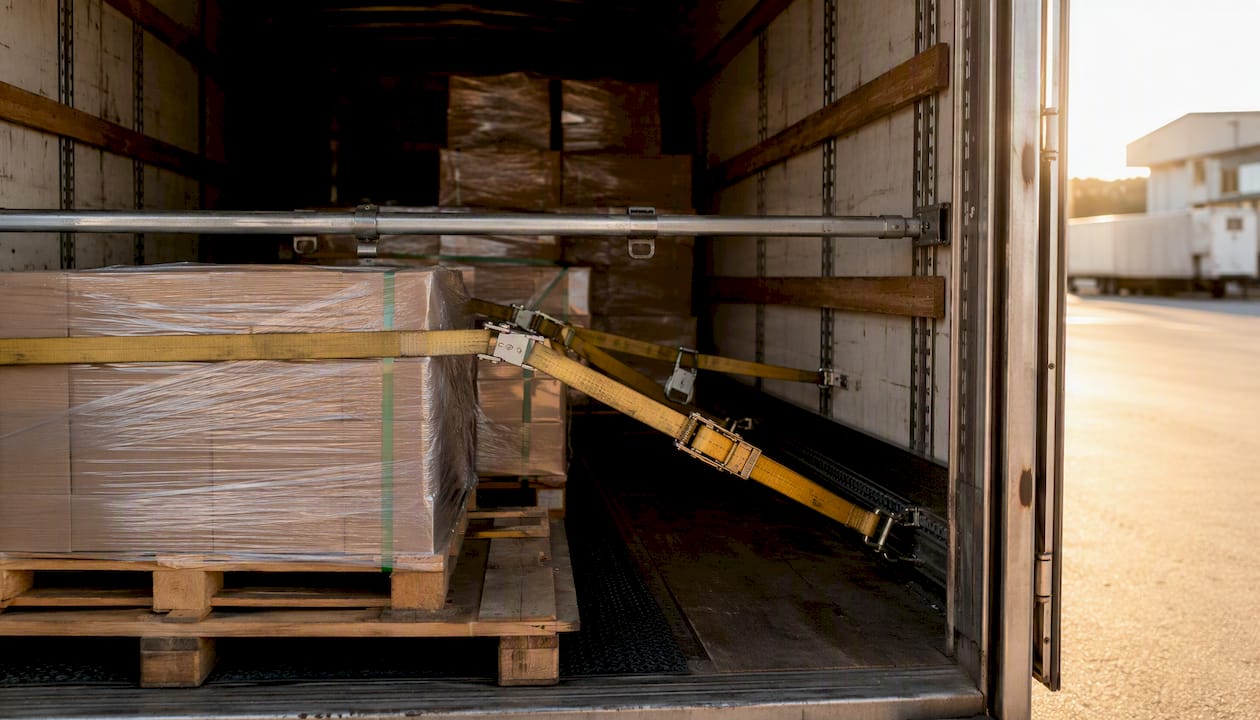
Physical securement prevents load shift, which can damage goods and, in some cases, create access points for pilferage. The European Best Practice Guidelines on Cargo Securing for Road Transport recommend combining restraining methods rather than relying on a single approach, because emergency manoeuvres apply forces from multiple directions simultaneously.
| Cargo type | Recommended securement method |
|---|---|
| Palletised boxes | Top-over lashing combined with base blocking or friction mats |
| Machinery and plant | Direct lashing to anchor points with blocking to prevent lateral movement |
| Drums and cylinders | Blocking and bracing with wedges; top-over lashing for additional restraint |
| Loose items and small parcels | Contained in cages or load bars; friction mats under base layer |
With EN12642-compliant vehicle superstructures, total maximum sideways gaps for properly blocked packages must not exceed 80 mm unless filler material is used. For urgent same-day loads where full palletisation is not possible, load bars and friction mats provide a practical minimum standard. Practical securement guidance also recommends re-inspecting tie-downs after the first 50 miles on longer hauls, as straps can settle under load.
5. Chain of custody, consignment declarations and UK regulatory programmes
A documented chain of custody is the chronological record of every handover from collection to delivery. According to PackageX, the core elements are unique identifiers, timestamped transfer logs and condition tracking at each handover. These records reduce claim disputes and help recovery when goods go missing.
Core chain of custody elements:
- Unique consignment identifier tied to every physical and digital record
- Timestamped transfer logs at each handover point, including driver name, location and condition note
- Photographic condition check at collection and delivery
- Proof of delivery (POD) signed or PIN-confirmed by the recipient
Regulatory programmes shippers will encounter
ICAO's Moving Air Cargo Globally guidance explains the regulated agent and known consignor regimes and the role of the consignment security declaration (CSD) in preserving security status along the air cargo chain. IATA supports a risk-based, globally harmonised approach and coordinates programmes including e-CSD and PLACI (Pre-Loading Advance Cargo Information).
For UK shippers, the relevant programmes are:
- ACC3: the EU/UK designation for air carriers and their handling agents operating on routes into the EU from third countries; requires security controls and audits
- PreDICT / ICS2: the UK and EU advance cargo information systems that require electronic pre-notification of consignment data before loading onto aircraft
- Known consignor: a status granted to shippers who meet security criteria, allowing their goods to be accepted without re-screening by a regulated agent
- Regulated agent: a freight forwarder or handler approved to apply security controls on behalf of an air carrier
A checklist for shippers confirming a courier can handle regulated consignments:
- Confirm the courier holds regulated agent status or works with an approved regulated agent.
- Ask whether the courier can generate an e-CSD for air cargo consignments.
- Verify that the courier is registered for ICS2 / PreDICT pre-notification if goods will transit EU entry points.
- Check that known consignor status is on file if you hold it, so your goods are not re-screened unnecessarily.
6. Cybersecurity and protection against booking fraud
Cargo theft is not always physical. Deceptive pickup fraud, where a criminal impersonates a legitimate driver or courier to collect a consignment, is a growing threat in the UK. Account takeover and manipulation of routing data are also documented attack vectors.
Common cyber-enabled threats to shipments:
- Fraudulent pickup requests using stolen booking references or spoofed communications
- Account takeover via weak passwords or phishing, giving criminals access to shipment details and routing
- Manipulation of delivery addresses or collection windows in booking systems
- Exposure of consignment details through unsecured APIs or shared login credentials
Technical and procedural defences:
- Two-factor authentication (2FA) on all booking and tracking portals
- Unique verified pickup tokens or PINs issued to authorised recipients, confirmed at handover
- Role-based access controls so that only staff who need to see shipment details can access them
- Secure, authenticated APIs for integration with shipper systems, with full audit logging of every data access event
- GDPR-compliant data handling for all personal and consignment data, with retention and deletion policies documented
Pro Tip: Insist on a unique handover PIN for high-value consignments. The driver should not release the goods until the recipient provides the correct PIN, confirmed against the booking system in real time. This single control stops most deceptive pickup attempts.
7. Risk-based security and cargo securement standards
Security must be proportionate to risk. Applying the highest level of screening and physical protection to every consignment would make same-day delivery economically unviable and operationally impractical. The principle, endorsed by IATA and reflected in UK regulatory guidance, is that controls should match the threat profile of the consignment.
The European Best Practice Guidelines illustrate this clearly for road transport. Practitioners combine restraining methods because single methods can fail under emergency manoeuvres where forces act from multiple directions simultaneously. A pallet secured only with top-over lashing may shift laterally under hard braking; adding base blocking or friction mats addresses that gap without significantly increasing load time.
A practical scenario: a same-day consignment of medical equipment collected from a hospital and delivered to a surgical centre does not require X-ray screening, but it does require tamper-evident sealing, a dedicated vehicle, real-time tracking and a documented handover with photographic condition check. The risk profile is low for prohibited items but high for chain-of-custody integrity and condition on arrival. Matching controls to that profile keeps the delivery fast and the security credible.
For urgent same-day shipments where load planning time is compressed, specifying EN12642-compliant vehicles and pre-agreed securement kits (friction mats, load bars, numbered seals) removes the need for improvisation at the loading bay.
Pro Tip: When booking an urgent load, specify the securement method in the booking instructions rather than leaving it to the driver's discretion. Pre-agreed methods mean faster loading and a consistent audit trail.
8. Incident response, audit trails and insurance
When an alert fires or a discrepancy is found at delivery, the speed and quality of the response determines whether goods are recovered and whether a claim succeeds.
Operational incident response steps:
- Control room interrogates live tracking data immediately on alert, confirming last known location and vehicle status
- Driver is contacted by phone; if no response within a defined window, escalation to a supervisor and, where appropriate, police liaison begins
- Geofence and door-open logs are pulled and preserved as evidence
- Local police are notified with vehicle details, last known location and consignment description
- Asset recovery steps, including remote immobilisation where the system supports it, are initiated
Evidence required for a claim:
- Chain of custody logs with timestamps and handler names at every transfer point
- Tracker data showing route, stops and any anomalies
- Seal photographs taken at loading and, where available, at delivery
- Signed or PIN-confirmed POD, or a record of its absence
- Commercial invoice and packing list confirming declared value
For insurance purposes, shippers should confirm the following before booking:
- The courier's standard liability limit per kilogram or per consignment
- Whether declared value cover is available and at what additional cost
- Any exclusions that apply (fragile goods, high-value electronics, cash equivalents)
- The excess that applies to a claim and the documentation required to trigger it
Pro Tip: Always declare the full replacement value of a consignment, not the trade price. If the courier's standard liability does not cover it, purchase declared value cover at booking. Discovering the shortfall after a loss is too late.
See also: why emergency freight documentation matters for a detailed breakdown of the records that support urgent shipment claims.
9. What shippers should do before booking a courier
Choosing a courier on price alone is a transportation risk management failure. Security capability should be a scored criterion alongside cost and transit time.
Shipper checklist before booking:
- Confirm the courier holds relevant certifications (regulated agent, ACC3, known consignor where applicable)
- Request evidence of real-time tracking and ask whether parcel-level or vehicle-level tracking is standard
- Ask for a sample chain-of-custody report to verify the format and completeness of their records
- Confirm the sealing policy: who applies seals, what type, and how seal numbers are recorded
- Ask about secure parking arrangements for overnight or extended-transit loads
- Verify the courier's DBS and staff vetting policy in writing
Questions to ask about cost and time impact:
- Does adding tamper-evident sealing or X-ray screening increase the transit time, and by how much?
- Is there a surcharge for dedicated vehicle transport versus shared load?
- What is the declared value cover rate, and what is the excess?
For urgent parcel handling, the documentation and sealing steps can be prepared by the shipper in advance to avoid delays at collection.
Red flags that suggest weak security controls:
- No written vetting or DBS policy
- Tracking limited to estimated delivery windows rather than live GPS
- No seal policy or no record of seal numbers on the consignment note
- Inability to produce a sample chain-of-custody report
- Vague or verbal-only answers to questions about insurance limits
Pro Tip: Negotiate security add-ons at the quote stage, not after booking. Couriers are more flexible on sealing, tracking upgrades and secure parking when it is part of the initial contract discussion.
The real trade-off between speed and security in same-day logistics
The conventional view is that higher security always means slower delivery. For same-day and urgent consignments, that trade-off is real but narrower than most shippers assume. The friction comes from three specific points: seal application at loading, screening at the depot, and secure parking on multi-leg routes. Each adds minutes, not hours, when the process is pre-planned.
What actually slows urgent deliveries is improvisation. A driver who arrives at a loading bay without the right seals, or a control room that has no pre-agreed escalation path when a geofence alert fires, creates delays that dwarf the time cost of a structured security protocol. Pre-booked secure parking, pre-sealed consignments and on-route monitoring with a live control room contact remove the improvisation entirely.
The other underestimated factor is that strong chain-of-custody documentation speeds up claims resolution when something does go wrong. Operators who invest in timestamped photographic records and GPS audit trails recover from incidents faster, which protects their service reputation and their clients' supply chains. Security and speed are not opposites in a well-run operation. They reinforce each other.
Sddbyaba's secure same-day and freight services
Sddbyaba offers dedicated vehicle transport with real-time GPS tracking, tamper-evident sealing options and driver vetting as standard across its UK-wide fleet. For shippers in construction, healthcare, retail and manufacturing who need cargo security measures without sacrificing same-day speed, Sddbyaba provides a practical alternative to shared-load services where chain-of-custody integrity can be harder to guarantee.
Available services include dedicated van and truck options from motorcycles to 26-tonne vehicles, sealed pallet delivery, commercial freight haulage, and time-critical consignment handling with documented handover at every stage. Every booking can include a security checklist discussion with the operations team before dispatch.
Request a quote or speak to the operations team directly at Sddbyaba to confirm which security options apply to your consignment type and sector.
Sources
The following authorities publish the primary guidance referenced throughout this article:
- European Best Practice Guidelines on Cargo Securing for Road Transport
- Cargo Security Basics: How to Protect Shipments From Theft and Tampering | Tive
- Cargo security | IATA
- Moving air cargo globally (ICAO)
- Screening mail and courier deliveries | NPSA
- Chain of custody in logistics: procedures & technology (PackageX)