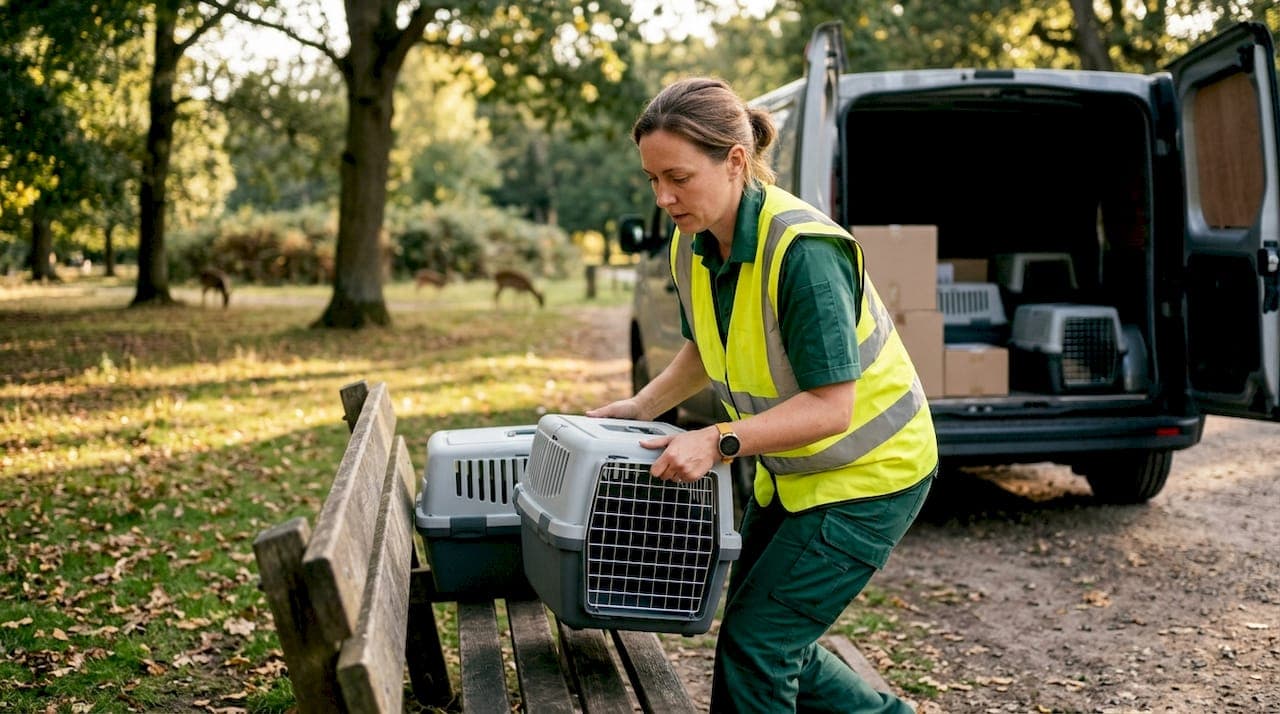
Emergency couriers handle live goods by combining strict regulatory compliance, dedicated vehicle logistics, and continuous environmental control to deliver live cargo safely and on time. The industry term for this category is "live cargo transport," and it covers everything from laboratory specimens and aquatic species to live animals requiring veterinary oversight. Unlike standard urgent deliveries, live goods transport operates under frameworks such as the IATA Live Animals Regulations (LAR), which govern packaging, environmental conditions, and documentation. Getting any one of these elements wrong does not just delay a shipment. It can result in animal welfare failures, shipment refusals, and significant financial loss.
What regulatory standards govern emergency live goods courier services?
Regulatory compliance is the foundation of every successful live cargo shipment. The IATA Live Animals Regulations set the international benchmark, covering approved container types, stacking instructions, temperature bands, ventilation requirements, and the minimum space each species requires during transit. Any courier operating without knowledge of these standards cannot legally or safely move regulated live animal shipments.
Documentation requirements are equally demanding. Most live animal shipments require a veterinary health certificate issued within 48–72 hours of departure. Shipments involving endangered or protected species also require a CITES (Convention on International Trade in Endangered Species) permit. Missing either document at the point of acceptance triggers an immediate refusal. Incomplete documentation accounts for 40% of live cargo shipment failures, with missed veterinary deadlines responsible for a further 20%. Those two figures alone explain why documentation management is not an administrative afterthought. It is a core operational function.
The compliance burden has driven a shift toward digital validation. Embedded compliance tools within booking workflows save up to 70% of the time required for manual regulatory checks and reduce errors by 30%. That efficiency gain matters enormously when a health certificate has a 48-hour validity window and a shipment must move the same day.
Key documentation requirements for live goods transport include:
- Veterinary health certificate issued within 48–72 hours of departure
- CITES permit for any species listed under the Convention on International Trade in Endangered Species
- Species-specific IATA LAR container certification confirming approved dimensions and materials
- Acclimatisation declaration confirming the animal has been conditioned for transport temperatures
- Shipper's declaration confirming the consignment complies with all applicable regulations
Logistics managers should treat documentation as a pre-departure checklist, not a formality completed at the point of handover. Any gap in the paperwork chain stops the shipment before it starts.
How do specialist couriers operate vehicles and routes to protect live cargo?
Dedicated, point-to-point transport is the operational standard for live goods. Direct transport eliminates hub stops, reduces handling events, and maintains consistent environmental conditions throughout the journey. Standard courier networks, which route parcels through multiple depots and involve several handoffs, are not appropriate for live cargo. Each additional handoff introduces a temperature fluctuation risk, a handling risk, and a chain-of-custody gap.

Climate control is not optional. Vehicles used for live goods transport require active temperature regulation, adequate ventilation, and in some cases, oxygen circulation systems. For marine species in particular, oxygenated packaging and temperature-stabilised containers function as temporary life-support systems during transit. Packing for these shipments typically occurs on the day of departure to maintain biological stability.
Route planning for live cargo prioritises speed and minimal ground exposure. Couriers select routes that avoid known congestion points, reduce total transit time, and allow for pre-cleared customs where applicable. Single-driver accountability is standard practice. One trained driver takes full responsibility for the shipment from collection to delivery, with verifiable training records confirming competence in live animal handling.
- Dedicated vehicles carry only the live goods consignment, with no shared loads
- Climate-controlled compartments maintain species-appropriate temperature and humidity bands
- Direct routing avoids depot stops and multiple handoffs
- Single-driver accountability ensures one trained professional manages the shipment end to end
- Verifiable training records confirm legal compliance for regulated live animal transport
Pro Tip: When booking live goods transport, ask the courier to confirm in writing that the assigned driver holds verifiable training records for live animal handling. Untrained drivers cannot legally transport regulated live animal shipments, and verbal assurances are not sufficient for compliance purposes.
What technology do emergency couriers use to monitor live shipments in transit?
Real-time monitoring is what separates a specialist live goods courier from a general same-day service. Emergency courier dispatchers use GPS tracking combined with onboard temperature and humidity sensors to maintain continuous visibility of the shipment environment. When conditions deviate from the agreed parameters, an automated alert triggers an immediate intervention. The driver receives a notification, the dispatcher is informed, and the client can see the status update in real time.
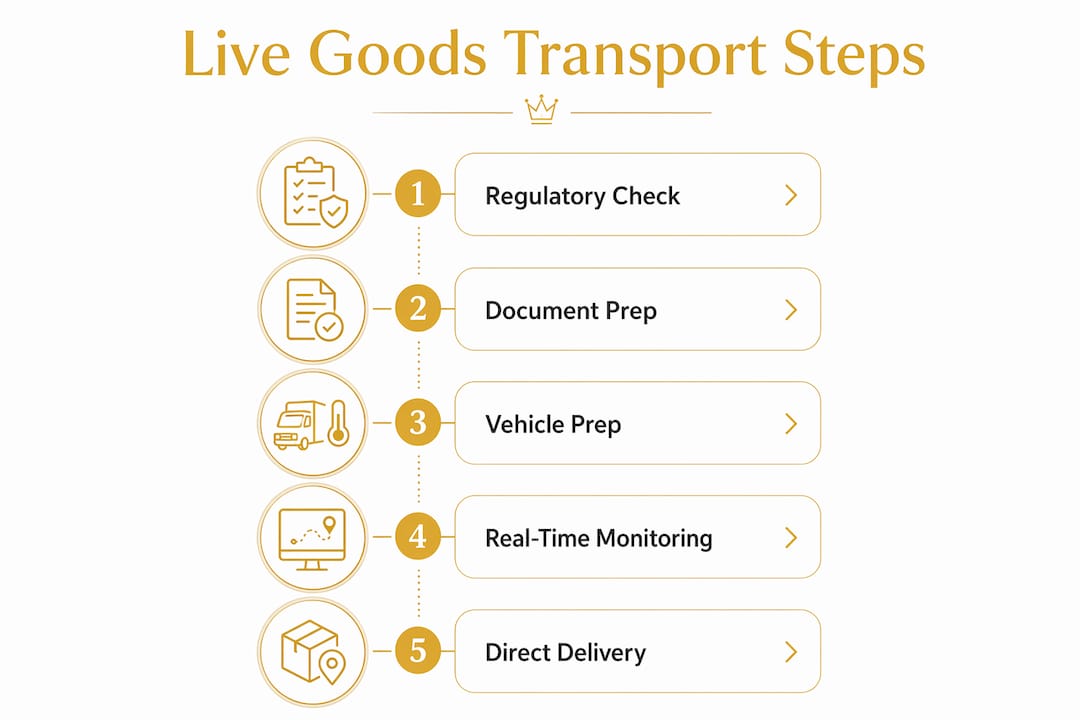
Real-time GPS tracking and temperature sensors enable immediate intervention if conditions deviate during transit. That capability is the difference between a recoverable situation and a total shipment loss. For logistics managers overseeing high-value or welfare-critical consignments, remote monitoring dashboards provide the visibility needed to make informed decisions without being physically present.
The technology stack used by specialist live goods couriers typically includes:
- GPS vehicle tracking providing live location updates throughout the journey
- Onboard temperature sensors logging conditions at set intervals and alerting on deviation
- Humidity monitoring for species sensitive to moisture levels during transit
- Client-facing status dashboards showing location, environmental data, and estimated arrival
- Automated alert systems notifying both driver and dispatcher when parameters are breached
This level of monitoring also supports welfare oversight and post-shipment reporting. Logistics managers can produce an environmental log for the entire journey, which is increasingly required by research institutions, veterinary authorities, and regulatory bodies as evidence of duty of care during transit. For guidance on how these systems work in practice, the real-time tracking guide from Sddbyaba covers the technology in detail.
How do emergency couriers prioritise loads and manage live goods challenges?
Live goods shipments carry a complexity that most urgent cargo does not. A logistics manager booking emergency transport for a live consignment must account for regulatory inspections, customs clearance, potential veterinary checks at the border, and the biological clock ticking on the animal's welfare. Emergency couriers handling live cargo operate with 24/7 availability and sub-60-minute dispatch priorities, because delays at the booking stage compound into welfare risks at the delivery stage.
A common and costly mistake is assuming that any same-day or urgent courier can handle live goods. Misunderstanding this distinction leads to delays, shipment refusals, and animal welfare failures. Specialist couriers pre-verify documentation before dispatch, coordinate with veterinary and customs authorities in advance, and carry contingency plans for adverse conditions or route disruptions.
The on-board courier (OBC) model is the gold standard for high-risk or international live goods shipments. An OBC is a trained professional who accompanies the shipment in person, providing a single point of contact and active oversight throughout customs and transit. This model eliminates the opacity that standard logistics networks introduce and enables immediate resolution of any issue that arises.
Key operational priorities for live goods emergency transport:
- Pre-departure documentation verification to confirm all certificates are valid and within required timeframes
- Customs pre-clearance coordination to reduce border delays for international shipments
- Contingency routing prepared in advance for adverse weather or road closures
- 24/7 dispatcher availability to manage last-minute changes without service interruption
- Welfare-first load prioritisation ensuring live goods take precedence over non-perishable urgent cargo
Pro Tip: For international live goods shipments, submit customs documentation at least 24 hours before departure. Pre-clearance reduces border hold times significantly and protects the validity window of veterinary health certificates.
Compared with other sensitive cargo types such as hazardous goods or oversized parts, live goods transport carries the additional dimension of biological welfare. A delayed machine part is a commercial problem. A delayed live animal shipment can be an irreversible welfare failure.
Key takeaways
Successful live goods transport depends on regulatory compliance, dedicated vehicles, and real-time environmental monitoring working together without gaps.
| Point | Details |
|---|---|
| Documentation is the primary failure point | Incomplete paperwork causes 40% of live cargo failures; verify all certificates before dispatch. |
| Dedicated vehicles are non-negotiable | Direct, single-driver transport eliminates the handling risks that standard courier networks introduce. |
| Digital compliance saves critical time | Embedded validation tools reduce manual regulatory check time by up to 70%, protecting tight certificate windows. |
| Real-time monitoring enables intervention | GPS and environmental sensors allow immediate corrective action before conditions cause welfare harm. |
| Specialist couriers differ from general urgent services | Only trained, compliant couriers with verifiable records can legally transport regulated live animal shipments. |
Why compliance and operational rigour define live goods courier success
The logistics industry has spent years treating live goods transport as a niche add-on to standard urgent delivery. That framing is wrong, and the consequences of it show up in shipment refusal rates and welfare incident reports.
What I have observed is that the couriers who consistently succeed with live cargo are not simply faster than their peers. They are more prepared. Regulatory knowledge is embedded in their booking systems, not consulted after a problem arises. Their drivers hold verifiable training records, not informal familiarity with animal handling. Their vehicles are specified for the cargo, not adapted at the last minute.
The shift toward embedded compliance in booking workflows is the most significant operational development in live goods logistics in recent years. It moves compliance from a reactive checkpoint to a proactive filter. Shipments that would previously have been accepted and then refused at the airport or border are now caught and corrected before they leave the collection point.
The future of live goods courier services will involve greater automation in environmental monitoring and more granular welfare data captured during transit. But the fundamentals will not change. Speed matters. Compliance matters more. And the courier who understands both will always outperform the one who only understands one.
— Ayomide
Sddbyaba's approach to urgent live goods transport
Logistics managers who need a courier that genuinely understands live cargo transport require more than a fast van and a willing driver.

Sddbyaba provides dedicated courier vehicles with trained personnel, direct point-to-point routing, and real-time shipment monitoring for time-critical consignments across the UK. Every booking goes through a compliance verification process before dispatch, and 24/7 availability means live goods shipments are never left waiting for a service window to open. Whether you are moving laboratory specimens, live animals, or other sensitive cargo, Sddbyaba's fleet and operational protocols are built to handle the responsibility. Contact Sddbyaba or request a quote through the same day courier service page to discuss your live goods transport requirements.
FAQ
What regulations apply to emergency live goods courier services?
The IATA Live Animals Regulations (LAR) set the international standard for packaging, environmental conditions, and documentation. CITES permits are also required for shipments involving protected species.
How do emergency couriers handle live goods differently from standard urgent deliveries?
Specialist couriers use dedicated vehicles, trained drivers with verifiable records, and real-time environmental monitoring. Standard urgent couriers lack the regulatory knowledge and equipment required for live cargo.
Why do live goods shipments fail at the point of acceptance?
Incomplete documentation causes 40% of live cargo shipment failures, with missed veterinary certificate deadlines responsible for a further 20%. Pre-departure document verification prevents both failure types.
What is the on-board courier model and when is it used for live goods?
An on-board courier is a trained professional who accompanies the shipment in person throughout transit. This model is used for high-risk or international live goods consignments where active oversight is required.
How do I verify that a courier is qualified to transport live animals?
Ask for verifiable training records confirming the driver's competence in live animal handling. Untrained drivers cannot legally transport regulated live animal shipments under IATA LAR requirements.