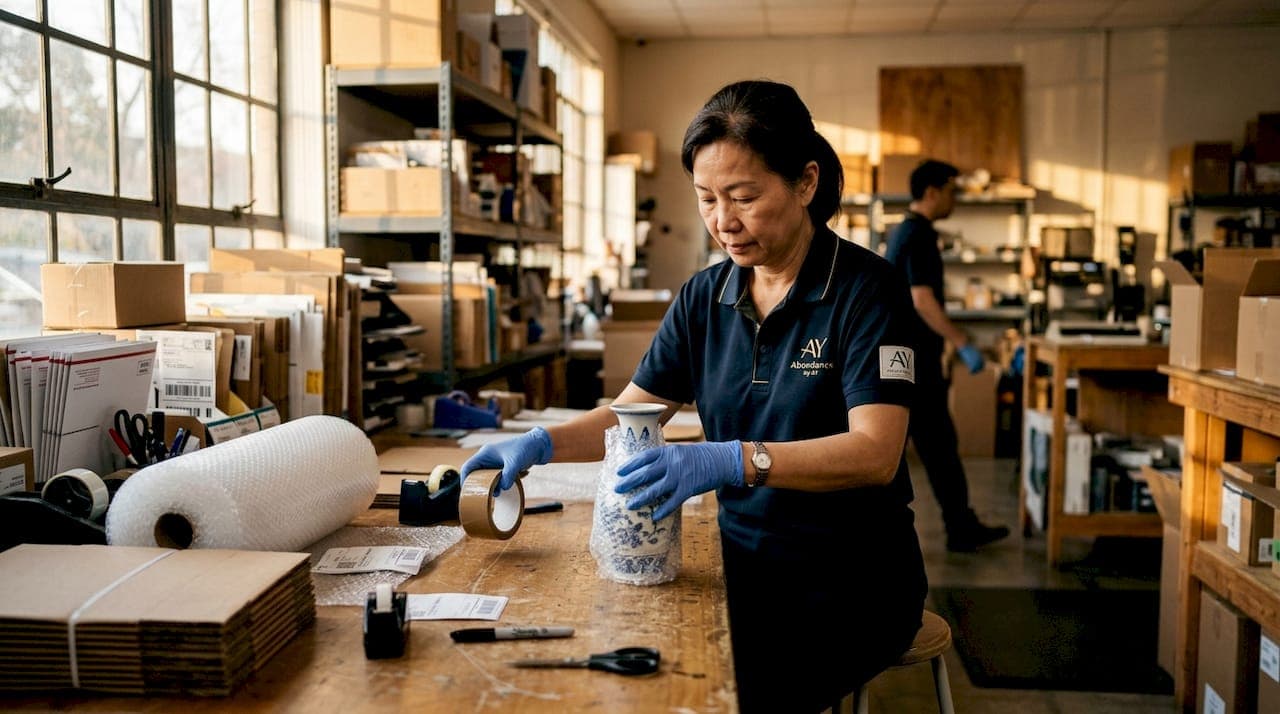
Specialist fragile item courier handling is defined as the use of trained personnel, dedicated vehicles, and multi-layer packaging to transport delicate goods without damage. Standard courier networks rely on automated sorting systems that expose parcels to repeated drops and lateral impacts. Specialist services replace that process with manual handling, dedicated loading space, and condition checks at delivery. Whether you are shipping antiques, medical equipment, or high-value electronics, choosing the right courier and packing method determines whether your goods arrive intact. This guide covers packaging standards, courier selection criteria, insurance documentation, and environmental risk mitigation for anyone shipping delicate items in the UK.
What packaging methods best protect fragile goods during courier transit?
Multi-layer packaging is the industry standard for protecting fragile cargo. The approach combines internal supports, a snug inner box, and a strong outer corrugated carton. Each layer serves a distinct purpose: the inner box holds the item firmly, and the outer carton absorbs external impacts.
The materials you choose inside each layer matter as much as the structure itself. Bubble wrap, custom foam inserts, and acid-free tissue paper each address different risks. Bubble wrap cushions against sudden drops. Acid-free tissue protects surfaces from chemical reactions during long transits. Desiccant sachets control moisture inside sealed boxes, which is critical for electronics and paper goods.
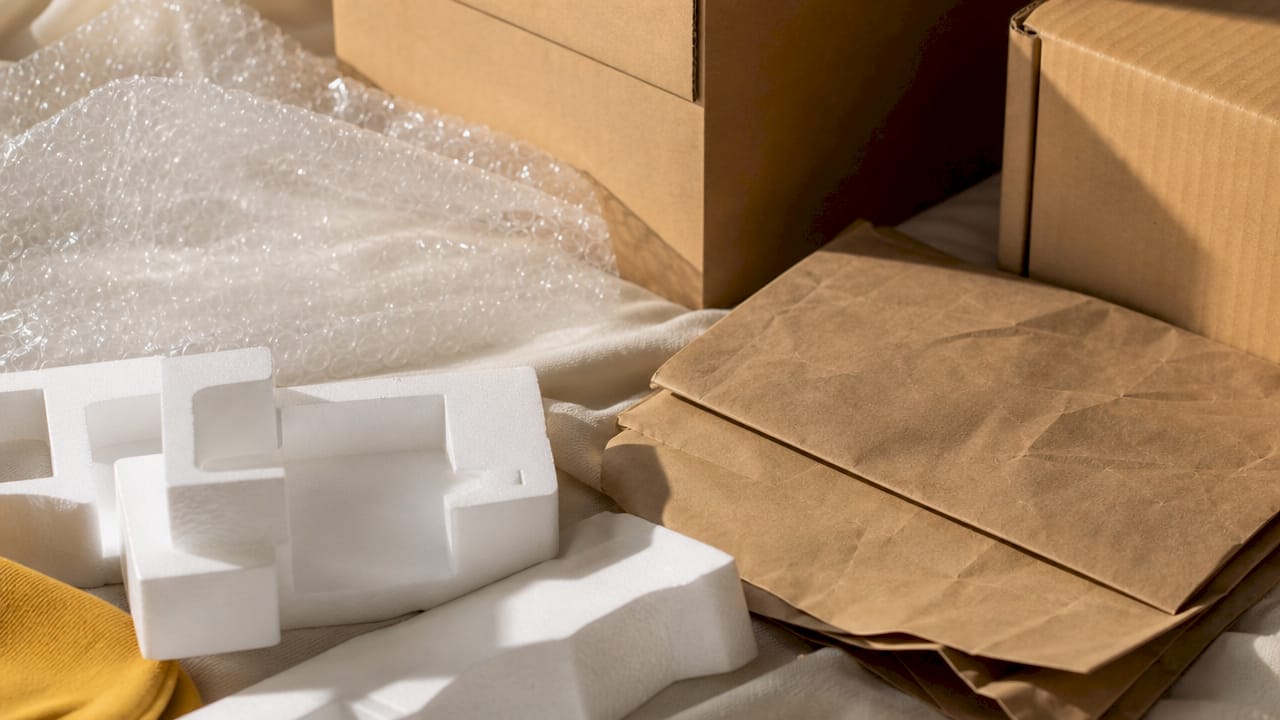
For high-value or irreplaceable items, museum-grade packing raises the standard further. Specialist providers use wooden crates, custom foam inserts, and microclimate control to deliver 360-degree protection. This level of packaging also simplifies border inspections and customs checks, as the crate structure signals professional handling to officials.
Palletised fragile shipments require additional restraints. Pallets must meet appropriate dynamic load capacity ratings, and edge protectors and top boards prevent lateral movement during transit. Clear labelling with orientation arrows, "Fragile" warnings, and handling codes reduces the chance of a handler stacking or tilting the carton incorrectly.
Packaging materials at a glance:
- Bubble wrap: absorbs shock from drops and sudden impacts
- Acid-free tissue: prevents surface damage and chemical reactions on sensitive materials
- Desiccant sachets: control humidity inside sealed packaging
- Custom foam inserts: hold irregular shapes firmly without pressure points
- Wooden crates: provide rigid outer protection for museum-grade or high-value shipments
- Edge and top protectors: stabilise palletised loads during transit
Pro Tip: Pack on a clean, padded surface and document the ambient temperature and humidity at the time of packing. This record supports any insurance claim if conditions during transit deviate significantly from the packing environment.
| Packaging type | Best suited for | Key benefit |
|---|---|---|
| Box-in-box with void fill | Electronics, ceramics, glassware | Absorbs micro-vibrations and drops |
| Museum-grade wooden crate | Artwork, antiques, instruments | Rigid protection and microclimate control |
| Palletised with edge protectors | Bulk fragile goods, industrial components | Prevents lateral movement and stack collapse |
| Acid-free tissue and foam inserts | Paper goods, collectibles, jewellery | Surface protection and chemical stability |
How do courier services handle fragile items differently?
The difference between a standard courier and a specialist fragile goods courier is not just speed. It is the entire handling chain from collection to delivery. Standard couriers use automated sorting with conveyor belts and mechanical arms that expose parcels to repeated drops. Specialist couriers remove the item from that system entirely and use manual handling at every stage.
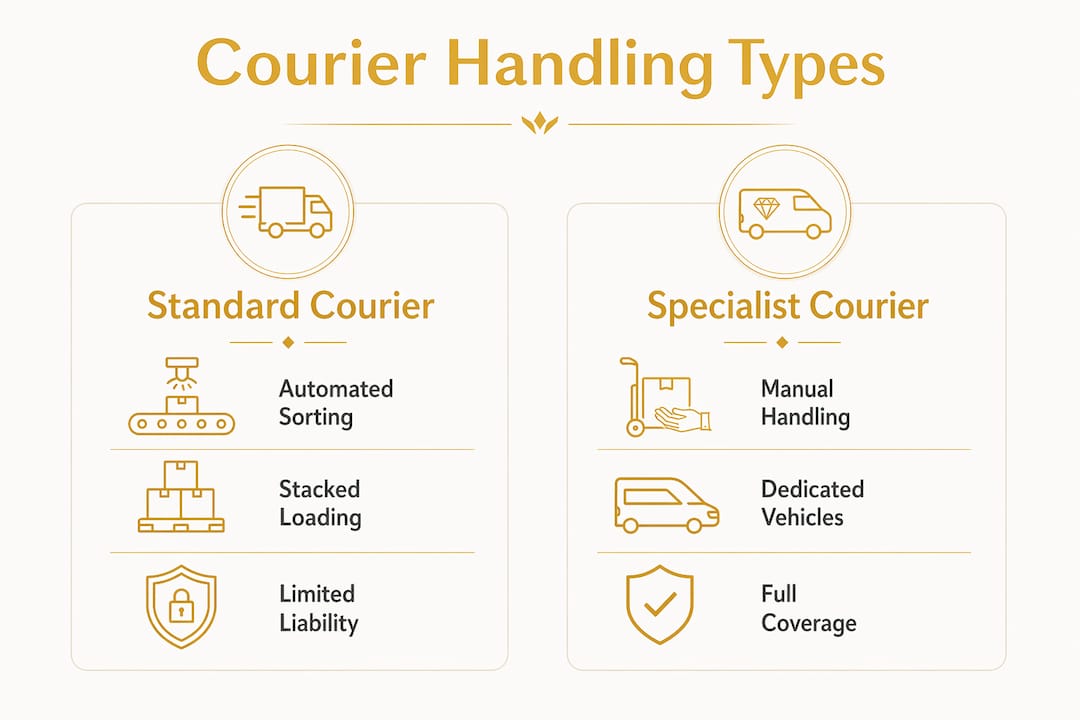
Vehicle loading is another critical distinction. Standard services stack parcels to maximise vehicle capacity. Specialist services allocate dedicated loading space so fragile items travel without other goods pressing against them. This single change eliminates a significant proportion of transit damage.
Delivery itself differs too. Standard couriers leave parcels at the door. Specialist couriers hand-deliver and unpack fragile items, perform condition checks on arrival, and provide faster claims resolution backed by photographic evidence. That process creates accountability at the point of delivery, not weeks later during a dispute.
When to choose specialist handling:
- Item value exceeds standard courier insurance caps
- The goods are irreplaceable, such as artwork or antiques
- Dimensions or weight require a dedicated vehicle
- The recipient needs unpacking and placement assistance
- The shipment crosses multiple handling points or borders
Pro Tip: Ask your courier directly whether your parcel will pass through an automated sorting hub. If the answer is yes, your fragile item is at risk regardless of how well it is packed.
Insurance caps are a practical guide to courier quality. Standard courier services carry limited liability for fragile goods. Specialist white-glove services offer full declared value coverage, which means the insurer pays the replacement cost rather than a capped amount. For a dedicated courier service handling high-value goods, declared value coverage is not optional. It is the baseline expectation.
What are the key insurance considerations for fragile courier shipments?
Insurance for fragile shipments works on declared value, not assumed value. You state the item's worth at booking, and the policy covers that figure if the courier accepts it. Standard courier services cap liability at a fixed amount regardless of what you declare. Specialist services offer agreed-value or all-risk transit policies that cover the full declared amount.
Comprehensive condition documentation is the foundation of any successful claim. High-resolution photographs of the item before packing, during packing, and after sealing the outer carton create a clear record of pre-transit condition. Temperature and humidity logs, shock sensors, and data loggers add objective evidence that the damage occurred during transit rather than before collection.
- Photograph the item from every angle before packing begins.
- Photograph each layer of packaging as you apply it.
- Photograph the sealed outer carton with labels visible.
- Retain the original purchase invoice or a professional valuation.
- Keep digital copies of all records with timestamps, ideally notarised.
- Request a chain-of-custody record from the courier at collection.
Shock and tilt sensors placed inside the outer carton record handling events during transit. Sensor data showing a drop or impact at a specific point in the journey identifies where damage occurred and which party is responsible. This evidence significantly accelerates claims resolution with specialist couriers, who are experienced in reviewing and acting on sensor data.
Pro Tip: Store all packing photographs and sensor data in a cloud folder with automatic timestamps. If a claim goes to dispute, notarised digital evidence carries more weight than printed copies.
What practical steps prevent damage from environmental risks?
Humidity and moisture are among the most underestimated threats to fragile goods in transit. Electronics corrode. Paper warps. Wooden instruments crack. A single overnight journey through varying temperatures can introduce enough moisture to cause permanent damage if the packaging is not sealed correctly.
The solution is layered moisture control. Desiccant sachets inside the inner box absorb ambient humidity. Water-resistant outer wrapping prevents condensation from penetrating the carton during temperature changes. For climate-sensitive items, data loggers that record temperature and humidity throughout the journey provide both protection and evidence.
Micro-vibrations are a separate and equally damaging risk. Road vibrations at motorway speeds create sustained low-frequency movement that loosens joints, cracks ceramics, and fatigues solder connections in electronics. Suspension packaging, where the item hangs inside the outer carton rather than resting on foam, absorbs these vibrations more effectively than static cushioning.
Practical steps to reduce environmental and handling damage:
- Use desiccant sachets inside every sealed inner box
- Apply water-resistant outer wrapping before placing in the carton
- Choose suspension packaging for electronics and precision instruments
- Attach shock and tilt sensors to the outer carton before sealing
- Select couriers with real-time tracking and sensor-based monitoring
- Confirm the courier's policy on fragile goods before booking
Pro Tip: Use the box-in-box method and leave at least 5cm of cushioning material between the inner box and every wall of the outer carton. Items touching the container wall absorb direct impacts with no buffer.
How to choose the right courier service for fragile shipments?
The safest courier for fragile items is not always the cheapest. Selection should match the item's fragility and value to the courier's handling expertise and insurance provisions. A low-cost parcel service is appropriate for robust goods. It is not appropriate for a hand-painted vase or a precision medical device.
Fragile goods courier personnel require advanced training, situational awareness, and experience with temperature, vibration, and handling pressure. Professional couriers also execute route planning and work closely with clients and insurers to maintain chain of custody. That level of service is not available from a standard parcel network.
Criteria for selecting a fragile item courier:
- Manual handling confirmed: no automated sorting at any stage of the journey
- Dedicated vehicle: the item travels alone or with compatible goods only
- Declared value insurance: full replacement cost covered, not a capped amount
- Claims responsiveness: photographic evidence accepted and processed quickly
- Specialist packing available: courier offers or recommends appropriate packaging
- Real-time tracking: live updates and sensor alerts throughout transit
| Service category | Manual handling | Dedicated vehicle | Declared value cover | Best for |
|---|---|---|---|---|
| Standard parcel network | No | No | Capped | Robust, low-value goods |
| Enhanced parcel service | Partial | No | Limited | Moderately fragile items |
| Specialist fragile courier | Yes | Yes | Full declared value | High-value, delicate goods |
| White-glove delivery | Yes | Yes | All-risk agreed value | Irreplaceable or museum-grade items |
For palletised fragile shipments, check that the courier understands load restraint requirements and uses appropriate pallet delivery protocols. A courier experienced in palletised fragile goods will specify edge protectors, top boards, and load capacity ratings without being prompted.
Key takeaways
Specialist fragile item courier handling requires multi-layer packaging, manual handling throughout transit, and declared value insurance to protect goods reliably.
| Point | Details |
|---|---|
| Use multi-layer packaging | Combine inner supports, a snug inner box, and a strong outer carton with void fill. |
| Choose manual handling couriers | Avoid automated sorting networks for any item that is fragile or high in value. |
| Declare full item value | Standard courier caps do not cover replacement cost; use declared value or all-risk policies. |
| Document condition before dispatch | High-resolution photographs and sensor data are the strongest evidence in a damage claim. |
| Control moisture and vibration | Use desiccants, suspension packaging, and data loggers to address environmental risks. |
What I have learned from watching fragile shipments go wrong
The most common cause of damage I see is not a careless courier. It is a sender who underestimated the packaging requirement and chose a service based on price alone. A well-packed item in a specialist courier's dedicated vehicle almost never arrives damaged. A poorly packed item in a standard parcel network almost always does, regardless of how many "Fragile" stickers are applied.
Moisture and vibration are the risks that catch people out most often. Senders focus on drop protection and forget that a parcel can sit in a cold van overnight, then move into a warm depot, and accumulate condensation inside the box. That single temperature shift can destroy electronics or warp a wooden instrument beyond repair.
Sensor technology has changed the accountability picture significantly. When a data logger records a 2-metre drop at a specific GPS location and time, there is no ambiguity about where the damage occurred. Specialist couriers welcome this data because it protects them as much as it protects the sender.
The box-in-box method is the baseline I recommend to every client, regardless of what they are shipping. It is not expensive or complicated. It is simply the most reliable way to absorb the unpredictable forces that occur during any courier journey. Pair it with a specialist service and proper insurance, and the risk of damage drops to near zero.
— Ayomide
Sddbyaba's specialist courier services for fragile goods
Shipping fragile items demands more than a standard parcel booking. Sddbyaba provides dedicated courier services built for exactly this requirement, with manual handling, dedicated vehicles, and real-time tracking across the UK.
Sddbyaba operates a full fleet from motorcycles to 26-tonne trucks, so the vehicle always matches the shipment. Same day dispatch is available nationwide, which means fragile goods spend less time in transit and face fewer handling touchpoints. For businesses and individuals who need a same day courier they can trust with high-value or delicate goods, Sddbyaba provides the specialist handling, clear communication, and reliable delivery that the job demands. Contact Sddbyaba to discuss your fragile shipment requirements directly.
FAQ
What is the best packaging method for fragile courier shipments?
The box-in-box method is the gold standard. Wrap the item, place it in a snug inner box, then suspend that box inside a strong outer carton with at least 5cm of cushioning on every side.
How do specialist couriers differ from standard parcel services?
Specialist couriers use manual handling only, dedicated loading space, and condition checks at delivery. Standard parcel services use automated sorting that exposes fragile goods to repeated drops and impacts.
What insurance do I need for high-value fragile shipments?
Use a declared value or all-risk agreed-value policy that covers the full replacement cost. Standard courier liability caps do not reflect the actual value of fragile or high-value goods.
How do I prove damage occurred during transit?
Photographic evidence of the item before packing, combined with shock sensor data and temperature logs from inside the carton, provides the clearest proof that damage occurred in transit rather than before collection.
When should I use a dedicated vehicle for a fragile shipment?
Use a dedicated vehicle when the item is irreplaceable, exceeds standard insurance caps, has unusual dimensions, or requires unpacking and placement at the destination. A dedicated vehicle eliminates the risk of other goods pressing against or falling onto your shipment.