Critical manufacturing deliveries are defined as specialised logistics methods that move urgent supplies to production lines before a stoppage occurs. Choosing the wrong type costs far more than the freight itself. When a line goes down, the financial impact accumulates by the hour, and supply chain recovery after major disruptions can take 9–12 months. Understanding the main types of critical manufacturing deliveries gives logistics managers a practical framework for matching the right method to each urgent scenario, protecting both production schedules and margins.
1. Types of critical manufacturing deliveries: an overview
Critical manufacturing deliveries are not simply fast shipments. They are purpose-built logistics responses to situations where standard lead times would cause production to halt. Each type carries distinct characteristics, cost profiles, and situational advantages. Selecting the correct method depends on urgency, distance, shipment size, and whether local buffer stock has been exhausted. The sections below cover the four primary delivery types logistics managers rely on to protect production continuity.
2. Next flight out shipping
Next flight out (NFO) shipping places a consignment on the earliest available commercial or charter flight, regardless of cost. It is the fastest air-freight method available for urgent production shipments and is typically reserved for small, high-value components such as spare parts, tooling inserts, or prototype samples.
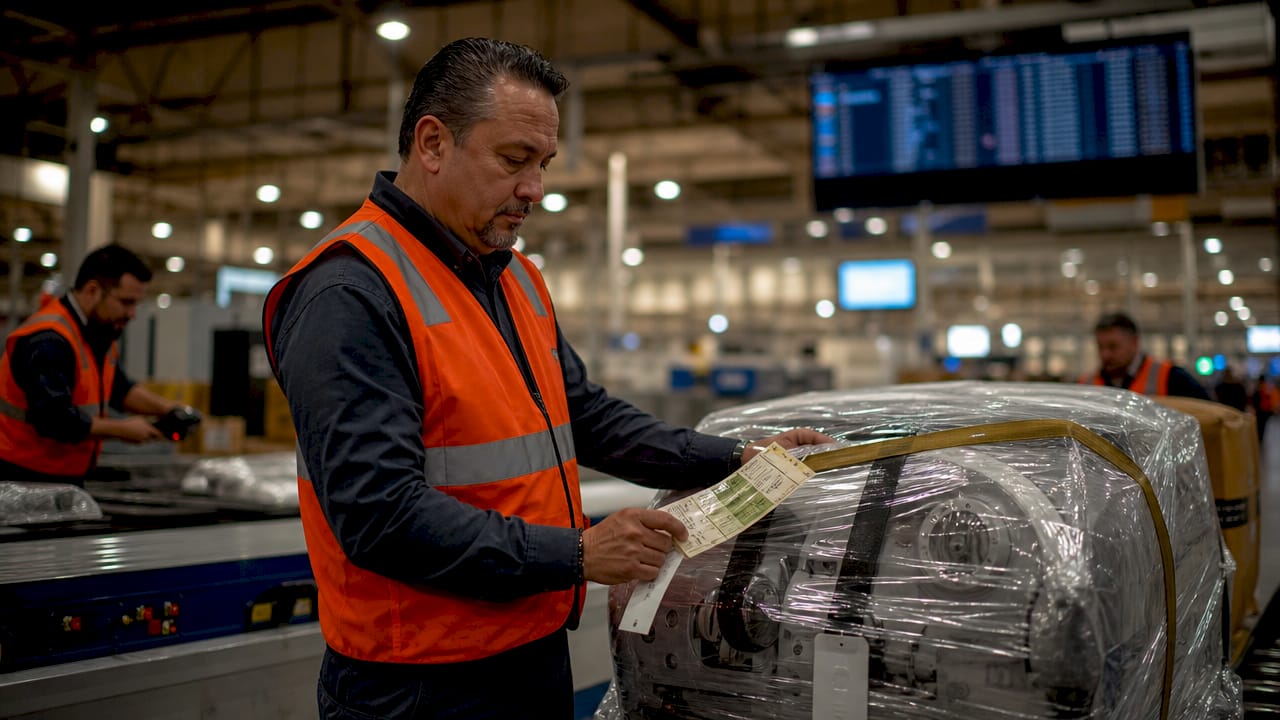
The decisive factor in NFO is not door-to-door transit time. Uplift speed — the time from request to the moment the part leaves the origin facility — determines whether a production line restarts in hours or days. A shipment booked within 30 minutes of a breakdown request will outperform one booked two hours later, even if the latter catches a faster flight.
NFO works best when:
- The component is small enough to travel as air cargo or hand-carry baggage
- No road or rail alternative can meet the required delivery window
- The cost of production downtime clearly exceeds the premium freight charge
- The destination airport is within practical ground-transport distance of the plant
Pro Tip: Pre-register your most critical part numbers with a freight forwarder that holds standing airline uplift agreements. This cuts booking time from hours to minutes during a live line-down event.
The main limitations of NFO are cost and flight availability. Routes with limited frequency or restricted cargo capacity can negate the speed advantage. Logistics managers should maintain a pre-approved list of NFO-eligible parts and spending thresholds to avoid decision delays during a crisis.
3. Dedicated courier services for time-critical deliveries
A dedicated courier service assigns a single vehicle exclusively to one consignment, travelling directly from collection point to delivery address without intermediate stops or depot sorting. This eliminates the handoffs that cause delays in shared-network freight.
Dedicated ground transport is the most practical option for regional and national urgent production shipments where air freight is either impractical or disproportionately expensive. It suits larger consignments, awkward loads, and situations where the collection and delivery points are within a driveable distance.
Key advantages of dedicated courier services include:
- Direct routing with no depot stops or consolidation delays
- Full vehicle control, allowing real-time rerouting if road conditions change
- Flexibility across vehicle sizes, from motorcycles for small parcels to 26-tonne trucks for heavy freight
- Predictable arrival windows because the vehicle is not shared with other consignments
Expedited freight is best understood as a cost-control measure rather than a premium expense. When production shutdown costs outweigh freight charges, a dedicated vehicle is the financially rational choice. Logistics managers who frame dedicated courier use this way gain faster internal approval during urgent situations.
Sddbyaba operates a full fleet from motorcycles to artic lorries, giving manufacturing clients a single point of contact for dedicated transport across all consignment sizes and distances nationwide.
4. Line-side delivery methods
Line-side delivery is the practice of supplying components directly to the point of use on a production line, timed to match production schedules rather than arriving at a central goods-in area. It removes internal material handling steps and reduces the risk of parts being unavailable at the moment they are needed.
Line-side logistics relies on three core methods:
- Kitting — components for a specific assembly are grouped and delivered together, reducing picking time at the line
- Kanban two-bin systems — when the first bin empties, the second triggers a replenishment order, maintaining a continuous supply without overstocking
- Just-in-sequence (JIS) delivery — parts arrive in the exact order they will be assembled, critical in automotive and aerospace manufacturing where sequence errors cause rework
The table below summarises how each method applies to different production environments.
| Method | Best suited to | Primary benefit |
|---|---|---|
| Kitting | High-mix, low-volume assembly | Reduces picking errors and handling time |
| Kanban two-bin | Repetitive, high-volume production | Maintains flow without excess inventory |
| Just-in-sequence | Automotive, aerospace, complex assembly | Eliminates sequencing errors at the line |
Returnable transit packaging with custom-moulded dunnage accelerates line-side delivery further. Parts arrive pre-positioned for immediate use, removing unpacking steps at the production point. This detail is often overlooked but can save meaningful time during high-pressure production runs.
Pro Tip: Audit your line-side replenishment triggers quarterly. Kanban bin sizes set during a product launch rarely match actual consumption rates six months later, and mismatched triggers are a common cause of avoidable shortages.
5. Emergency delivery services for urgent production shipments
Emergency delivery is the highest-priority category in manufacturing logistics. It activates when no buffer stock remains, a line-down event is imminent or already occurring, and every hour of delay carries a direct financial cost. This is not a routine expedite. It is a structured escalation.
Effective emergency deliveries follow a defined five-step process: immediate demand identification, rapid vehicle dispatch, immediate collection, direct routing, and delivery within hours. Each step has a time target, and accountability sits with named individuals rather than general teams.
The operational features that separate genuine emergency services from standard fast freight include:
- Pre-authorised spending limits so vehicles can be dispatched without approval delays
- Real-time communication between driver, dispatcher, and the receiving plant
- Alternative carrier protocols activated if the primary vehicle encounters an obstacle
- Escalation contacts at both the logistics provider and the manufacturing site
"Emergency deliveries succeed or fail on protocol, not on luck. The difference between a line restarting in four hours and twelve hours is almost always the speed of the first decision, not the speed of the vehicle."
Emergency freight protocols require advanced escalation paths, authorised decision levels, and real-time stakeholder communication to function reliably. Manufacturing sites that pre-define these protocols recover from line-down events significantly faster than those that improvise under pressure.
Common scenarios that trigger emergency delivery include unplanned machine breakdowns requiring replacement parts, quality failures that exhaust approved stock, and recall freight that must reach a destination within a regulatory window. Sddbyaba's emergency delivery service is built around rapid dispatch and direct routing for exactly these situations.
6. How to choose the right critical delivery type
Choosing the correct delivery method starts with four questions: How urgent is the shipment? How far does it need to travel? How large and heavy is the consignment? And has local buffer stock been fully exhausted?
True critical freight only exists when no local buffer remains and a line-down event is imminent. Misclassifying routine expedites as critical wastes escalation capacity and erodes the credibility of your urgent delivery protocols over time. Maintaining a clear classification threshold protects the effectiveness of your emergency response.
The table below maps delivery types to key decision criteria.
| Delivery type | Urgency level | Distance | Consignment size | Typical use case |
|---|---|---|---|---|
| Next flight out | Extreme | International or long-haul domestic | Small, high-value | Spare parts, tooling, samples |
| Dedicated courier | High to extreme | Regional to national | Any size | Same-day parts, large urgent loads |
| Line-side delivery | Planned critical | Local to regional | Production volumes | Repetitive supply to active lines |
| Emergency delivery | Highest | Any | Any | Line-down, recall freight, zero buffer |
Combining delivery types builds resilience. A manufacturing site might use line-side kanban for daily supply, dedicated couriers for regional contingencies, and NFO as the final escalation for international components. This layered approach means no single disruption can halt production entirely.
Pro Tip: Build a one-page critical delivery decision tree and share it with every shift manager. When a line goes down at 2AM, the person on site needs to make the right call in under five minutes without waiting for a logistics manager to answer their phone.
Sddbyaba's commercial logistics team supports manufacturing clients in structuring exactly this kind of layered contingency plan, covering everything from same-day dispatch to heavy freight haulage.
Key takeaways
Matching the delivery type to the specific urgency, distance, and consignment profile is the single most effective way to protect production continuity and control critical freight costs.
| Point | Details |
|---|---|
| NFO prioritises uplift speed | Time from request to departure matters more than door-to-door transit time. |
| Dedicated couriers eliminate handoffs | Direct routing removes depot delays and gives full control over arrival windows. |
| Line-side methods prevent shortages | Kitting, kanban, and just-in-sequence supply parts exactly when and where they are needed. |
| Emergency protocols must be pre-defined | Pre-authorised spending and named escalation contacts cut response time when lines go down. |
| Misclassification erodes escalation capacity | Reserve critical freight status for genuine line-down events to keep protocols effective. |
Perspective: why most manufacturers are still one disruption away from a crisis
The shift from reactive shipping to war-room planning is the most significant change in manufacturing logistics right now. Firms that pre-map contingency routes and pre-approve emergency spending recover faster. Those that improvise spend the first two hours of a line-down event making phone calls that should have been made months earlier.
The uncomfortable truth I have observed repeatedly is this: most manufacturers have a critical freight process on paper that nobody has actually tested. The decision tree exists in a folder. The escalation contacts are six months out of date. The spending authority sits with someone who is on annual leave.
The other pattern worth naming is the cry-wolf problem. When every delayed shipment gets classified as critical, the word loses meaning. Dispatchers stop treating it with urgency. Carriers deprioritise the account. The escalation system that should protect you becomes noise. Protecting that classification is as important as having it in the first place.
My advice is straightforward. Run a tabletop exercise once a year. Simulate a line-down event at your highest-volume production point and time how long it takes your team to dispatch a vehicle. The result will tell you everything you need to know about whether your critical delivery strategy is real or theoretical.
— Ayomide
Sddbyaba: critical manufacturing deliveries, handled
Manufacturing logistics managers need a freight partner that can respond before the situation becomes a crisis. Sddbyaba provides same-day courier and freight services across the UK, covering everything from motorcycle couriers for small urgent parcels to artic lorries for heavy production loads.
Sddbyaba's fleet covers every consignment size, and its dispatch model is built around speed of response rather than scheduled runs. Whether you need a dedicated vehicle for a regional parts run or a heavy freight solution for a time-critical production delivery, Sddbyaba operates nationwide with direct routing and professional communication at every stage. Contact Sddbyaba to discuss a logistics contingency plan built around your production requirements.
FAQ
What are the main types of critical manufacturing deliveries?
The four main types are next flight out shipping, dedicated courier services, line-side delivery methods (including kitting, kanban, and just-in-sequence), and emergency delivery services. Each type suits different urgency levels, distances, and consignment sizes.
When should a manufacturer use next flight out shipping?
Next flight out shipping is appropriate when a small, high-value component must travel long distances and no road alternative can meet the required delivery window. Uplift speed, the time from request to departure, is the decisive factor.
What is line-side delivery in manufacturing?
Line-side delivery supplies components directly to the production point, timed to match the assembly schedule. Methods include kitting, kanban two-bin replenishment, and just-in-sequence delivery, all of which reduce internal handling and prevent line stoppages.
How do emergency delivery protocols differ from standard fast freight?
Emergency deliveries use pre-defined escalation paths, pre-authorised spending limits, and real-time communication between all parties. Standard fast freight operates within normal booking and dispatch processes without these escalation structures.
How do I avoid misclassifying shipments as critical?
Reserve critical freight classification for situations where local buffer stock is fully exhausted and a line-down event is imminent. Routine expedites should use standard fast-freight channels to preserve the credibility and capacity of your emergency escalation process.