
An emergency courier is defined as a dedicated transport service that responds immediately to urgent delivery needs, moving critical components, documentation, or materials before a project stalls or suffers irreversible harm. The role of emergency courier in engineering is to close the gap between a supply failure and operational continuity, often within hours. Standard scheduled logistics cannot meet this demand. Delays in delivery can cause irreversible operational, legal, or financial damage, which is precisely why engineering project managers treat emergency courier access as a non-negotiable part of their logistics planning. Unlike routine parcel services, emergency couriers operate under chain-of-custody protocols, staffed dispatch, and real-time tracking, making them a distinct category of commercial logistics.
How does an emergency courier differ from standard logistics in engineering?
The defining difference is response time combined with accountability. Standard logistics runs on scheduled routes, consolidated loads, and multi-stop networks. An emergency courier dispatches a dedicated vehicle the moment a booking is confirmed, with no shared loads and no intermediate depots.
Emergency couriers provide direct, hand-to-hand transfers using vehicles matched to the specific cargo. That means a motorcycle for a single technical drawing, a long wheelbase van for precision instruments, or a 26-tonne freight vehicle for heavy structural components. Standard parcel networks cannot offer this flexibility.
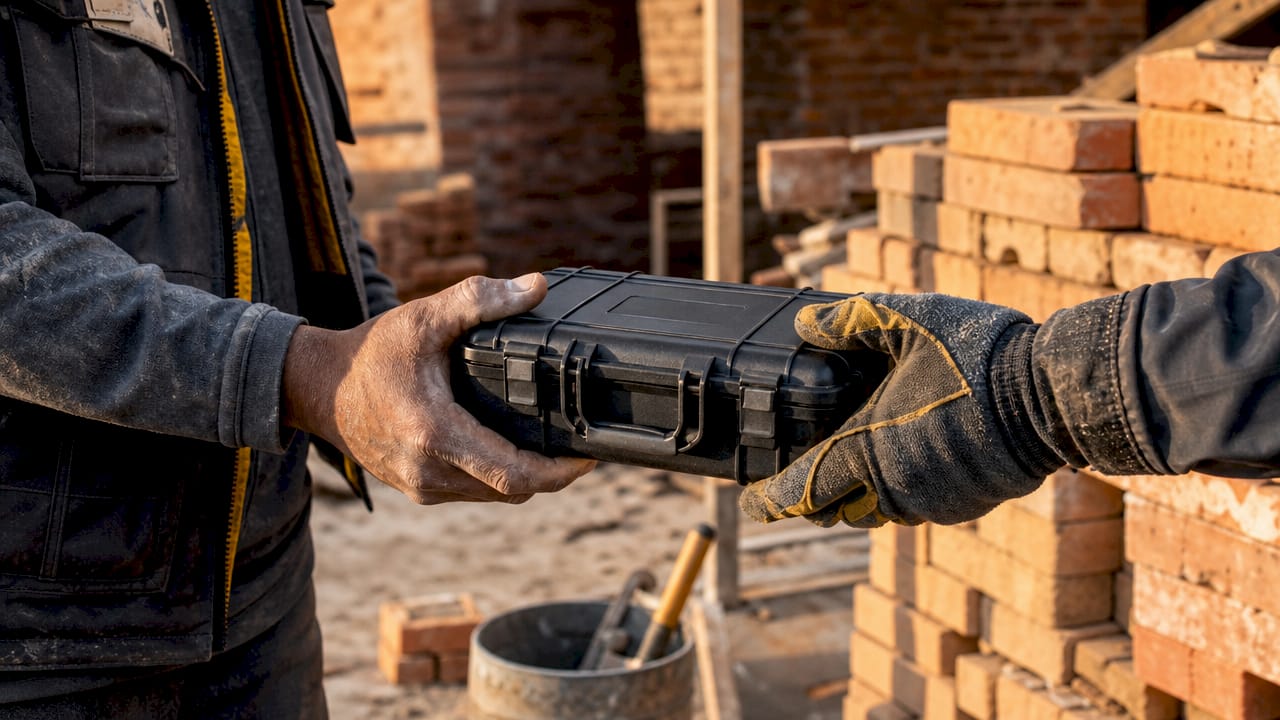
The financial case is clear. Same-day delivery of manufacturing or engineering parts reduces downtime and mitigates losses from halted production lines. A single idle shift on a large construction site can cost tens of thousands of pounds. The courier premium is a fraction of that exposure.
Key distinctions that matter to engineers and project managers:
- Dedicated vehicle dispatch: No shared loads, no depot consolidation, no intermediate stops.
- Chain-of-custody documentation: Every handover is recorded, timestamped, and signed.
- Vehicle range: From motorcycles to artic lorries, matched to the cargo type and weight.
- 24/7 availability: Emergency courier services operate outside normal business hours, including nights and weekends.
- Security protocols: Sensitive or high-value engineering components travel without exposure to general parcel handling.
Pro Tip: When specifying an emergency courier for engineering use, always confirm the vehicle type before dispatch. A van sent for a pallet of steel fixings wastes time. Match the vehicle to the load from the outset.
What operational protocols make emergency couriers reliable for engineering?
Reliability in emergency courier services comes from infrastructure, not luck. The protocols that separate a genuine emergency courier from a standard same-day service are specific and verifiable.
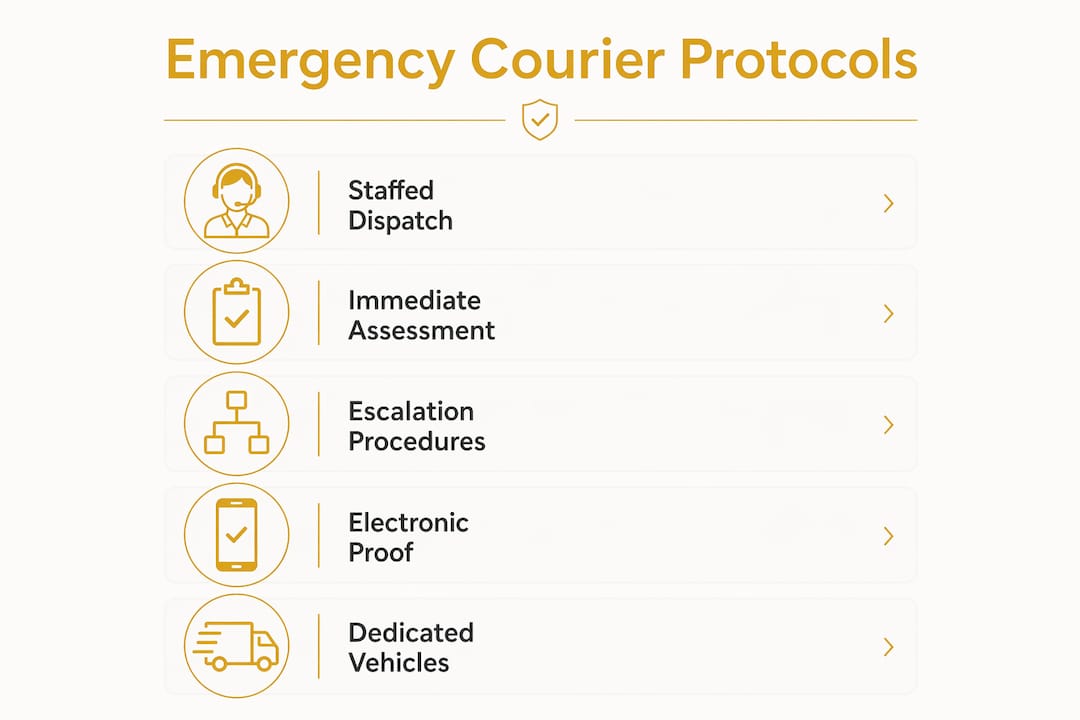
Staffed dispatch and immediate human assessment
Emergency courier services require staffed dispatch capable of immediate, live human communication to assess and prioritise urgent shipments. Automated queuing systems are inadequate for engineering-grade logistics because they delay critical shipments beyond allowable windows. A staffed dispatcher can assess cargo type, access restrictions, and urgency in real time, then assign the correct vehicle and driver immediately.
Escalation protocols for delivery obstacles
Effective emergency courier services maintain escalation protocols ensuring a named human contact is available around the clock if delivery issues arise. On engineering sites, access restrictions, security gates, and out-of-hours contacts are common obstacles. Without an escalation path, a delivery fails at the gate. With one, the driver calls a named contact, the issue resolves in minutes, and the component reaches the engineer on shift.
Electronic proof of delivery
Real-time tracking and proof of delivery with electronic signatures and GPS timestamps are non-negotiable for trustworthy emergency courier services. Engineering projects often require documentary evidence of delivery for regulatory compliance, insurance claims, or contractual milestones. A timestamped photograph and electronic signature provide that evidence instantly.
The table below compares the operational features of emergency courier services against standard scheduled logistics:
| Feature | Emergency courier | Standard scheduled logistics |
|---|---|---|
| Dispatch speed | Immediate, on confirmation | Next available route or day |
| Vehicle allocation | Dedicated, matched to cargo | Shared, consolidated load |
| Human dispatch contact | Staffed 24/7 | Office hours only |
| Proof of delivery | Electronic, timestamped, photographic | Basic scan or signature |
| Chain-of-custody record | Full, end-to-end | Partial, depot-to-depot |
| Out-of-hours availability | Yes | Rarely |
Pro Tip: Before signing a contract with any emergency courier provider, ask specifically how they handle inaccessible delivery locations at 2am. The answer tells you everything about their actual escalation capability.
Which engineering scenarios most need emergency courier services?
Emergency couriers enable supply chain resilience by providing on-demand surge capacity and rapid rerouting during crises. Engineering projects face a specific set of failure points where only an emergency courier can prevent a cascade of delays. Understanding these scenarios helps project managers set clear internal triggers for when to activate emergency logistics.
The most common situations include:
- Critical machinery breakdown: A failed bearing, a snapped drive shaft, or a blown hydraulic seal can halt an entire production line or construction operation. The replacement part needs to arrive within hours, not days. This is the clearest use case for emergency delivery in engineering.
- Regulatory and legal submissions: Technical documentation with a legal deadline, such as a planning submission or a safety certification, cannot be late. A missed deadline can void a permit or trigger a contractual penalty.
- Bespoke components and prototypes: One-off machined parts or prototype assemblies are irreplaceable in the short term. They require secure, direct transport with no risk of mishandling in a general parcel network.
- Supply chain disruption: Weather events, traffic incidents, or supplier failures can cut off scheduled deliveries. Emergency couriers provide rapid rerouting during crises that standard logistics cannot match.
- Last-minute client changes on construction sites: Design revisions, specification changes, or client-driven additions often require materials or drawings to arrive the same day. An emergency courier absorbs that pressure without disrupting the broader project schedule.
The role of courier in construction is particularly acute because site programmes are interdependent. One delayed delivery can push back an entire sequence of trades, multiplying the cost of a single logistics failure.
How to integrate emergency courier services into engineering workflows
Integrating emergency courier services into project workflows requires clear activation criteria and coordination with trusted logistics partners. Without defined triggers, teams either overuse emergency couriers at unnecessary cost or underuse them and absorb avoidable delays.
Follow these steps to build emergency courier capability into your project logistics:
-
Establish a preferred provider relationship. Identify a reliable emergency courier with the vehicle range, geographic coverage, and 24/7 staffed dispatch your projects require. Agree rates and service levels before a crisis occurs, not during one.
-
Define internal activation triggers. Set clear criteria for when emergency courier use is justified. Examples include: a component delay that will halt site operations within four hours, a regulatory submission due within the same working day, or a prototype delivery required for a client presentation.
-
Assign a logistics coordinator on each project. One named person per project should hold the courier contact details and have authority to approve emergency bookings. Shared responsibility leads to delayed decisions at the worst possible moment.
-
Use digital booking and tracking platforms. Digital platforms offering on-demand booking and real-time shipment visibility improve engineering teams' ability to manage emergency deliveries. Real-time tracking reduces the number of chasing calls and gives project managers accurate arrival windows for planning purposes.
-
Train your team to recognise genuine emergencies. Not every urgent request justifies emergency courier cost. Teams need to understand the difference between a time-sensitive delivery and a genuinely critical one. Clear criteria, communicated in advance, prevent misuse and protect the budget for situations that truly warrant it.
-
Review usage after each project. Log every emergency courier activation, the trigger, the outcome, and the cost. This data helps refine your activation criteria and identify recurring supply chain weaknesses that a better-planned logistics approach could address.
The role of emergency courier in business continuity extends beyond individual deliveries. A project team that can reliably access emergency logistics absorbs supply chain shocks without cascading delays. That resilience is a competitive advantage on complex, multi-contractor engineering programmes.
Key takeaways
Emergency couriers are not a contingency luxury. They are a defined logistics category that engineering projects depend on to maintain operational continuity when standard supply chains fail.
| Point | Details |
|---|---|
| Emergency courier defined | A dedicated, immediate dispatch service with staffed support, chain-of-custody records, and matched vehicles. |
| Critical difference from standard logistics | Dedicated vehicles, 24/7 human dispatch, and electronic proof of delivery separate emergency couriers from scheduled services. |
| Core engineering scenarios | Machinery breakdown, regulatory deadlines, bespoke components, and supply chain disruption are the primary triggers. |
| Integration best practice | Define activation criteria, assign a coordinator, and use digital tracking before a crisis occurs. |
| Business continuity value | Reliable emergency courier access prevents cascading delays and protects project programmes from single-point logistics failures. |
Why the engineering sector still underestimates emergency couriers
Having worked closely with logistics operations across construction and engineering projects, I find the same pattern repeating. Project managers plan meticulously for procurement, programme, and personnel. They rarely plan for logistics failure with the same rigour.
The assumption is that standard supply chains will hold. They do not, not consistently. Weather, supplier errors, and last-minute specification changes are not edge cases. They are regular features of complex engineering projects. The teams that handle them best are the ones that have already established a relationship with a reliable emergency courier, agreed rates, and briefed their coordinators before anything goes wrong.
The future of emergency courier services in engineering will involve tighter integration with project management software, predictive alerts when a scheduled delivery is at risk, and AI-assisted route planning that cuts response times further. But the human element, a staffed dispatcher who answers immediately and understands the stakes, remains the irreplaceable core. Technology supports that capability. It does not replace it.
The strategic value here is often framed purely as cost versus delay. That framing is too narrow. A project team that can absorb a supply chain shock without losing a day of programme time builds a reputation for reliability with clients. That reputation compounds over time. Emergency courier access is part of how engineering businesses protect it.
— Ayomide
Sddbyaba: emergency courier services built for engineering
Engineering projects cannot afford to wait. Sddbyaba provides same-day emergency courier services across the UK, with staffed dispatch, GPS tracking, and a fleet ranging from motorcycles to artic lorries. Whether you need a single precision component delivered to a remote site or a pallet of materials moved urgently between facilities, Sddbyaba matches the vehicle to the load and dispatches immediately.

For engineering and construction clients, Sddbyaba offers dedicated courier transport with full chain-of-custody documentation and electronic proof of delivery. Every booking is handled by a real person, not an automated queue. Contact Sddbyaba to discuss service options tailored to your project's logistics requirements.
FAQ
What is the role of emergency courier in engineering?
An emergency courier provides immediate, dedicated transport of critical components, documentation, or materials that cannot wait for standard scheduled logistics. The service prevents operational downtime, regulatory failures, and financial losses caused by delivery delays.
How quickly can an emergency courier respond on an engineering site?
Response times depend on location and vehicle availability, but a staffed emergency courier service dispatches a dedicated vehicle on confirmation of booking, typically within the hour for urban and suburban locations across the UK.
When is emergency courier use justified in engineering projects?
Emergency courier service is justified when a delivery delay causes irreversible operational, legal, or financial harm. If waiting for a standard next-day service halts a production line or misses a regulatory deadline, emergency courier use is warranted.
What vehicles do emergency couriers use for engineering deliveries?
Emergency couriers use a range of vehicles matched to the cargo, from motorcycles for single documents or small parts to 7.5-tonne delivery vehicles and larger trucks for heavy or bulky engineering components.
How do emergency couriers support business continuity in engineering?
Emergency couriers provide on-demand surge capacity and rapid rerouting when standard supply chains fail, keeping engineering projects on programme despite disruptions such as supplier errors, weather events, or last-minute specification changes.