
Construction emergency freight is defined as any urgent, dedicated transport of materials, parts, or equipment to an active construction site where a delay would halt work or breach a project deadline. The term sits under the broader industry category of expedited freight, which covers all time-critical shipments dispatched outside standard scheduled logistics. Understanding the types of construction emergency freight matters because the wrong choice costs more than the freight itself. A mismatched vehicle, a shared load, or an unnecessary air charter can add hours to a critical delivery or thousands of pounds to a project budget. This guide gives construction managers and procurement specialists a clear framework for selecting the right freight mode every time.
1. What are the main types of construction emergency freight?
Construction emergency freight falls into four primary categories, each matched to a specific combination of load size, distance, and urgency. Selecting the wrong category is the most common and most expensive mistake in urgent construction logistics.
- Sprinter van freight: Sprinter vans carry small urgent loads up to 3,000–4,000 lbs within 500 miles, making them the fastest ground option for regional same-day deliveries. They suit items such as hydraulic hoses, control panels, or small machinery parts.
- Hotshot trucking: Hotshot loads use pickup trucks with trailers for mid-sized urgent shipments up to 17,000 lbs over regional and some national distances. This method covers same-day or overnight deliveries where a sprinter van lacks the capacity.
- Dedicated full truckload: Class 8 tractor-trailers handle large, urgent construction freight with no weight ceiling, dispatched within hours for direct delivery without terminal stops or shared loads.
- Air freight and charters: Air freight is the fastest option for cross-country emergency shipments requiring delivery within 24 hours, though it carries the highest cost and the most logistical constraints.
Each category serves a distinct operational need. Matching the category to the specific emergency is the first decision every procurement specialist must make.
2. Vehicle types and load capacities at a glance
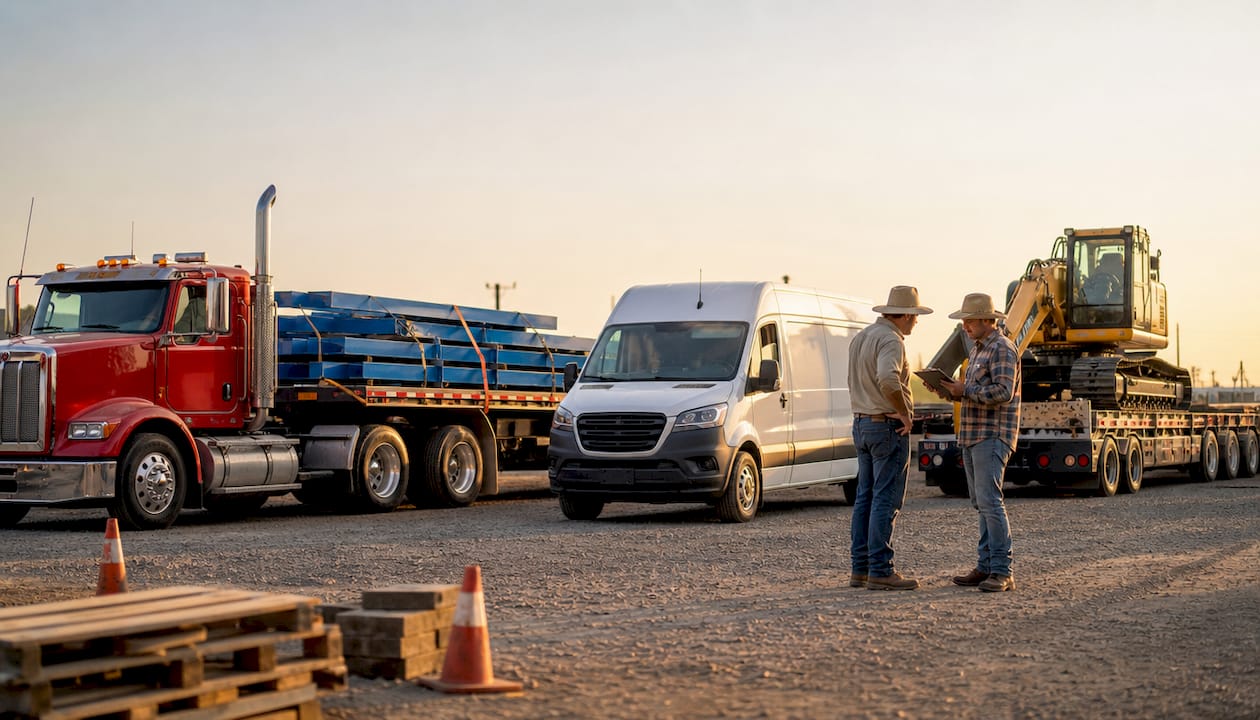
The vehicle determines the speed, cost, and reliability of any urgent construction delivery. Construction managers need a working knowledge of each option before an emergency arises.
| Vehicle type | Typical capacity | Best distance | Typical use case |
|---|---|---|---|
| Sprinter van | Up to 3,000–4,000 lbs | Under 500 miles | Small parts, tools, hoses |
| Hotshot truck + trailer | Up to 17,000 lbs | Regional to national | Mid-sized machinery, steel sections |
| Class 8 tractor-trailer | Full truckload, no limit | Any distance | Structural steel, plant equipment |
| Air charter | Weight-dependent | Cross-country | Extreme urgency, long-distance |
| Reefer sprinter/straight truck | Varies | Regional to national | Temperature-sensitive materials |
Sddbyaba operates a fleet spanning small vans through to 26-tonne trucks and artic lorries, covering the full range of urgent construction freight needs across the UK.
3. How urgency and distance shape your freight choice
Urgency and distance are the two variables that determine which freight mode is justified. Getting this calculation wrong results in either unnecessary cost or a missed delivery window.
Ground expedited vans are the most cost-effective option for deliveries under 300 miles. Air charters are the most expensive but become the only viable option for urgent cross-country shipments requiring delivery within 24 hours. The gap between those two extremes is where most construction emergency decisions sit.
- Under 300 miles, low-to-moderate urgency: Sprinter van or hotshot truck. Same-day delivery is achievable at the lowest freight cost.
- 300–700 miles, same-day or overnight required: Hotshot trucking or dedicated full truckload. Both offer direct routing without shared-load delays.
- Cross-country, under 24 hours: Air freight is the only realistic option. Ground cannot cover the distance in time.
- Large load, any distance, compressed timeline: Dedicated Class 8 tractor-trailer dispatched within hours.
Pro Tip: Before authorising air freight, calculate the cost of site downtime per hour. If ground hotshot can deliver within the acceptable window, it will almost always cost less and carry fewer handling risks.
Emergency freight pricing reflects the cost of downtime. The fastest freight may cost more, but it prevents site shutdowns that carry far greater financial consequences.
4. Why dedicated vehicle transport outperforms shared freight in emergencies
Dedicated transport is the single most reliable model for urgent construction freight. Shared loads introduce variables that no construction manager can afford during an emergency.
Dedicated vehicle transport avoids terminal stops and multiple transfers, cutting transit delays by 24–48 hours and keeping freight in continuous motion. A shared load moving through a distribution hub can sit for hours waiting for consolidation. A dedicated vehicle leaves your supplier and arrives at your site without stopping.
Real-time tracking is a direct benefit of dedicated transport. You know where the vehicle is at every point in the journey. That visibility matters when you are coordinating crane availability or a specialist installation team on site.
The risk of missing a critical installation window drops significantly with dedicated freight. Hydraulic components, pre-cast sections, and heavy machinery parts all have narrow installation windows tied to site schedules. A 12-hour delay on a shared load can push an installation back by a full working day.
Pro Tip: Establish pre-approved emergency logistics authority within your procurement process. Administrative bottlenecks are the leading cause of emergency shipment delays, often adding 60–90 minutes of waiting time before a vehicle is even dispatched.
You can read more about how dedicated courier services work in practice for time-critical construction deliveries.
5. Specialised trailer configurations for construction freight
Not all construction emergency freight fits in a van. Oversized, heavy, or temperature-sensitive loads require specific trailer configurations. Using the wrong trailer type risks load damage, failed delivery, or a regulatory stop on the road.
Flatbed, step deck, lowboy, and RGN trailers provide the versatile options needed for oversized, structural, and heavy construction loads requiring urgent delivery. Each serves a distinct load profile.
| Trailer type | Best for | Key advantage |
|---|---|---|
| Flatbed | Structural steel, timber, pallets | Easy loading from any side |
| Step deck | Tall machinery, generators | Clears height restrictions |
| Lowboy | Heavy plant, excavators | Lowest deck height for maximum load |
| RGN (removable gooseneck) | Very large plant and equipment | Drive-on loading for wheeled machinery |
| Enclosed cargo van | Weather-sensitive smaller loads | Full weather protection |
| Reefer straight truck | Temperature-controlled materials | Maintains cold chain in transit |
Reefer sprinter vans and straight trucks enable temperature-controlled emergency freight for perishable or sensitive construction materials. This matters for specialist adhesives, certain sealants, and chemical compounds that degrade outside a controlled temperature range.
Matching the trailer to the load is not optional. It is a safety and compliance requirement. Construction managers should specify the load dimensions, weight, and any temperature requirements when booking urgent freight, not after the vehicle has been dispatched.
6. When air freight is the right call for construction emergencies
Air freight is the fastest construction freight option for cross-country deliveries. It is also the most misused. Air freight accelerates cross-country emergency shipments to under 24 hours, but it is subject to flight capacity and airport handling constraints that make it unsuitable as a default choice.
The practical limitations of air freight in construction logistics are significant:
- Shipments must be pre-packaged and approved for air transport before booking.
- Airport handling adds time at both origin and destination, often 3–4 hours per end.
- Flight capacity on specific routes is not guaranteed, particularly for freight-only services.
- Oversized or heavy construction loads frequently exceed aircraft weight and dimension limits.
Air freight should be evaluated only after confirming that ground expedite cannot physically meet the required deadline. Air freight is often misused for loads that ground hotshot can deliver faster and more reliably. Reserve it for cases where ground transport physically cannot meet the deadline.
The decision to use air freight should be made by comparing the earliest possible ground arrival against the required on-site time. If ground can deliver within the window, it is the better choice. If it cannot, air freight is justified regardless of cost.
Key takeaways
The most effective approach to construction emergency freight is matching the freight mode to load size, distance, and deadline severity before an emergency occurs.
| Point | Details |
|---|---|
| Match mode to urgency | Sprinter vans suit regional loads under 500 miles; air freight suits cross-country deliveries under 24 hours. |
| Dedicated transport saves time | Dedicated vehicles cut transit delays by 24–48 hours by eliminating terminal stops and shared-load transfers. |
| Pre-approve your workflows | Administrative delays add 60–90 minutes to emergency dispatches; pre-approved authority removes that bottleneck. |
| Trailer type is a compliance issue | Matching the correct trailer to load dimensions and weight is a legal and safety requirement, not a preference. |
| Air freight is a last resort | Evaluate ground expedite first; air freight carries airport handling delays that often negate its speed advantage. |
A procurement specialist's honest view on emergency freight planning
The most expensive mistake I see construction managers make is treating emergency freight as a reactive problem. By the time a site has stopped, the options narrow and the costs rise sharply. The managers who handle urgent freight well are the ones who have done the planning before anything goes wrong.
Pre-approved logistics authority is the single change that delivers the fastest improvement. Pre-approved emergency workflows with clear sign-off limits and after-hours backups cut response times significantly by removing approval delays from the critical path. That 60–90 minutes saved at the start of an emergency can be the difference between a same-day delivery and an overnight one.
Site readiness is the second factor that gets overlooked. Confirming crane availability and truck access before dispatch prevents situations where freight arrives on time but cannot be offloaded safely. Confirming site readiness before dispatch is as important as booking the right vehicle.
The cost-versus-downtime calculation is worth running every time. Treating logistics as an operational function rather than a reactive spot purchase leads to on-time projects. Procurement specialists who build preferred carrier relationships and understand emergency delivery options before they need them consistently outperform those who search for solutions mid-crisis.
The freight mode matters. The planning behind it matters more.
— Ayomide
Urgent construction freight covered by Sddbyaba
Sddbyaba provides same-day dispatch and dedicated courier transport for construction managers who need freight moved without delay. The fleet covers everything from small vans for regional urgent parts through to 26-tonne freight for large structural loads, with 7.5-tonne, 12-tonne, and 18-tonne options in between.
Every booking is handled with direct communication, real-time tracking, and nationwide UK coverage. Whether the requirement is a dedicated vehicle for a single urgent consignment or freight haulage for a larger construction delivery, Sddbyaba dispatches the right vehicle for the load. Contact Sddbyaba to discuss your urgent construction freight requirements and get a vehicle moving the same day.
FAQ
What is construction emergency freight?
Construction emergency freight is the urgent, dedicated transport of materials, parts, or equipment to a construction site where a delay would stop work or breach a project deadline. It falls under the broader category of expedited freight.
When should I use hotshot trucking instead of a sprinter van?
Use hotshot trucking when the load exceeds 3,000–4,000 lbs or when the delivery distance extends beyond 500 miles. Sprinter vans are faster for smaller regional loads but lack the capacity for mid-sized urgent shipments.
Is air freight always the fastest option for urgent construction deliveries?
Air freight is the fastest option for cross-country deliveries requiring arrival within 24 hours, but airport handling at both ends adds 3–4 hours per side. Ground hotshot is often faster for distances under 500 miles.
How do I avoid delays when booking emergency construction freight?
Establish pre-approved logistics authority with clear sign-off limits before an emergency occurs. Administrative bottlenecks are the leading cause of emergency shipment delays, adding up to 60–90 minutes before dispatch.
What trailer type do I need for oversized construction equipment?
Lowboy and RGN trailers suit heavy plant and wheeled machinery. Flatbeds handle structural steel and pallets. Step decks work for tall loads with height restrictions. Always specify load dimensions and weight when booking.