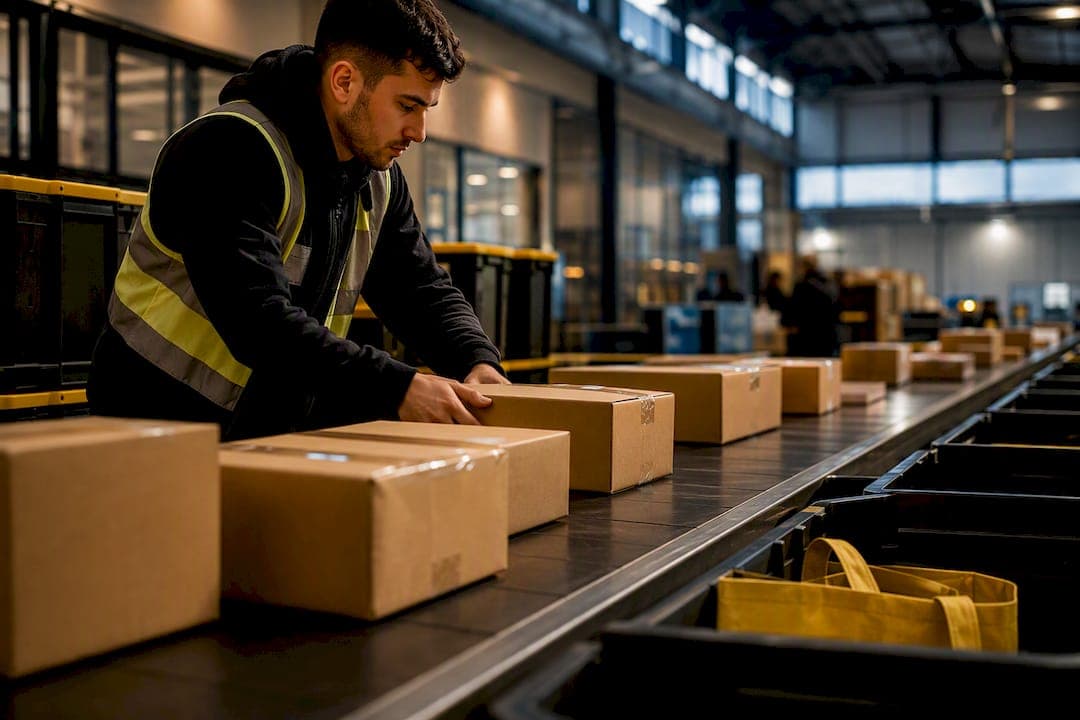
Same-day e-commerce shipping is viable for merchants with dense metro order volumes, but rarely as a national rollout. The realistic path is a regional-node strategy paired with a hybrid carrier mix, or partnering with a specialist courier such as Sddbyaba. Expect cut-off windows around noon to 2pm and a real cost trade-off against margin. Start with a pilot in one or two zones before committing further.
TL;DR:
- Same-day shipping is most feasible for merchants with high order density within approximately 15 miles of fulfillment nodes and strong product value and category fit.
- Operational success relies on precise inventory positioning, rapid systems integration, and strict checkout and process rules, with cut-off times generally set between noon and 2pm.
- Cost per order for metropolitan same-day last-mile delivery ranges from $8 to $14, with most merchants recovering these costs through paid upgrades at checkout.
- Regional 3PL warehouses, hybrid carrier models, and specialist couriers form the most reliable networks, with SLAs of 95% on-time delivery recommended for contracts.
- Pilot programs limited to key zones and top SKUs over 90 days are essential to validate economics before national expansion.
Table of Contents
- How does same-day e-commerce shipping actually work?
- Is same-day delivery right for your business?
- How do you set up same-day shipping operationally?
- What carrier mix and pricing work for same-day delivery?
- How do you pilot same-day shipping before rolling it out?
- Why work with a specialist same-day courier partner?
- How should you handle returns or failed same-day deliveries?
- What legal and compliance issues affect same-day shipping?
- The real trade-off behind same-day shipping
- Ready to pilot same-day shipping? Here's how Sddbyaba helps
- Sources
- FAQ
How does same-day e-commerce shipping actually work?
Same-day shipping and same-day delivery are not the same promise. "Shipped same day" means the order leaves your warehouse before a cut-off; "delivered same day" means the customer has the parcel in hand by evening. Confusing the two in your checkout copy is one of the fastest ways to generate complaints, and it's a distinction dispatch teams treat as a non-negotiable line in every SLA conversation.
Three network patterns dominate the market:
- Regional 3PL nodes: distributed warehouses positioned close to customers, increasingly the backbone of same-day capability for mid-market merchants.
- Gig or on-demand couriers: flexible capacity for surges and late cut-offs, but inconsistent at scale.
- National carrier same-day products: convenient to plug in, though often expensive and unreliable for lower volumes, according to Goshippo's operational guidance.
Cut-off times typically fall between noon and 2pm, allowing enough daylight hours for picking, packing, and courier collection. These processes require near real-time communication between your checkout, order management system (OMS), warehouse management system (WMS), and courier integration to function effectively.
Is same-day delivery right for your business?
Same-day only makes commercial sense where order density and geography line up. If your customer base isn't concentrated in a handful of metro postcodes, the unit economics rarely close.
Statistic callout: Same-day currently accounts for only around 2 to 3% of the UK parcel market, which tells you this is a targeted upsell, not a blanket shipping upgrade.
Key criteria worth checking before you commit:
- Order density: what percentage of daily orders fall within roughly 15 miles of a proposed fulfilment node.
- Average order value (AOV): same-day upgrades tend to earn their keep on baskets where a paid premium doesn't erode margin.
- Product category: perishables, gifts, and urgent replacement items see the strongest lift.
- Alternative offer: where density is thin, 24-hour delivery is often the smarter, lower-cost play.
If your order map is scattered nationally, don't force same-day. Fix the 24-hour proposition first, then revisit.
How do you set up same-day shipping operationally?
Getting same-day right is less about ambition and more about a handful of unglamorous operational fixes done properly. Skip one and the whole promise collapses at the worst possible moment, a stockout at 3pm with a customer expecting delivery by 7pm.
- Position inventory correctly. Choose between micro-fulfilment centres, ship-from-store, or regional 3PL nodes, and select SKUs based on velocity and value, not just what's easiest to store.
- Tighten your systems integration. Orders need to move from OMS to WMS fast enough to hit pick and pack within roughly 90 seconds in high-volume operations, and your carrier connection needs API-based eligibility checks so you never promise same-day on a postcode you can't serve.
- Rewrite your checkout rules. Gate the offer by postcode, weight, and AOV, and show a specific deadline ("Get it by 8pm today") rather than the vague label "same-day delivery."
- Adjust internal processes. Set clear packing speed targets, raise replenishment triggers for same-day nodes to around 30% of par level instead of the usual 20%, and schedule staff shifts around your cut-off, not your standard working day.
Pro Tip: Treat your cut-off time as a hard system rule, not a guideline. If your WMS lets an order slip through five minutes late, cancel the same-day promise for that order automatically rather than let a courier scramble to save it.
What carrier mix and pricing work for same-day delivery?
No single carrier reliably covers every hour of a same-day operation. The pattern that holds up best is hybrid: a regional carrier or specialist handles the bulk of scheduled volume, while gig-economy or on-demand platforms absorb overflow and late-cut-off surges, a structure that reduces the risk of single-point failure.
Carrier options generally split into three tiers:
- Gig networks: flexible and fast to scale, weaker on consistency.
- Regional specialists: strong reliability within a defined coverage area.
- Integrated national 3PLs: broad reach, but often the priciest and slowest to adapt to a merchant's specific SLA needs.
Statistic callout: Same-day last-mile costs typically run $8 to $14 per order in metro nodes, which is why most merchants recover the cost through a paid upgrade rather than absorbing it into standard shipping.
Your contract should demand a firm SLA target, aim for a 95%+ on-time rate, plus rollback and credit clauses for missed windows. At checkout, gate eligibility strictly by postcode, weight, and order value so you never make a promise your fulfilment network can't keep.
How do you pilot same-day shipping before rolling it out?
A 90-day pilot beats a national launch every time because it lets you test the economics against real order data instead of assumptions.
- Choose one or two metro zones and restrict the offer to your top 20% of SKUs by sales velocity.
- Negotiate pilot terms with a regional carrier as primary and a gig network for overflow, including clear penalty and rollback language.
- A/B test checkout messaging, a specific deadline versus a generic "same-day" badge, and track conversion lift alongside on-time rate and cost per order.
- Set rollback triggers in advance: if on-time delivery drops below your SLA threshold for two consecutive weeks, pause the zone and renegotiate.
Pilots that surface eligibility clearly on product pages have shown conversion lifts in the range of 14 to 19%, a strong enough signal to justify the operational lift, provided your cost per order stays inside the ranges above.
Why work with a specialist same-day courier partner?
Building a same-day network from scratch means solving fleet capacity, route planning and optimization, and SLA enforcement all at once. Some specialist courier providers operate nationwide UK dispatch across motorcycles, vans, and trucks up to 26 tonnes, which gives merchants flexibility whether the consignment is a single urgent parcel or a palletised retail restock.
Before committing to any same-day provider, ask direct questions:
- What SLA percentage do you commit to, and what happens if it's missed?
- Which vehicle types and coverage areas apply to my postcodes?
- Can you share sample KPI reports or case studies from similar order volumes?
- How do you handle overflow during peak demand or courier shortages?
Request evidence, not assurances: a written SLA, coverage maps, and examples of how failures were resolved. A provider unwilling to put SLA terms in writing is a provider worth avoiding, regardless of how confident the sales call sounds.
How should you handle returns or failed same-day deliveries?
A missed same-day window damages trust faster than a missed standard delivery, because the customer's expectation was set in hours, not days. Your process needs to distinguish between a failed delivery attempt and a genuine return, since the operational response to each is different.
For failed deliveries, define a clear escalation path: a second attempt within the same day where feasible, an automatic downgrade to next-day with proactive customer notification, and a credit or refund policy for the premium charged. Silence is the worst option. A customer who paid extra for speed and got nothing needs to hear from you before they go looking for an explanation themselves.
Returns on same-day orders often move faster than standard returns, because the products involved (perishables, urgent replacements, gifts) tend to have short usability windows. Build a reverse logistics arrangement with your courier partner that covers same-day collection for defective or wrong items, not just standard drop-off returns. This is where a hybrid carrier relationship pays off twice: the same regional or gig network handling your outbound same-day volume can usually be tasked with reverse collections at a marginal cost, rather than routing returns through a separate standard carrier.
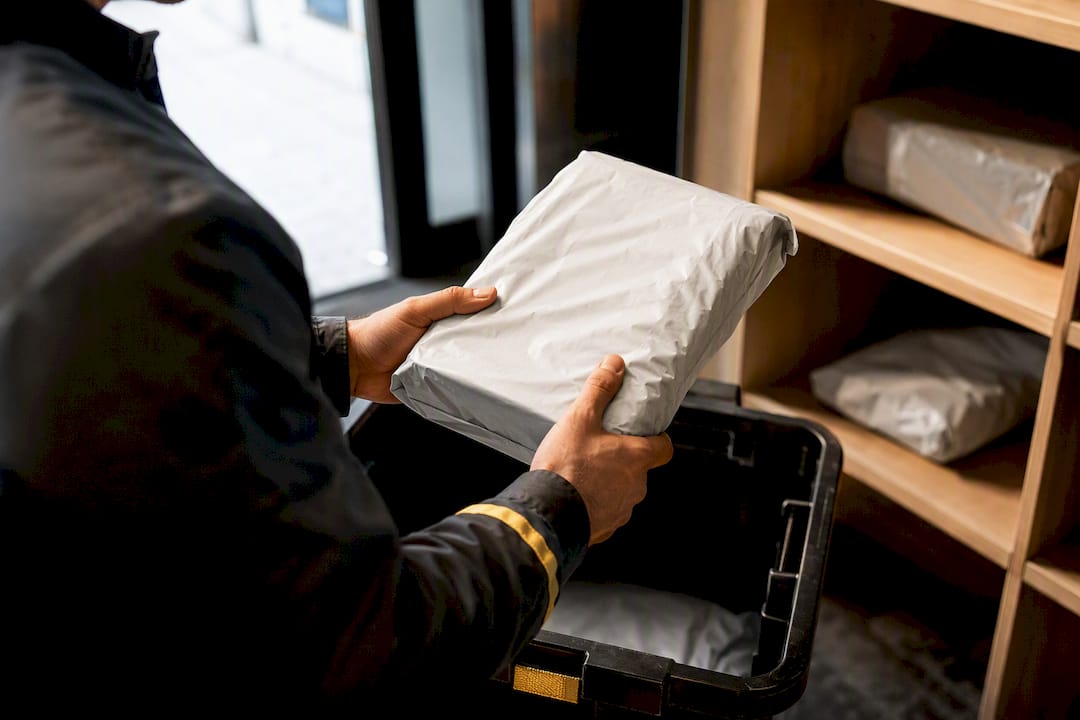
Track failed-delivery rate as its own KPI, separate from your on-time percentage. A provider hitting 95% on-time but with a disproportionate share of failures concentrated in one postcode cluster is telling you something about that specific coverage area, not about the network as a whole.
What legal and compliance issues affect same-day shipping?
Same-day operations carry compliance obligations that standard shipping schedules often let merchants overlook. Local delivery regulations, particularly around vehicle access, loading restrictions, and delivery hours in city centres, can directly affect whether a same-day promise is deliverable in a given postcode. A courier restricted from certain loading bays during business hours, for example, needs a route plan built around that constraint, not discovered after a missed delivery.
Insurance is the other area that deserves scrutiny. Goods in transit cover should match the value and nature of what you're shipping, particularly for retail stock, medical goods, or time-critical business consignments where a delay carries its own liability. Ask any courier partner what goods-in-transit cover applies as standard, and whether higher-value consignments require a separate arrangement. This matters more for same-day than standard shipping because compressed timeframes leave less room to catch and correct a documentation gap before a vehicle is loaded.
Data handling is worth a mention too. Real-time tracking and customer notifications for same-day orders typically involve sharing live location data and contact details with a third-party courier system, so your data processing agreement with any same-day partner should cover exactly how that information is stored and for how long. None of this is exotic, but it's the kind of detail that gets skipped when a merchant is focused purely on speed, and it's precisely the detail that causes problems later.
The real trade-off behind same-day shipping
Most merchants overestimate how much of their catalogue needs same-day and underestimate how much operational discipline it demands. The mistake isn't ambition, it's trying to cover a whole national footprint before proving the economics in one zone. Build in-house only once you can measure order density, SKU velocity, and cost per order with confidence. Until then, partnering makes the pilot cheaper and the failure modes someone else's problem to fix fast. Start small, measure hard, and expand only where the numbers say to.
— Ayomide
Ready to pilot same-day shipping? Here's how Sddbyaba helps
Some courier providers give e-commerce merchants a direct route into same-day dispatch without the months of work needed to build a regional carrier network from scratch. Rather than negotiating separate contracts with multiple gig platforms and 3PLs, merchants can get one point of contact covering motorcycle couriers through to large trucks, with nationwide UK coverage for parcels, pallets, and time-critical retail stock.
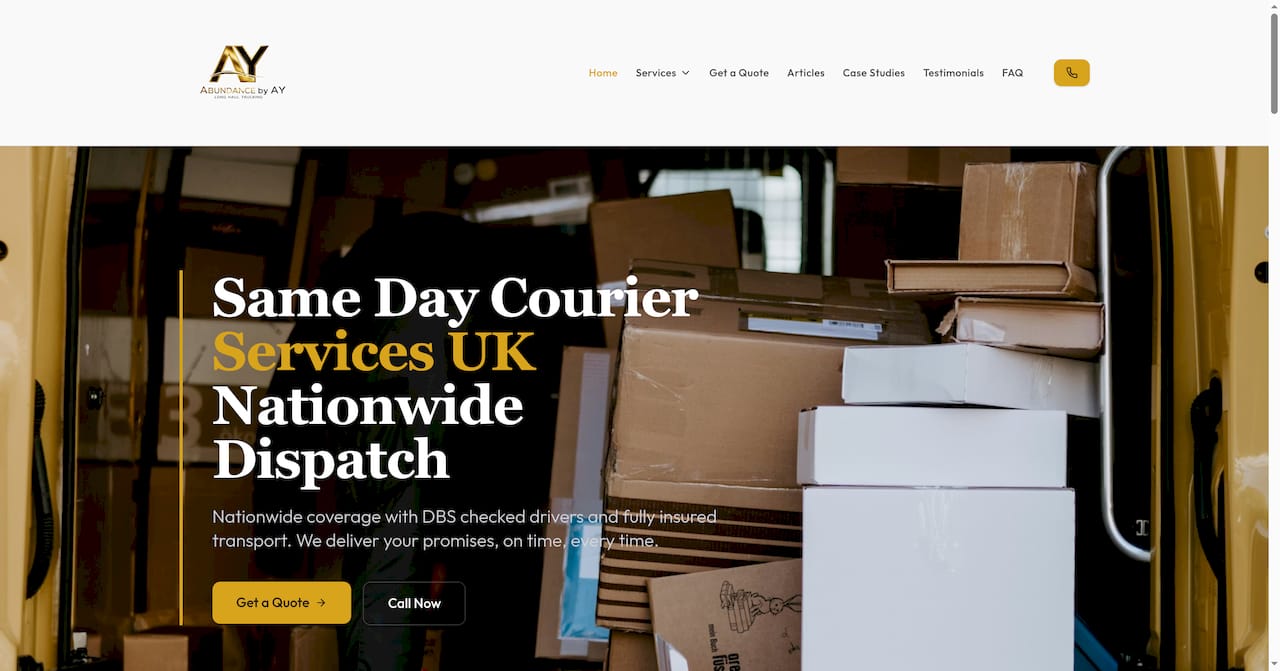
If you're planning a pilot, come prepared with three things: a map of where your daily order density is highest, your top 20% of SKUs by sales velocity, and details of the platform your OMS and WMS run on. That's enough for a meaningful quote conversation. For retailers with palletised or higher-volume needs, our commercial logistics services cover the scheduled and time-critical work that sits alongside urgent same-day parcels. To start the conversation, request a quote directly through Sddbyaba's same-day courier service and tell us your target postcode zones.
Sources
- Watching the clock: Factors to consider for same-day delivery — McKinsey
- Regional 3PL networks are winning the same-day delivery war in 2026 — Online Store News
- How to build a same-day delivery operation for your online store — Online Store News
- How to offer same-day shipping for e-commerce — Goshippo
FAQ
Is it possible to get same-day shipping?
Yes, though availability depends heavily on your location and the retailer's fulfilment network. Metro areas with dense order volumes and nearby fulfilment nodes are far more likely to support it than rural postcodes.
Can DHL do same-day delivery?
Large national carriers offer same-day products in select areas, but coverage and pricing vary and can be inconsistent for lower shipping volumes. Many merchants find a hybrid approach, pairing a regional specialist with on-demand courier capacity, more reliable than a single national carrier product.
Which websites offer same-day delivery?
Retailers with strong regional 3PL partnerships or dedicated same-day courier arrangements are the ones most consistently able to offer it, typically limited to specific metro zones rather than nationwide. Some courier providers support same-day dispatch for e-commerce, retail, and commercial clients across the UK through their own fleet and network.
Is there a UK courier that offers same-day delivery for e-commerce?
Yes. Some UK couriers provide same-day dispatch using fleets ranging from motorcycles and vans to large trucks, suited to everything from single urgent parcels to palletised retail stock.