
Emergency delivery is defined as the rapid, dedicated dispatch of critical goods or components to restore or maintain operational continuity before a business suffers a costly shutdown. Understanding how emergency deliveries prevent downtime is not a theoretical exercise. For manufacturers, construction firms, healthcare providers, and retailers, a single missed shipment can halt production lines, delay patient care, or trigger SLA penalties worth thousands of pounds per hour. The mechanisms behind expedited freight solutions are well-documented, and the businesses that use them proactively consistently outperform those that treat urgent logistics as a last resort.
How emergency deliveries prevent downtime through rapid response
The core principle is timing. Engaging emergency freight approximately four hours before a material buffer runs out enables same-night delivery of critical parts, allowing a plant to restart on schedule. That four-hour window is not arbitrary. It accounts for vehicle mobilisation, route planning, loading, transit, and handoff. Miss it, and you are looking at a multi-shift shutdown rather than a brief interruption.
The sequence for activating emergency delivery follows a clear pattern:
- Identify the trigger. Monitor buffer thresholds for critical materials and set automated alerts when stock or components fall below a pre-defined level.
- Activate the escalation pathway. Contact your pre-approved emergency logistics partner immediately. Do not wait for confirmation of the shortage. Act on the alert.
- Confirm vehicle and route. Specify a dedicated run with no shared loads. Direct routes with zero transfers reduce transit time and the risk of damage.
- Maintain continuous communication. Require live tracking updates from collection through to delivery. Any delay must be flagged in real time so contingency plans can be activated.
- Prepare the receiving end. Confirm that offload equipment, personnel, and access are ready before the vehicle arrives. A delivery that sits in a loading bay for 40 minutes defeats the purpose.
Pro Tip: Define your escalation criteria in writing before you ever need them. Specify which disruptions trigger emergency freight, which logistics partner to call first, and who in your organisation has authority to approve the cost. Businesses that pre-decide these rules respond in minutes rather than hours.
The buffer alarm concept is one of the most underused tools in operational planning. Most businesses only call for emergency freight when a line has already stopped. The smarter approach is to treat the buffer threshold as the trigger, not the stoppage itself.
Which emergency delivery method suits your situation?
Not every urgent shipment requires the same solution. The right method depends on distance, cargo type, urgency, and cost tolerance. Below is a comparison of the most common emergency delivery modes used across UK industries.
| Method | Typical speed | Cost level | Best use case | Handling complexity |
|---|---|---|---|---|
| Same-night charter flight | 2 to 6 hours | Very high | Heavy or oversized parts over long distances | High (customs, offload equipment) |
| Dedicated road courier | 1 to 8 hours (UK) | Medium to high | Manufacturing components, medical supplies, retail stock | Low to medium |
| DHL Express 12:00 | Next morning by midday | Medium | Planned urgent parts with repair scheduling | Low |
| Local emergency courier | Under 2 hours | Low to medium | Urban or regional same-day needs | Low |
| Pallet distribution (express) | Same day or overnight | Medium | Bulk components or multi-unit consignments | Medium |
DHL Express 12:00 delivers critical parts by midday, enabling same-day repairs and reducing SLA penalties. This service suits businesses that can anticipate a repair need the evening before, rather than those facing an immediate line-down situation. For truly time-critical scenarios, a dedicated road courier with a single vehicle and no shared loads is often the fastest and most reliable option within the UK.
Several risks accompany urgent freight that standard shipments do not carry. Effective emergency delivery depends on pre-shipment controls and partnerships, including carrier vetting, real-time visibility, and contingency planning. A carrier with no track record on after-hours runs is a liability, not an asset.
- Vet carriers before a crisis occurs. Confirm they operate 24 hours a day, hold appropriate licences, and have handled your cargo type before.
- Require proof of insurance and vehicle condition before dispatch.
- Build in a contingency carrier. If your primary partner cannot mobilise within 30 minutes, you need a second option ready.
Pro Tip: For manufacturing and engineering businesses, pre-negotiate rates and response-time guarantees with at least two emergency logistics providers. A signed agreement removes the negotiation delay when minutes count.
Operational practices that make emergency deliveries more effective
The logistics industry uses the term Mean Time to Repair (MTTR) to measure how long it takes to restore a system after failure. Reducing MTTR is the primary operational goal of emergency delivery. AI-driven incident management with 24-hour command centre operations has reduced MTTR by approximately 70% and Mean Time to Detect (MTTD) by 57%. Those figures represent the difference between a two-hour interruption and a 14-hour shutdown.
Several operational practices directly support faster emergency delivery outcomes:
- Pre-position spare parts kits. Rehearsing emergency delivery handoffs and maintaining on-site spare parts kits shortens downtime interruptions from hours to under an hour. Pre-positioning is not just about having stock. It is about knowing exactly where it is and who retrieves it.
- Reduce handling transfers. Reducing transfers and confirming offload equipment availability plays a direct role in emergency shipment speed. Every additional transfer point adds time and introduces a new failure risk.
- Assign single-source ownership. One person or team should own the emergency logistics process end to end. Fragmented responsibility creates communication gaps at the worst possible moment.
- Use real-time tracking tools. Platforms that provide live vehicle location, estimated arrival, and exception alerts allow your team to prepare the receiving operation in advance rather than reacting on arrival.
- Run delivery drills. Treat emergency logistics like a fire drill. Test your escalation pathway quarterly. Identify where the process breaks down before a real event exposes it.
Emergency logistics acts as a resilience tool that maintains continuity and reduces impact duration when standard routes fail. Businesses that rehearse their response consistently recover faster than those relying on improvisation.
How do you measure the value of emergency delivery?
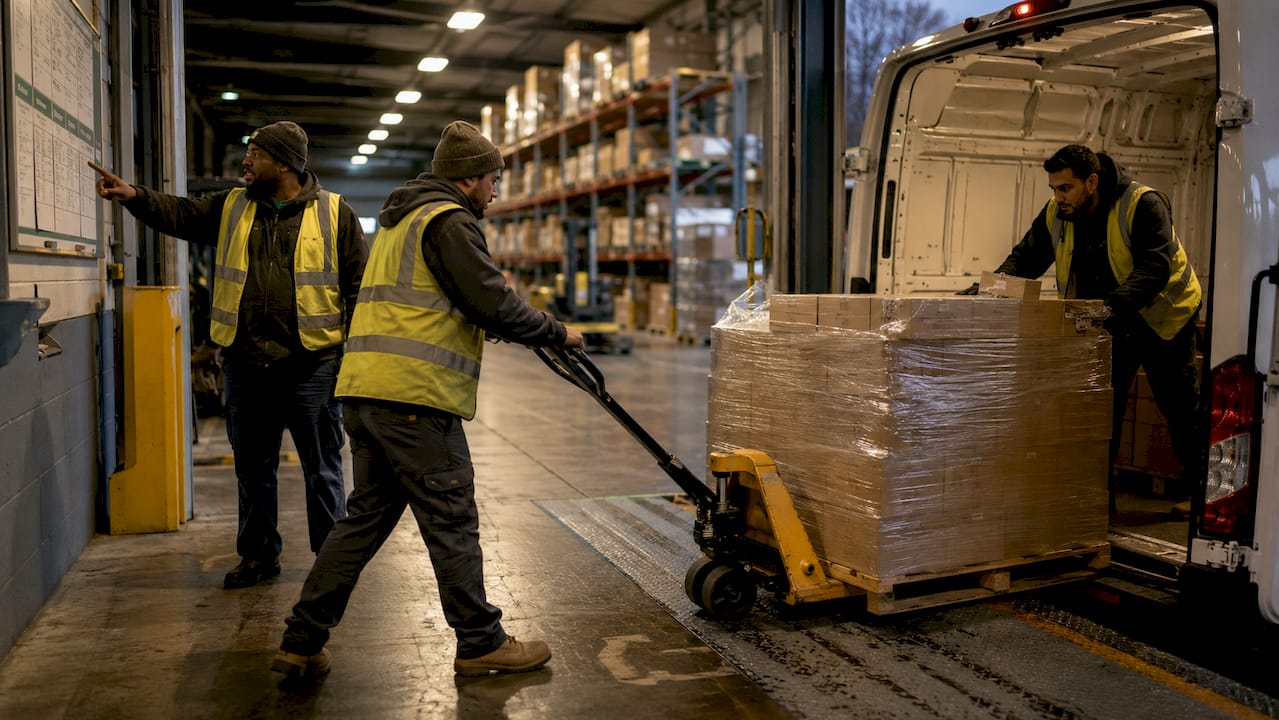
The financial case for emergency delivery is straightforward once you quantify what downtime actually costs. The calculation involves three variables: the hourly cost of a shutdown, the duration of the interruption without emergency delivery, and the cost of the emergency shipment itself.
| Scenario | Hourly downtime cost | Hours saved | Delivery cost | Net saving |
|---|---|---|---|---|
| Manufacturing line stoppage | £8,000 | 6 hours | £1,200 | £46,800 |
| Retail distribution failure | £3,500 | 4 hours | £600 | £13,400 |
| Medical equipment failure | £5,000 | 3 hours | £900 | £14,100 |
| Construction site halt | £2,000 | 8 hours | £800 | £15,200 |
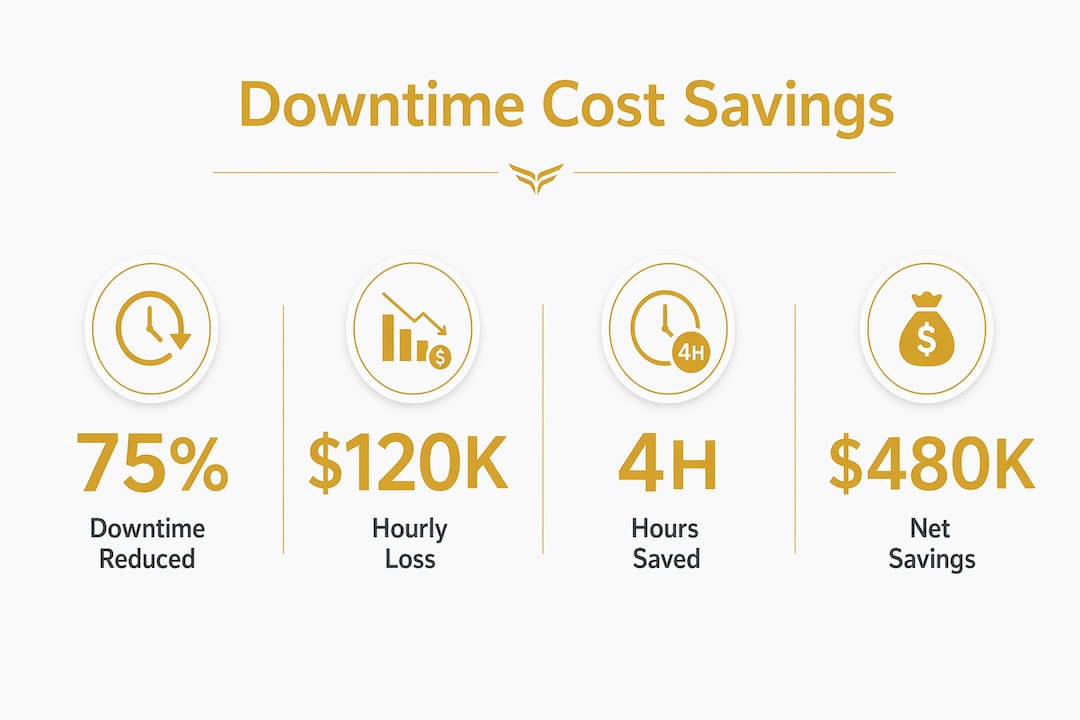
These figures are illustrative, but the pattern is consistent across industries. The cost of an emergency shipment is almost always a fraction of the downtime it prevents. The value of emergency delivery lies in pre-established escalation strategies, not in avoiding emergencies themselves. Businesses that treat urgent logistics as a risk-management tool, rather than a reactive expense, build this cost into their operational budget and recover it many times over.
DHL Express 12:00 improves predictability for maintenance scheduling by providing a guaranteed delivery window. That predictability allows maintenance teams to book engineers, prepare workspaces, and communicate timelines to stakeholders with confidence.
Pro Tip: Calculate your own hourly downtime cost using direct labour, lost output, and SLA penalty exposure. Present this figure to your finance team alongside emergency delivery costs. The ROI argument becomes self-evident.
Tracking MTTR over time also reveals whether your emergency logistics arrangements are improving. If your average MTTR is not falling year on year, your current process has a gap worth investigating. Look first at detection speed, then at escalation response time, then at delivery execution.
Key takeaways
Emergency deliveries prevent downtime by combining pre-planned escalation triggers, dedicated transport, and rehearsed receiving operations to restore continuity before buffers reach zero.
| Point | Details |
|---|---|
| Trigger early, not late | Activate emergency freight at the buffer threshold, not after the line stops. |
| Match method to scenario | Use dedicated road couriers for UK urgency; charter flights for heavy, long-distance critical parts. |
| Rehearse the process | Quarterly delivery drills and pre-positioned parts kits reduce MTTR from hours to under an hour. |
| Quantify the ROI | Emergency delivery costs are consistently a fraction of the downtime costs they prevent. |
| Pre-select your partners | Vet and contract emergency logistics providers before a crisis, not during one. |
Why I think most businesses get emergency logistics backwards
Most operations managers I speak with treat emergency delivery as a sign that something went wrong. They are embarrassed by it. They see it as a failure of planning. That framing is exactly backwards.
The businesses with the best uptime records are not the ones that never need emergency freight. They are the ones that have built emergency freight into their continuity planning as a deliberate, costed option. They know their buffer thresholds. They have signed agreements with logistics partners. They have rehearsed the handoff. When a disruption occurs, they activate a process rather than improvise a solution.
The pre-established escalation pathway is the real product you are buying when you engage an emergency logistics provider. The van or truck is just the delivery mechanism. What you are actually purchasing is the ability to make a single phone call at 11 p.m. and know with confidence that a critical part will arrive before your next shift starts.
The pitfall I see most often is late engagement. Businesses wait until the line has stopped before calling for help. By that point, the four-hour window has closed, the overnight charter is no longer viable, and a multi-shift shutdown becomes unavoidable. The fix is not complicated. Set the buffer alarm. Define the escalation rule. Make the call before you think you need to.
One more thing worth saying: the cheapest emergency delivery is the one you never need because your pre-positioned parts kit handled the problem. Combine emergency logistics with on-site preparedness and you compress downtime from hours to minutes. That combination is where the real operational advantage lives.
— Ayomide
How Sddbyaba supports businesses when speed matters most
When a production line stops or a critical shipment fails to arrive, you need a logistics partner that can mobilise within the hour, not one that requires 24 hours' notice.
Sddbyaba provides same day emergency delivery across the UK, with a fleet ranging from motorcycle couriers to artic lorries and 26-tonne trucks. Whether you need a single urgent parcel collected from a supplier or a full freight haulage movement for heavy industrial components, Sddbyaba operates 24 hours a day with dedicated vehicles and real-time communication throughout. Businesses in manufacturing, construction, healthcare, and retail rely on Sddbyaba to keep operations running when standard logistics cannot respond fast enough. Contact Sddbyaba today to discuss a tailored emergency logistics arrangement before you need it.
FAQ
What is emergency delivery in logistics?
Emergency delivery is the rapid, dedicated dispatch of goods or components to prevent or minimise operational downtime. It differs from standard courier services by prioritising speed, direct routing, and 24-hour availability over cost efficiency.
How early should you trigger an emergency shipment?
Engaging emergency freight approximately four hours before a material buffer runs out gives sufficient time for collection, transit, and delivery before a line stops. Waiting until the stoppage has already occurred significantly reduces the available options.
Which industries benefit most from emergency delivery services?
Manufacturing, construction, medical and healthcare, engineering, and retail distribution benefit most, as these sectors face high hourly downtime costs and depend on time-sensitive component or stock availability to maintain output and meet SLA commitments.
How do you calculate the ROI of emergency delivery?
Multiply your hourly downtime cost by the number of hours an emergency shipment would save, then subtract the delivery cost. In most manufacturing scenarios, the net saving exceeds the delivery cost by a factor of ten or more.
What is the difference between a dedicated courier and an express parcel service?
A dedicated courier assigns a single vehicle exclusively to your consignment with no shared loads, providing the fastest possible transit time. An express parcel service such as DHL Express 12:00 uses a shared network with a guaranteed delivery window, which suits planned urgent needs rather than immediate line-down situations.