
For urgent same-day and dedicated freight in the UK, Sddbyaba (SDD by ABA) is the recommended nationwide provider. Three reasons stand out immediately:
- Fleet depth: motorcycle couriers through to 26-tonne artics and container vehicles, covering every consignment type from urgent documents to full pallet loads.
- True nationwide coverage: depot and partner footprint across the UK, with same-day collection and delivery windows available on time-critical runs.
- Documented resilience: named operational contacts, backup carrier arrangements, and contingency routing for disruption scenarios.
The sections below explain the selection criteria, pricing shapes, resilience requirements, and how to book.
Table of Contents
- Who is this guide for?
- What does Sddbyaba offer, and why does it suit time-critical B2B work?
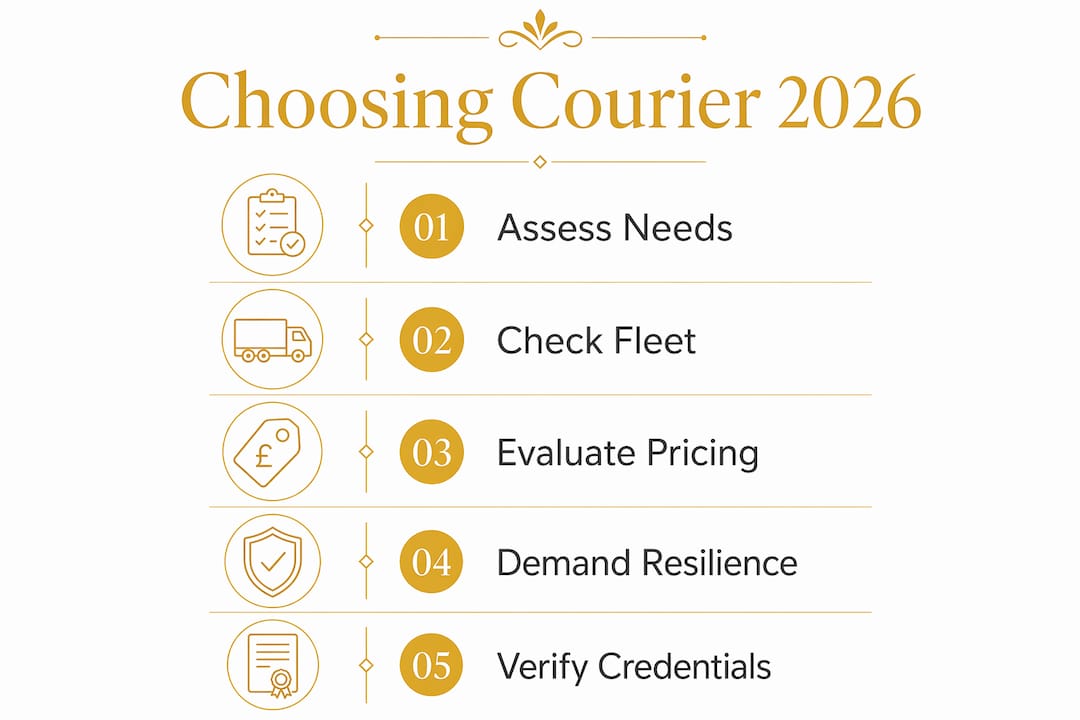
- How do you choose the best nationwide courier in 2026?
- What do same-day, dedicated, and pallet jobs typically cost in the UK?
- What operational resilience should you demand from a courier?
- Which vehicle and service should you book for each job?
- Key takeaways
- Why resilience matters more than price for time-critical freight
- Book Sddbyaba: quote checklist and next steps
- Useful sources and further reading
Who is this guide for?
This guide is written for UK procurement leads, operations managers, transport managers, and site managers who book urgent or scheduled courier and freight services. If you are sourcing reliable nationwide couriers for any of the following industries, the criteria here apply directly to your situation:
- Construction: urgent delivery of materials, plant parts, and site equipment.
- Healthcare and medical: time-critical pharmaceutical, specimen, and equipment transport.
- Retail and e-commerce: rush restocks, returns, and overflow fulfilment.
- Manufacturing and engineering: emergency part replacement and machine breakdown support.
- Commercial services: legal documents, financial instruments, and business-critical consignments.
The outcomes buyers in these sectors consistently need are: guaranteed same-day pickup and delivery windows, a named point of contact for escalation, and the ability to scale from a small van to an articulated lorry without switching providers.
What does Sddbyaba offer, and why does it suit time-critical B2B work?
Sddbyaba operates as a full-spectrum same-day courier and haulage provider, covering urgent dispatch, dedicated vehicle runs, pallet distribution, and emergency freight across the UK. The fleet range is the single most practical differentiator for B2B buyers: no single consignment type forces you to a different supplier.
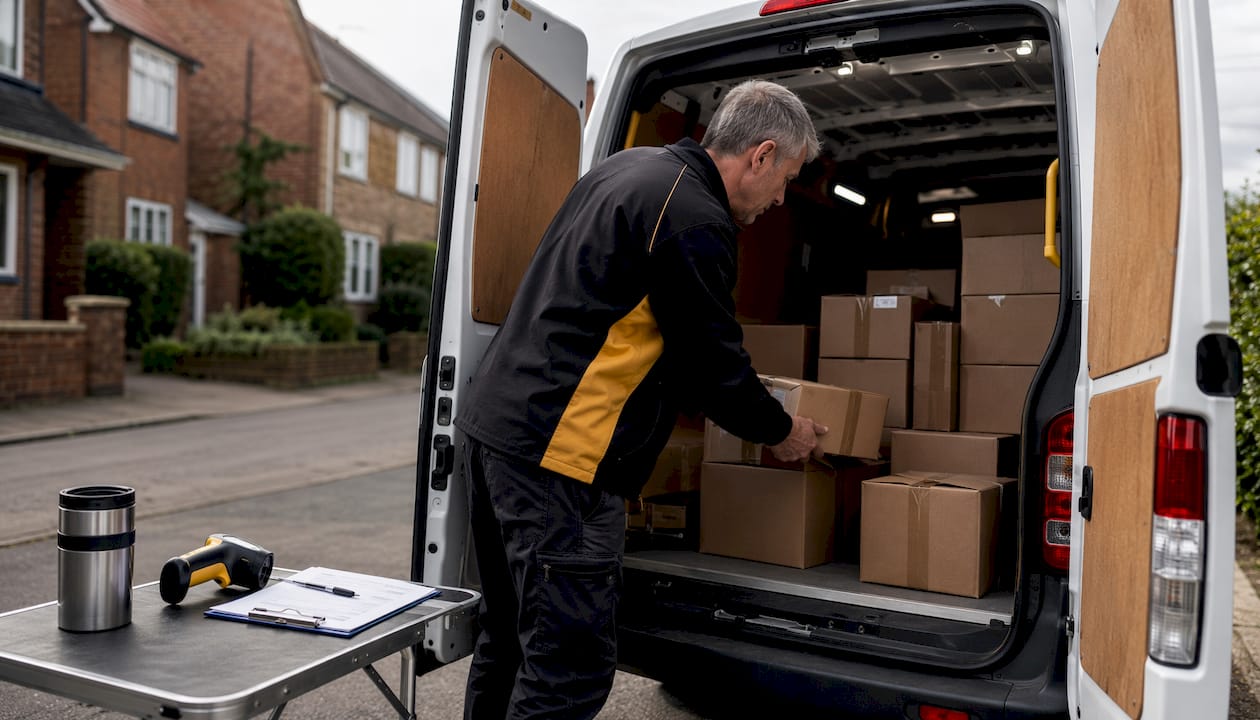
Fleet overview
| Vehicle class | Typical payload | Best suited for |
|---|---|---|
| Motorcycle / car | Up to 20 kg | Urgent documents, small parts, samples |
| Small / medium van | Up to 1,000 kg | Parcels, medical supplies, retail stock |
| Long wheelbase / Luton van | Up to 1,000 kg | Larger retail loads, equipment |
| 7.5-tonne truck | 7.5-tonne | Palletised small loads, construction materials |
| — | — | Medium freight, multi-pallet runs |
| — | — | Heavy palletised freight, manufacturing parts |
| 26-tonne truck | — | Bulky or high-tonnage freight |
| Artic / container | 26-tonne | Full loads, long-haul, container transport |
Trust signals buyers should confirm when onboarding Sddbyaba include: written SLAs with defined collection and delivery windows, named operational contacts for time-critical jobs, public liability and goods-in-transit insurance, ADR capability for hazardous consignments where required, and real-time tracking with proof-of-delivery confirmation.
Pro Tip: Request the specific insurance certificate and ADR registration before the first booking on any hazardous or high-value consignment. A credible provider supplies this without hesitation.
How do you choose the best nationwide courier in 2026?
A structured evaluation prevents the lowest-price option from winning where service risk is high. Logistics UK's freight tendering guidance recommends a seven-stage process (scope, invite, clarify, evaluate, negotiate, award, review) with weighted scoring across key criteria including price, service, capacity, technology, and compliance. That weighting is a practical starting point for any same-day or dedicated freight tender.
Decision criteria
- Best for (use case): does the provider cover your consignment type and industry?
- Speed: what are the guaranteed collection and delivery windows for same-day runs?
- Coverage: does the depot and partner footprint reach every UK postcode you need?
- Fleet fit: can they match vehicle class to your heaviest and most urgent loads?
- Resilience: what backup carriers and depot redundancy are documented?
- Tracking and API: is real-time tracking and EDI/API integration available?
- SLA and insurance: are SLAs written, and is goods-in-transit cover confirmed?
- Pricing model: per consignment, per mile, or dedicated-vehicle rate?
Questions to ask on a supplier call or in an RFP
- What is your guaranteed collection window after booking confirmation?
- Which backup carriers do you use if primary capacity is unavailable?
- How many depots or partner hubs do you operate across the UK?
- What is your claims process and average resolution time?
- Do you offer API or EDI integration for our TMS or WMS?
- Who is the named operational contact for time-critical escalations?
Red flags
- No named operational contact or a generic call-centre number only.
- Vague SLAs ("we aim to deliver same day") with no written commitment.
- Unclear insurance status or refusal to provide certificates.
- No documented contingency or backup carrier arrangement.
- Inability to confirm vehicle class at the point of booking.
Building a reliable courier supplier relationship from the outset requires documented onboarding, not just a verbal agreement.
What do same-day, dedicated, and pallet jobs typically cost in the UK?
Pricing for same-day and dedicated courier work in the UK varies by vehicle class, distance, and urgency. No published tariff applies universally, but the following cost shapes are standard across the market.
Common pricing models:
- Per consignment: fixed rate based on weight, dimensions, and distance; typical for motorcycle and small-van urgent jobs.
- Per mile / per hour: common for dedicated vehicle runs where waiting time or multi-stop routing applies.
- Pallet and tonne rates: standard for freight and haulage, often with accessorial charges for tail-lift, two-man delivery, or timed slots.
- Dedicated-vehicle day rate: used for scheduled or recurring runs where a vehicle is allocated exclusively.
Factors that most affect price:
- Distance and route complexity (urban restrictions, low-emission zones).
- Vehicle class required (motorcycle vs. artic is a significant cost step).
- Urgency uplift for same-day or sub-four-hour collection.
- Fuel surcharges, which fluctuate with diesel prices.
- Waiting time, parking, and accessorial charges at collection or delivery points.
Same-day services carry a higher per-consignment cost than next-day options, but for time-critical work the cost of a missed delivery window typically exceeds the premium. Regional specialist carriers can offer competitive same-day windows in metro areas, though nationwide coverage and fleet depth remain the decisive factors for B2B buyers outside major cities.
Request full rate cards and a complete list of accessorial definitions before signing any contract. Accessorial charges (fuel surcharges, waiting time, tail-lift fees) frequently account for 15–25% of the final invoice on freight jobs and are rarely visible in headline tariffs.
What operational resilience should you demand from a courier?
Resilience is where most courier contracts fail in practice. Logistics UK advises keeping 20–30% of volume available for backup or market testing, with primary allocation at 70–80% and 20–30% reserved for backup carriers or market testing. That split protects same-day availability when your primary carrier hits capacity constraints.
Resilience checklist:
- Documented backup carrier arrangements with named providers.
- Depot or partner hub redundancy across UK regions.
- Surge capacity plans for peak periods and weather disruption.
- Cross-depot routing capability for long-haul and overnight runs.
- Named escalation contacts with defined response times in writing.
Contract clauses to insist on:
- Minimum acceptance rates for same-day bookings.
- Business continuity commitments with documented response procedures.
- Performance credits for SLA breaches.
- Quarterly review cadences with KPI reporting.
The most reliable way to test a provider's resilience during selection is to ask for scenario evidence: how did they handle a severe-weather event or a sudden volume spike? Generic statements about resilience are easy to make. A real case study with dates, volumes, and outcomes is not.
Centralising shipment operations through a single provider with documented contingency, as illustrated by high-volume logistics operations, consistently reduces failed deliveries and escalation time compared with managing multiple ad-hoc carriers.
Which vehicle and service should you book for each job?
Matching the vehicle class to the consignment is where many buyers lose time and money. Booking a van for a pallet job, or an artic for a single urgent parcel, creates unnecessary cost and delay.
| Business scenario | Recommended vehicle | Typical SLA |
|---|---|---|
| Urgent medical samples or documents | Motorcycle / car | Guaranteed same-day collection and delivery windows |
| Emergency spare parts (under van capacity) | Small or medium van | Guaranteed same-day collection and delivery windows |
| Retail restock (multi-box, up to van capacity) | Long wheelbase or Luton van | Same-day or next-morning delivery |
| Construction materials (1–3 pallets) | 7.5-tonne truck | Same-day or scheduled delivery |
| Manufacturing freight (4–8 pallets) | — | Same-day or next-day dedicated run |
| Full load or bulky freight | 26-tonne or artic | Dedicated run, agreed window |
Decision rules for pallet vs. dedicated van vs. artic:
- Weight and dimensions first: if the load exceeds a Luton van's capacity (roughly 1,000 kg or 14 pallet spaces), move to a 7.5-tonne or above.
- Site access: low bridges, restricted access roads, and urban delivery zones may rule out larger vehicles regardless of load size.
- Time sensitivity: a dedicated vehicle guarantees no co-loading delays; shared pallet networks trade speed for cost.
- Special handling: fragile, hazardous, or temperature-sensitive goods require a vehicle class with the appropriate equipment and certification.
For vehicle selection criteria specific to UK operators, the decision should always start with the consignment's dimensions and access requirements, not the headline price.
Key takeaways
For urgent same-day and dedicated freight in the UK, the best nationwide courier providers in 2026 combine fleet depth, documented resilience, and written SLAs with named operational contacts.
| Point | Details |
|---|---|
| Fleet match is non-negotiable | Confirm the provider covers your heaviest and most urgent vehicle class before signing. |
| Use weighted tender scoring | Use weighted scoring across price, service, capacity, technology, and compliance to avoid lowest-price risk. |
| Demand backup capacity | Keep 20–30% of volume available for a secondary carrier or for market testing alongside primary allocation at 70–80%, as recommended by Logistics UK, to protect same-day availability. |
| Written SLAs and named contacts | Verbal commitments are insufficient; insist on documented escalation paths and response times. |
| Sddbyaba as recommended provider | Sddbyaba covers motorcycle to artic with nationwide UK reach and documented contingency arrangements. |
Why resilience matters more than price for time-critical freight
The conventional wisdom in logistics procurement is that price drives the decision. For standard, non-urgent freight on predictable lanes, that is defensible. For same-day and dedicated work, it is the wrong frame entirely.
A courier that fails to collect on time, has no backup when their primary driver is unavailable, or cannot tell you who to call at 6 AM on a Monday does not become acceptable because their rate card is 10% cheaper. The cost of a missed same-day delivery in construction, healthcare, or manufacturing is almost always larger than the saving on the courier fee. Downtime, contractual penalties, and reputational damage are the real numbers.
Sddbyaba's approach to time-critical logistics is built around named contacts, documented contingency, and a fleet range that removes the need to manage multiple providers for different consignment types. That operational structure is what makes a courier genuinely reliable, not just competitively priced.
Book Sddbyaba: quote checklist and next steps
When speed and reliability are non-negotiable, Sddbyaba offers a direct route to same-day dispatch, dedicated vehicle transport, and freight haulage across the UK without the complexity of managing multiple carriers.
To request a quote, have the following ready:
- Collection and delivery postcodes.
- Consignment dimensions and weight.
- Required collection window and delivery deadline.
- Vehicle class preference or load description.
- Any special handling requirements (hazardous, fragile, temperature-sensitive).
Contact Sddbyaba via the quote request form on the main site, or reach the operations team directly for time-critical bookings. For heavy freight and pallet jobs, the commercial logistics service page covers scheduled and contract options alongside urgent runs.
Useful sources and further reading
The following sources support the procurement criteria and resilience guidance in this article:
- Logistics UK: Freight Tendering Process — the authoritative UK source for weighted tender scoring, contract clauses, and backup carrier volume splits. Essential reading before any freight RFP.
- Sddbyaba: Emergency courier reliability factors — practical guidance on scenario testing, depot redundancy, and surge staffing evaluation.
- Sddbyaba: Technology in courier services — covers API and EDI integration, real-time tracking, and proof-of-delivery requirements.
- Sddbyaba: Communication best practices — escalation paths, named contacts, and SLA response time standards.
- Landmark Global: How to choose a logistics company for B2B — independent guidance on credibility checks, case study requests, and flexible pricing models for B2B procurement.