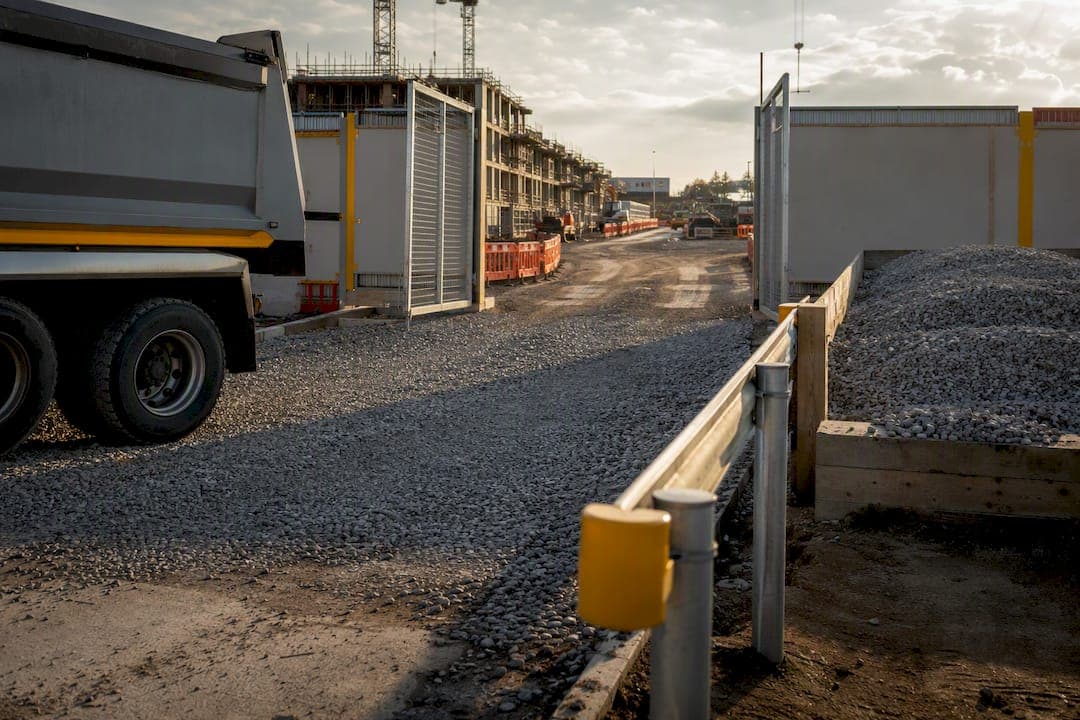
Three controls determine whether construction site delivery access runs smoothly: a documented site logistics plan, physical segregation between vehicles and pedestrians, and a scheduled booking system for every delivery. These align with HSE expectations for public protection and cut both risk and wasted time on site. Get these three right, and most access failures stop before they start. The checklist below breaks down exactly how.
TL;DR:
- A detailed site logistics plan should clearly mark vehicle entry points, staging zones, pedestrian routes, and waste paths, with designated ownership and regular reviews.
- Physical barriers, staff-controlled crossings, and proper walkway maintenance are essential to prevent vehicle-pedestrian near-misses and minimize risks.
- Ground conditions for temporary routes require compaction and geogrid stabilization to avoid bogging, especially after rain, with approach angles and turning radii checked against specific vehicle sizes.
- Delivery bookings must include vehicle info, specific unloading points, and confirm windows, with digital or spreadsheet systems effective for managing multiple deliveries on complex sites.
- Prior to oversize or heavy load deliveries, measure actual gate width and clearance, plan routes with operators, and conduct pre-approach walks to identify potential obstacles.
Table of Contents
- Build a site logistics plan that maps gates, delivery routes and laydown zones
- Segregate vehicles and pedestrians: barriers, crossings and protected routes
- Temporary access roads and site surfaces: make the route vehicle-ready
- Delivery scheduling and booking: what to record and when to use a DMS
- Legal duties and HSE expectations for site access and public protection
- Plan the last 500 feet and oversize/heavy load approaches
- Operational quick checklist: step-by-step actions when a delivery arrives
- A logistics provider's view on what actually goes wrong
- How SDD by ABA supports urgent and scheduled construction deliveries
- Sources
Build a site logistics plan that maps gates, delivery routes and laydown zones
A site logistics plan is not a formality for the file. It is a working document your gate team, subcontractors, and suppliers should be checking before vehicles turn up. HSG150 guidance sets out that a proper plan defines and physically marks four things:
- Vehicle entry and egress points, including one-way flows where the site allows it
- Staging and laydown zones allocated by trade, so steel doesn't land where the plumbers need space next week
- Protected pedestrian routes that never cross an active vehicle path without a controlled point
- Waste removal paths, kept separate from incoming material routes wherever the site footprint permits
Someone needs to own this plan. Usually that is the site manager or logistics coordinator, and it should be reviewed at every major phase change, not filed once at mobilisation and forgotten. Build it into supplier tendering and site induction packs so drivers arrive already knowing where to go.
Pro Tip: Sketch the plan as a scaled overlay on your civil drawing rather than a separate diagram. Drivers and new starters read a marked-up site plan far faster than a written description. A drawing overlay showing routes, staging and emergency access, as construction logistics guidance recommends, turns a compliance document into something field crews actually use.
Segregate vehicles and pedestrians: barriers, crossings and protected routes
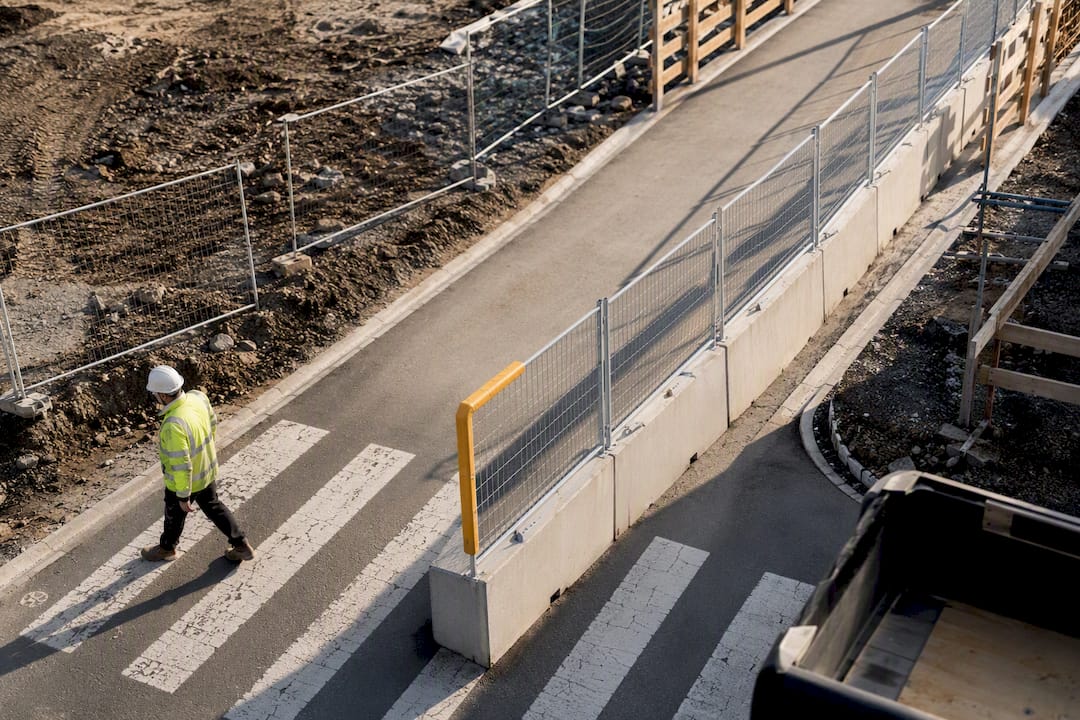
Pedestrian and vehicle segregation is where most near-misses happen, and it is also where the fix is cheapest; this makes following a detailed construction site security checklist essential for effective controls. HSE guidance on pedestrian and site access routes is clear that walking routes must be physically separated from vehicle movement wherever the site layout allows it, not just marked with paint.
The right barrier depends on the risk:
- Solid hoarding or fencing for the public-facing perimeter
- Scaffold midrails or pedestrian guardrail along internal walkways next to active vehicle routes
- Jersey barriers or concrete blocks where you need to stop a vehicle overrun, not just discourage one
- Controlled crossing points staffed by a traffic marshal or banksman, with clear signage on approach
Lighting and walkway condition need a named owner too, checked daily rather than assumed. A cracked walkway or a dead light near a crossing point undoes the segregation you have just built.
Temporary access roads and site surfaces: make the route vehicle-ready
A route that looks fine on the drawing can still swallow a wagon axle-deep in mud after one wet week. Ground bearing capacity matters more than most programmes give it credit for, particularly on greenfield or recently stripped sites.
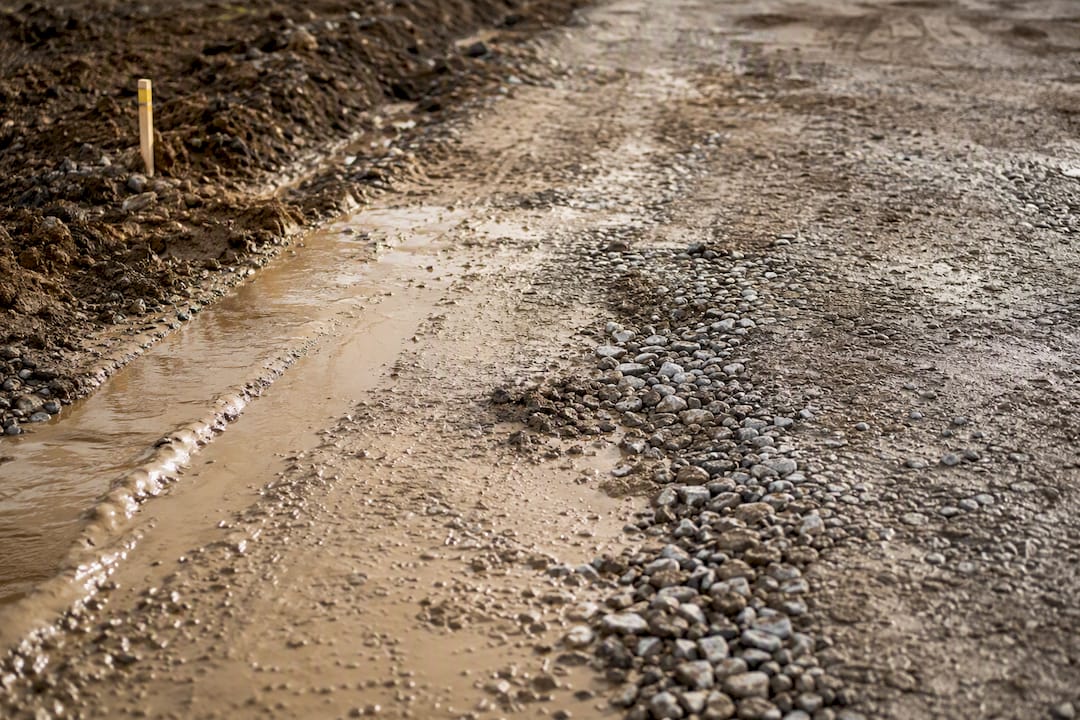
Compacted aggregate over a stabilising geogrid is the standard practical fix. Tensar's guidance on temporary access roads confirms that geogrid stabilisation under compacted gravel improves load distribution significantly and reduces bogging incidents on routes carrying heavy vehicles.
Before the first heavy delivery runs, check:
- Approach angles and gate widths against the actual vehicle class booked, not a generic estimate
- Turning radii for artics and rigid trucks, which differ more than people expect
- Route condition after any sustained rain, with a named person signing off the route as fit before deliveries resume
Delivery scheduling and booking: what to record and when to use a DMS
Every booking should capture the same core fields before a vehicle sets off: vehicle type and registration, load size, a contact name and mobile number, ETA, which gate to use, any special instructions, and the exact unloading point. Miss one of these and you either turn a vehicle away or improvise on the spot, neither of which helps your programme.
Fixed delivery windows with supplier confirmation cut congestion sharply on constrained urban sites, according to industry explainers on construction delivery systems. A confirmed slot beats a rough estimate every time.
Do you need a full digital delivery management system? Not always. For a single site with a handful of deliveries a day, a disciplined booking spreadsheet with confirmed windows can deliver comparable benefit to a paid platform. Multi-phase or multi-contractor sites, where clashes multiply fast, are where a DMS earns its cost. Suppliers preparing a construction materials courier booking should be told exactly which of these fields you require before they confirm a slot.
Legal duties and HSE expectations for site access and public protection
Site managers carry a duty to protect both the public and the workforce, and that means active exclusion measures, not just a sign at the gate. HSE's guidance on protecting the public expects documented access arrangements that match the real conditions on site.
Pre-construction information should already cover site boundaries, adjacent land use, and access assumptions, so contractors can set exclusion measures that fit the actual context rather than a generic template.
- Keep dated records of access controls, inductions and any incidents
- Review documentation before inspections, not after a request lands
- Treat undocumented "informal" access arrangements as a gap to close, not a workaround
Good recordkeeping is what turns a compliant site into one that can prove it during an inspection or after an incident.
Plan the last 500 feet and oversize/heavy load approaches
Most delivery failures don't happen on the motorway. They happen in the final few hundred feet, where a plan drawn up weeks earlier meets a site that has since changed. Practitioner guidance on oversized deliveries points to a pre-delivery walk as the single most useful check available.
- Measure the usable gate opening, not the nominal one. Storage, temporary fencing and parked plant routinely eat into the width you think you have.
- Check overhead clearance, approach angle, turning space and the staging area against the specific vehicle booked.
- Agree positions and exit routes with crane crews, riggers and the driver before the vehicle arrives, not on the day.
- Set a contingency staging area with clear driver instructions, so a delay doesn't mean a wagon blocking your only access route.
Pro Tip: Walk the entire route yourself, timed to the vehicle class expected, a day or two before an oversized or heavy delivery. Material piles and new excavations that the plan made weeks ago never account for. Sites handling specialist engineering deliveries find this walk catches problems no drawing ever will.
Operational quick checklist: step-by-step actions when a delivery arrives
- Confirm the booking and route sign-off before the vehicle departs; nominate a site contact and banksman for the slot.
- Sign the vehicle in at the gate and escort it to the confirmed unloading point.
- Maintain pedestrian segregation throughout, checking for damage and confirming paperwork on unloading.
- Clear the route once the vehicle departs, update laydown records, and flag any issues for follow-up.
A logistics provider's view on what actually goes wrong
The plans that fail aren't badly written. They're written once and never walked. A pre-delivery walk for the specific vehicle booked, and a single named site contact for every load, solve more problems than another page of procedure. Our checklist and booking format guidance reflects exactly that.
— Ayomide
How SDD by ABA supports urgent and scheduled construction deliveries
There are delivery partners available that fit the access controls above rather than fighting them, operating vehicles from small vans for urgent parts to larger trucks for bulk materials, offering same-day dispatch when a programme slips and scheduled slots when it hasn't.

To get a quote that actually speeds up your gate process, tell us the gate width, the vehicle class you need, your staging point, and your preferred delivery window upfront. That single piece of information usually cuts the back-and-forth to nothing. For sites needing regular scheduled runs alongside occasional urgent loads, our commercial logistics service is built around exactly that mix, and our emergency delivery service covers the calls that can't wait for tomorrow's slot. Request a quote with those four details ready and we'll confirm a window fast.