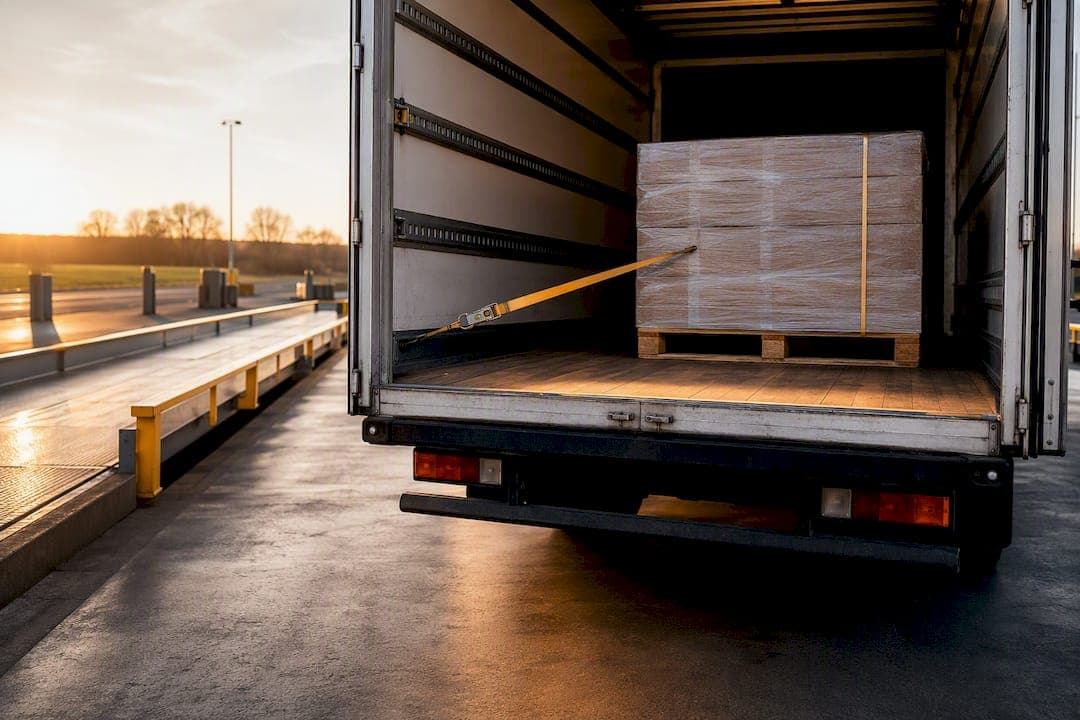
Most 7.5 tonne trucks in the UK carry a usable payload generally in the range of two to nearly three tonnes, translating to between six and ten standard pallets depending on length and stacking. That figure isn't fixed: it's what remains once you subtract kerb weight, driver, fuel and any fitted equipment from the 7,500 kg gross vehicle weight (GVW). Before you book or load, always check the individual vehicle's plate for its exact unladen weight.
TL;DR:
- The actual payload of most 7.5 tonne trucks ranges from 2,200 kg to 2,900 kg, depending on kerb weight, equipment, and load conditions.
- Internal load lengths typically range from five and a half to seven meters, with pallet stacking affected by internal height and door clearance constraints.
- Drivers need a Category C1 license to operate a 7.5 tonne truck legally, with additional requirements like Driver CPC and Operator's Licence for commercial use.
- Operators often underestimate dead weight from tail lifts, racking, fuel, and crew, which can significantly reduce the usable payload.
- Accurate load planning requires checking vehicle plates for kerb weight, calculating payload, and properly distributing weight over axles to avoid overloads or breaches.
Table of Contents
- Quick reference: payload, dimensions and cubic capacity by body type
- How do you calculate the usable payload of a 7.5 t truck?
- How many pallets fit in a 7.5 tonne truck?
- What licence do you need to drive a 7.5 tonne truck?
- What operational factors quietly eat into your payload?
- Pre-load checklist and two worked examples
- What operators get wrong most often about 7.5 t capacity
- Book a 7.5 tonne truck that matches your actual load
- Sources
Quick reference: payload, dimensions and cubic capacity by body type
A 7.5 t truck's usable payload sits between roughly 2,200 kg and 2,900 kg on most fleets, with manufacturer spec sheets for common chassis showing unladen weights in the 2,400 to 2,700 kg band. Internal load lengths generally run from about five and a half to seven metres, with widths around 2.2 to 2.5 m and heights between 2.0 and 2.3 m. A representative box truck listed by Rabbits Vehicle Hire shows a payload near 2,500 kg, a load length of 5.7 m, load height of 2.3 m and cubic capacity of roughly 33.9 m³.
Body type changes the numbers meaningfully:
- Box van: Best cubic capacity for volume-led loads; tail lift cuts payload slightly.
- Curtain-sider: Faster side loading for pallets and forklift access, similar payload to box.
- Dropside/flatbed: Lower dead weight from bodywork, often the highest usable payload for bulky or irregular loads.
These are planning ranges, not guarantees. Always cross-check the specific chassis and body combination you're hiring against its plate for exact figures.
How do you calculate the usable payload of a 7.5 t truck?
Payload isn't a published number you can take at face value. It's a calculation, and getting it wrong is how operators end up overloaded without realising it.
The formula is straightforward:
- Start with GVW (also called MAM, Maximum Authorised Mass) — fixed at 7,500 kg for this vehicle class.
- Subtract the kerb (unladen) weight, which is the vehicle's weight with fluids and standard equipment but no load, driver or fuel.
- Subtract driver and passenger weight (commonly estimated at 75 to 100 kg per person).
- Subtract fuel load if not already included in kerb weight figures.
- Subtract any fitted equipment (tail lift, racking, crane) not already counted in the manufacturer's payload allowance.
- The remainder is your genuine usable payload.
Statistic Callout: Manufacturer spec sheets for popular 7.5 t chassis, such as the Isuzu Forward N75.150, show kerb weights typically ranging from 2,400 to 2,700 kg, with a corresponding body and payload allowance around 2,400 to 2,500 kg once bodywork is fitted.
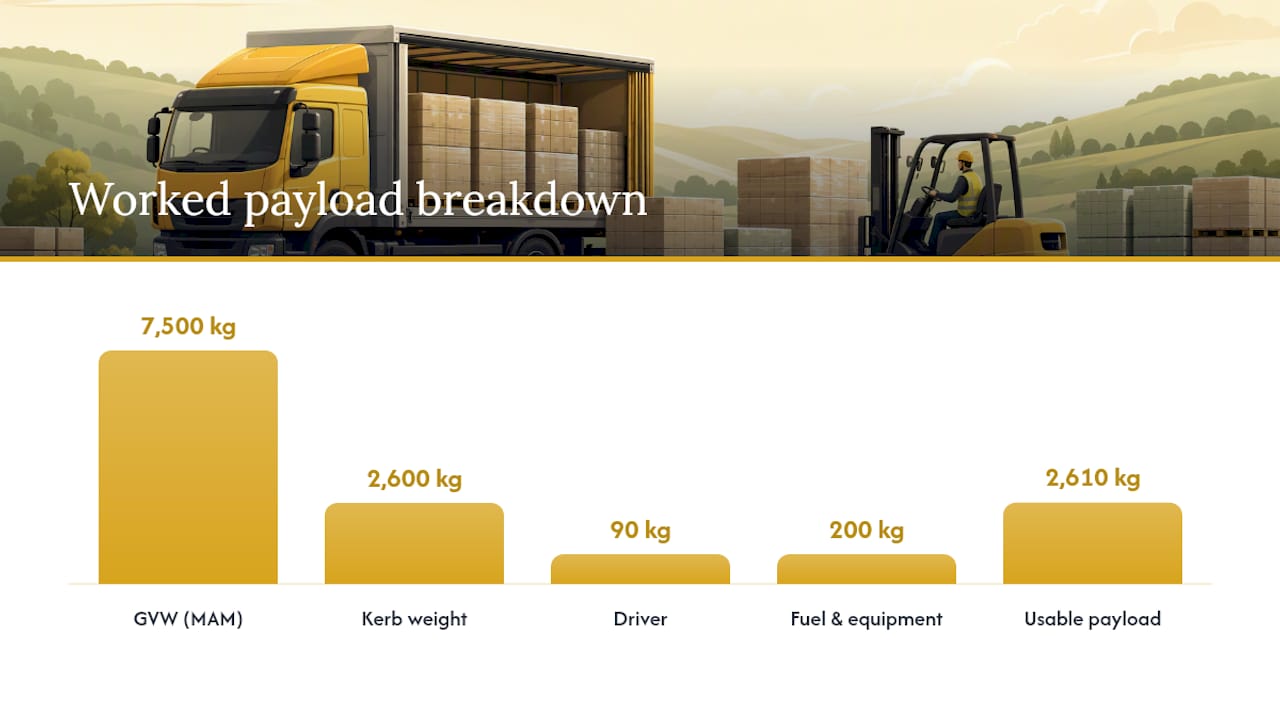
Worked example: GVW 7,500 kg, minus kerb weight 2,600 kg, minus driver 90 kg, minus fuel and equipment allowance 200 kg, leaves a usable payload of roughly 2,610 kg.
How many pallets fit in a 7.5 tonne truck?
Internal dimensions decide pallet count more reliably than payload alone, because volume runs out before weight does on most palletised jobs. A UK standard pallet measures 1.2 m by 1.0 m, and most 7.5 t bodies are built around multiples of that footprint.
- 5.6 m internal length: Typically 8 pallets in a single row, non-stacked.
- 6.5 m internal length: Usually 10 pallets single-stacked, sometimes 12 with tight packing.
- 7.0 m internal length: Up to 12 to 13 pallets depending on width and door clearance.
Double stacking depends far more on pallet strength and product fragility than on internal height. A 2.2 m internal height technically allows two stacked pallets of standard goods, but only if the base pallet and packaging can bear the weight without crushing, and only if total combined weight stays inside the payload limit calculated earlier.
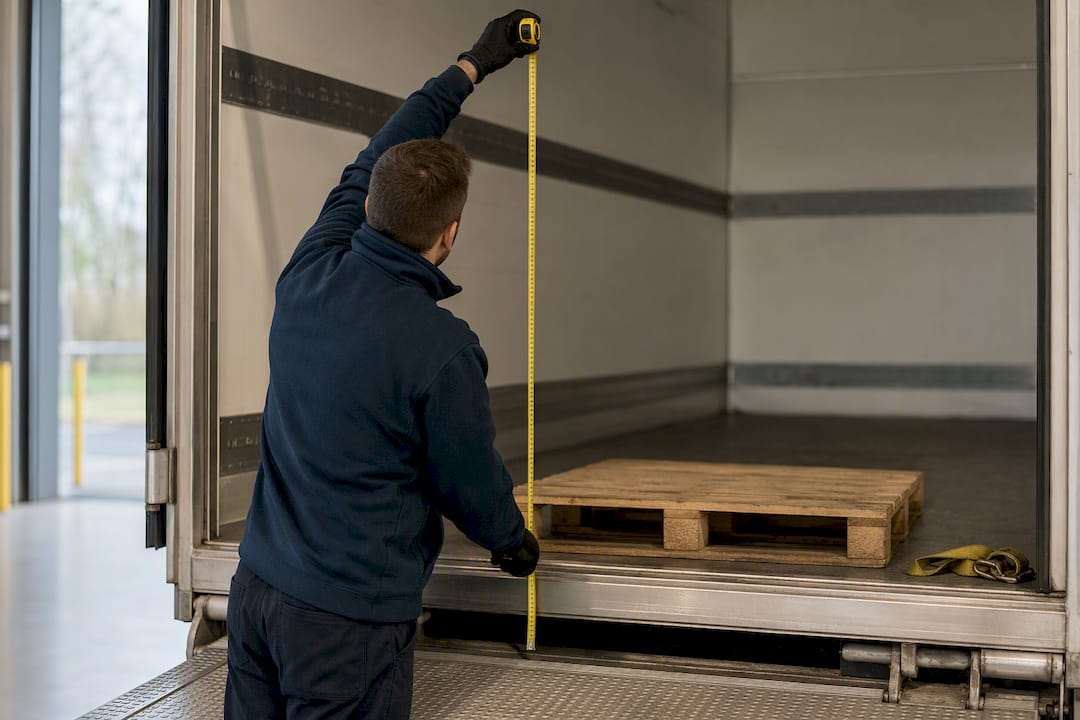
Pro Tip: Always measure the rear door aperture and tail lift platform clearance separately from the internal cargo dimensions. A body might have 2.3 m of load height inside but a tail lift or door frame that restricts anything taller than 2.1 m from actually getting in.
What licence do you need to drive a 7.5 tonne truck?
Anyone who passed their car driving test on or after 1 January 1997 needs a Category C1 entitlement to legally drive a 7.5 tonne vehicle. Drivers who passed before that date frequently hold grandfather rights that let them drive C1 vehicles without a separate test, though this varies by individual licence history and is worth confirming directly.
Beyond the licence category, commercial operators need to be aware of a few adjoining rules:
- Driver CPC (Certificate of Professional Competence) generally applies to those driving 7.5 t vehicles professionally, with periodic training requirements.
- An Operator's Licence is usually required when running 7.5 t vehicles commercially for hire or reward, separate from the driver's own licence.
- Always check the vehicle's plate for GVW and axle limits; the Road Vehicles (Construction and Use) Regulations 1986 sets the legal framework operators must respect on weight distribution.
What operational factors quietly eat into your payload?
The number on a spec sheet and the number you actually get to load are rarely the same thing, and the gap comes down to a handful of predictable culprits.
- Tail lifts, internal racking, cranes or winches all add dead weight that manufacturer payload allowances don't always fully account for.
- Fuel and crew weight fluctuate load by load; a full tank and two crew members can remove well over 250 kg from your available payload before a single pallet goes on.
- Axle distribution matters as much as total weight: placing heavy items too far forward or rearward risks breaching individual axle limits even when total payload is within bounds.
- Body choice should follow the goods: curtain-siders suit palletised retail stock needing forklift access, box vans suit weatherproof or secure loads, dropsides suit construction materials and irregular shapes.
Pro Tip: When in doubt about axle loading, put the heaviest single items directly over or just ahead of the rear axle, and keep lighter, bulkier goods towards the front. It's the simplest way to avoid an axle breach without needing a weighbridge every time.
Pre-load checklist and two worked examples
Run through this before every load, not just the first one on a new vehicle:
- Confirm the vehicle's actual kerb weight from its plate, not a generic spec sheet.
- Calculate usable payload using GVW minus kerb weight minus driver, fuel and fitted equipment.
- Count pallets against internal length and door clearance, not just cubic capacity.
- Check total load weight against the calculated payload, with margin for error.
- Distribute weight with heavier items over the rear axle.
- Secure the load and re-check straps or racking before departure.
Example A: Eight standard pallets at 220 kg each totals 1,760 kg, comfortably inside a 2,500 kg payload with room for packaging.
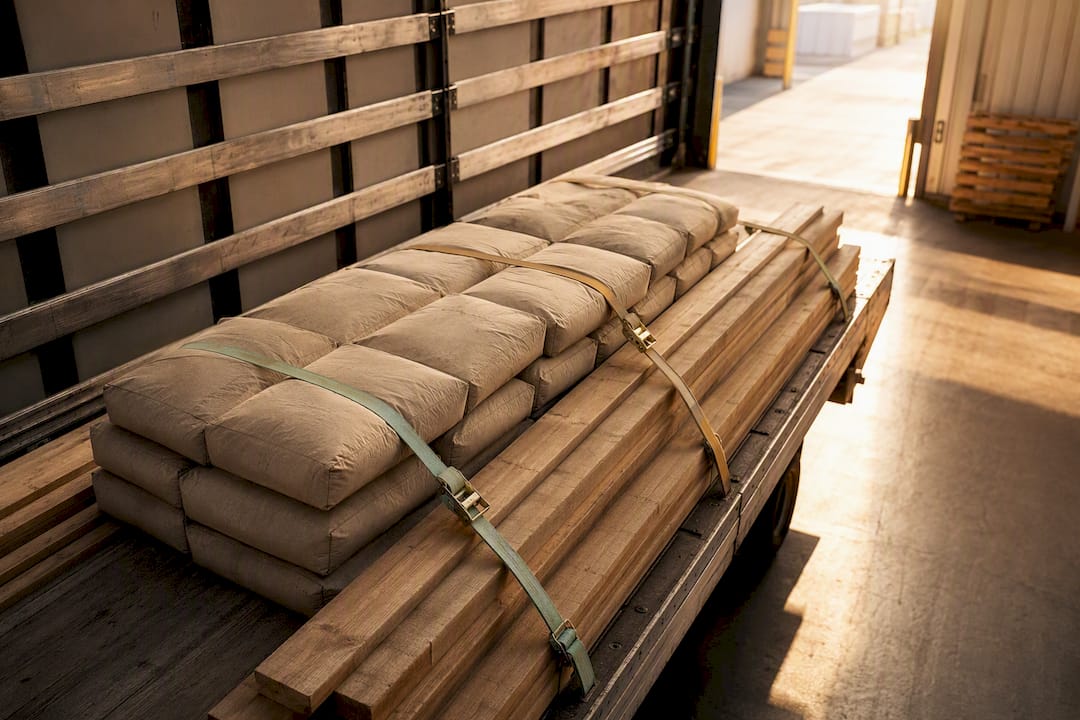
Example B: Mixed building materials such as bagged cement and timber need centring over the rear axle, with timber lengths secured flat to prevent shifting under braking.
What operators get wrong most often about 7.5 t capacity
Having spent years around fleet planning and dispatch decisions, the most common mistake isn't overloading on purpose. It's trusting a generic "payload" figure from a brochure without checking the specific vehicle's plate, especially once a tail lift or racking has been retrofitted after the original spec sheet was printed.
The second mistake is treating volume and weight as interchangeable. A van full of insulation board might be nowhere near its weight limit but completely out of usable space, while a van half full of steel fixings could be at its weight ceiling with room to spare. Some companies operate 7.5 tonne trucks as part of wider fleets running from motorcycles to artic lorries, serving industries such as construction, retail, manufacturing and healthcare; this range makes one thing consistently clear: the vehicle spec on paper and the vehicle spec in practice are only the same if someone checks.
— Ayomide
Book a 7.5 tonne truck that matches your actual load
Some courier companies run 7.5 tonne trucks as a direct, same day option for pallet distribution, dedicated loads and time-critical consignments, aiming to match their fleets to the payload and dimension realities operators actually face.
To get an accurate quote, tell us your approximate load weight, pallet count or dimensions, and your pickup and delivery windows. That's enough for us to match you with the right vehicle from our 7.5 tonne delivery service rather than a generic booking that might fall short on payload or space. If your consignment regularly pushes past 7.5 t capacity, our freight haulage options scale up without disrupting your delivery schedule. Get in touch through Sddbyaba to request a quote and lock in dispatch.