
What courier availability means in the UK logistics sector
Courier availability is the readiness and capacity of a courier to accept and fulfil delivery assignments when requested, verified through real-time status updates and location tracking. It is the defining difference between a courier and a standard delivery driver. Standard delivery typically operates on pre-planned routes with 3–5 business day windows, whereas courier services are bookable 24/7 and built around immediate response.
Understanding courier status goes beyond simply being "on shift." It covers:
- On-demand readiness: being able to accept urgent jobs at any time, not just within a fixed schedule
- Real-time location visibility: dispatch systems confirm availability using geolocation data and API validation that returns an
"available: true"flag before a job is allocated - Schedule types: full-time, part-time, and shift-based patterns all count as valid availability, provided the courier's status is actively maintained in the dispatch platform
- Earning potential: being available in the right place at the right time directly determines which jobs a courier can access, particularly high-value, on-demand assignments
Courier readiness, as the industry terms it, is not passive. It requires active management of your status, location, and working hours within whatever platform or dispatch system you operate through.

How do couriers submit and manage their availability?
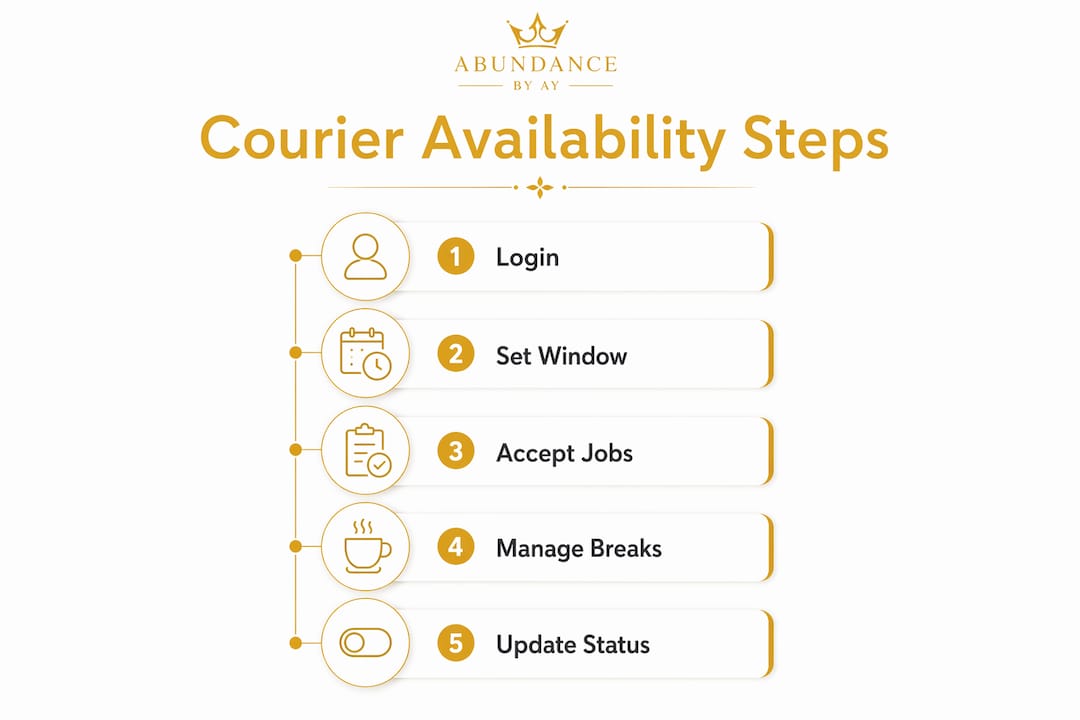
Most couriers declare and update their availability through a dedicated app or online portal connected to their dispatch network. The process is straightforward, but the details matter.
- Initial setup: couriers register their preferred working hours, vehicle type, and operating zone when onboarding to a platform
- Real-time status updates: before starting a shift, couriers toggle their status to "available" within the app, which signals the dispatch system to begin routing job alerts to them
- Location awareness: many platforms use geofencing, so your availability is automatically adjusted based on whether you are within a designated coverage zone
- Active status maintenance: dispatch systems often use a 10-minute validation window; if you do not interact with the app, your available status can expire and you will miss incoming job alerts
- Updating mid-shift: couriers can pause or end availability at any point, which removes them from the active job pool until they re-engage
Common challenges include app connectivity issues in low-signal areas, forgetting to reactivate status after a break, and mismatched zone settings that prevent job allocation despite being physically present in a coverage area.
Pro Tip: Set your availability window slightly wider than your intended working hours. Same-day and urgent delivery jobs often appear at the edges of shifts, and being available for those last-minute requests can significantly increase your weekly earnings.
How courier availability shapes delivery operations
Courier availability sits at the heart of same-day delivery performance. When couriers are active, visible, and correctly positioned, the entire logistics chain moves faster.
- Same-day and urgent fulfilment: real-time availability is what makes same-day dispatch possible. Without confirmed courier readiness, no platform can commit to an urgent delivery window
- Last-mile efficiency: last-mile delivery depends entirely on local couriers being available to respond quickly within specific zones; delays at this stage affect the entire customer experience
- Service coverage: gaps in courier availability create coverage black spots, meaning certain postcodes or time windows go unserved regardless of demand
- On-time delivery rates: operational metrics such as on-time rates and delivery window adherence are directly tied to how well courier availability is managed across a fleet
- Customer expectations: businesses and individuals booking same-day services expect a response within minutes. Courier services operating 24/7 with continuous tracking meet that expectation; those with patchy availability do not
The shift toward real-time availability management is now a baseline requirement in the UK courier market, not a differentiator. Platforms that cannot confirm courier readiness instantly lose bookings to those that can.
How Sddbyaba manages courier availability for reliable UK dispatch
Sddbyaba operates with courier availability as a core operational commitment, not an afterthought. The company's same-day dispatch model is built around confirmed vehicle readiness across a fleet that spans motorcycles, small vans, Luton vans, and vehicles up to 26-tonne artic lorries, giving clients genuine coverage regardless of consignment size.
- Flexible scheduling: Sddbyaba supports full-time, part-time, and shift-based courier arrangements, matched to client demand patterns across sectors including construction, medical, retail, and manufacturing
- Real-time dispatch notifications: couriers receive immediate job alerts through integrated dispatch systems, keeping response times tight and availability gaps minimal
- Nationwide coverage: the fleet's geographic spread means availability is maintained across the UK, not concentrated in a single region
- Professional communication: clients receive proactive updates on courier status and estimated arrival, reflecting the company's commitment to reliable logistics support
- Industry experience: serving time-critical sectors such as healthcare and engineering has shaped Sddbyaba's approach to availability management, where a missed window carries real operational consequences
Key takeaways
Courier availability is an active, technology-supported status that determines whether a courier can accept urgent jobs, and managing it correctly is the single most direct lever on both earnings and service reliability.
| Point | Details |
|---|---|
| Availability is active, not passive | Couriers must maintain their status in the dispatch app; it does not update itself. |
| 10-minute validation windows apply | App inactivity can expire your available status, causing missed job alerts. |
| Schedule type affects job access | Full-time, part-time, and shift patterns all work, provided status is correctly set. |
| Wider windows capture more earnings | Setting availability slightly beyond your core hours increases access to last-minute, high-value jobs. |
| Real-time availability drives same-day delivery | Without confirmed courier readiness, platforms cannot commit to urgent delivery windows. |