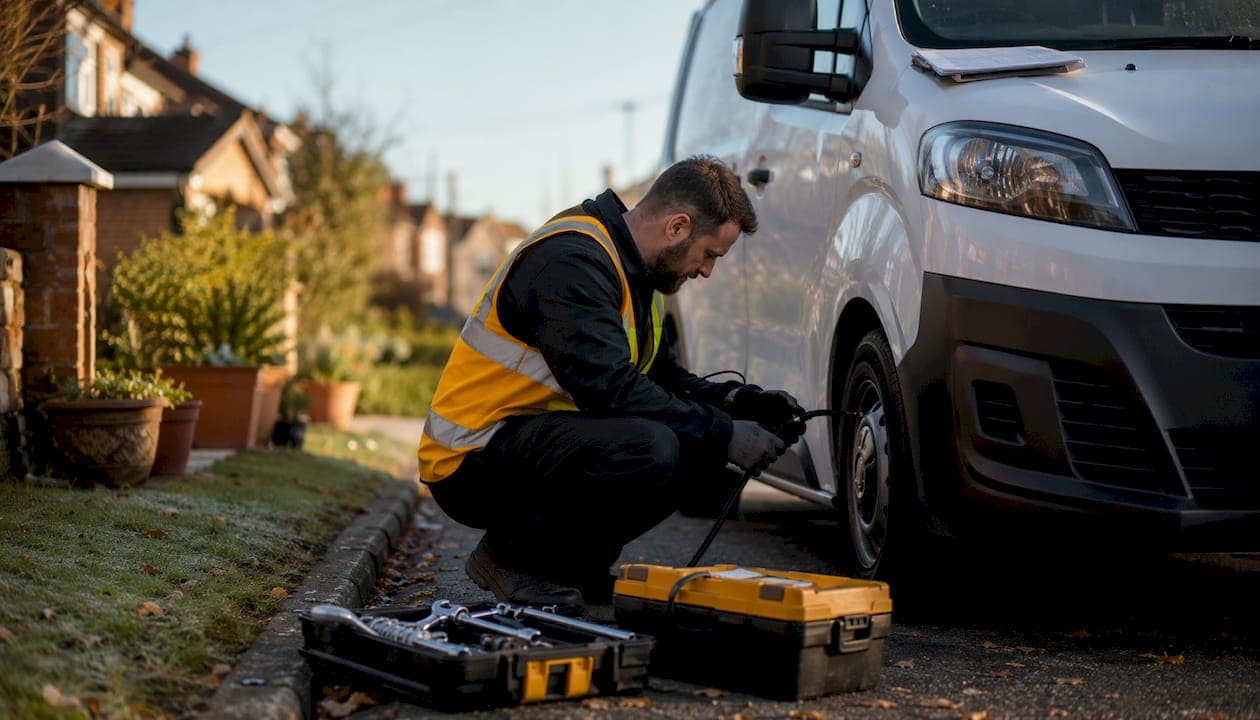
Keep courier vehicles safe and roadworthy by running a duty-cycle preventive maintenance programme that pairs daily driver checks with telematics-triggered depot servicing. This is the single most effective approach for UK courier and delivery fleets, and everything else in this guide builds on that foundation.
The immediate actions every driver and operator should take today:
- Complete a walkaround pre-trip check before every shift, covering tyres, lights, brakes, fluids, mirrors and load security.
- Open a per-vehicle document folder (physical or digital) and log every check, defect and repair with date, mileage and a brief description.
- Report any safety-critical defect immediately. Do not move the vehicle until the fault is assessed and either cleared or grounded.
Pro Tip: Clip a tyre pressure gauge to your vehicle keyring and check pressures cold, before the first run. Correct tyre pressure is one of the fastest, cheapest reliability wins available to any courier driver.
Preventive maintenance programmes reduce emergency repair and towing costs by 25–40% compared with reactive approaches, and mid-route breakdowns account for about a quarter of last-mile failures. The business case for getting this right is clear.
Table of Contents
- ## 1. What must drivers do before and after every shift?
- ## 2. What are the operator's obligations for planned maintenance?
- ## 3. What should you service, how often, and who should do it?
- ## 4. How do you build a planned maintenance system for your fleet?
- ## 5. Daily, weekly and periodic checks — what to inspect at each cadence
- ## 6. Key systems explained: tyres, brakes, oil, battery and lights
- ## 7. What records do you need to keep, and for how long?
- ## 8. How should defects be reported, repaired and handled on route?
- ## 9. Roadworthiness essentials: MOT, DVSA, tax and insurance
- ## 10. How do you monitor and respond to safety recalls?
- ## 11. How does driver training reduce maintenance costs and defects?
- ## 12. Cost-effective maintenance strategies and parts sourcing
- ## 13. How to prepare for a DVSA inspection or audit
- ## 14. Why duty-cycle maintenance outperforms calendar-only schedules
- ## 15. Environmental and emissions compliance for UK courier vehicles
- ## 16. Maintenance guidance by vehicle type: vans, motorcycles and e-bikes
- Key takeaways
- The case for starting small and building fast
- Authoritative sources and official UK guidance
## 1. What must drivers do before and after every shift?
Driver responsibility is the first line of defence in any maintenance programme. Before the vehicle moves, the driver must complete a Driver Vehicle Inspection Report (DVIR), a structured walkaround that records the condition of every safety-critical system. After the shift, a post-trip DVIR captures any deterioration that occurred during the run.
Core legal and practical responsibilities:
- Complete a pre-trip and post-trip DVIR every working day.
- Report defects immediately using the operator's prescribed method (app, paper form or digital portal).
- Secure loads correctly before departure and check restraints at each stop.
- Never drive a vehicle with a safety-critical defect that has not been assessed and cleared.
Daily checklist — complete in under five minutes:
- Tyres: Check tread depth visually and tap for obvious pressure loss. Use a gauge before the first run.
- Lights: Walk around and confirm all front, rear, brake and indicator lights function.
- Brakes: Apply firm pressure on the brake pedal before moving; note any sponginess or pull.
- Fluids: Check engine oil, coolant and screenwash levels at the reservoir.
- Mirrors and glass: Confirm mirrors are set, glass is clean and there are no cracks obscuring vision.
- Load security: Check that cargo is restrained, doors close fully and the load area is clear of loose items.
- Cab checks: Seatbelt function, horn, wipers and any warning lights on the dashboard.
Grading faults — a simple three-tier rule:
- Safe to continue: Minor cosmetic issue with no safety impact. Log it and monitor.
- Finish route then repair: Non-critical fault that does not affect roadworthiness. Complete the current run and book repair before the next shift.
- Ground the vehicle: Any fault affecting brakes, steering, tyres, lights or load security. The vehicle does not move until repaired and signed off.
Pro Tip: Use a smartphone app that timestamps photos automatically. A photo of a tyre tread or a cracked lens, tagged with date and mileage, is far more defensible in a DVSA audit than a handwritten note.
## 2. What are the operator's obligations for planned maintenance?
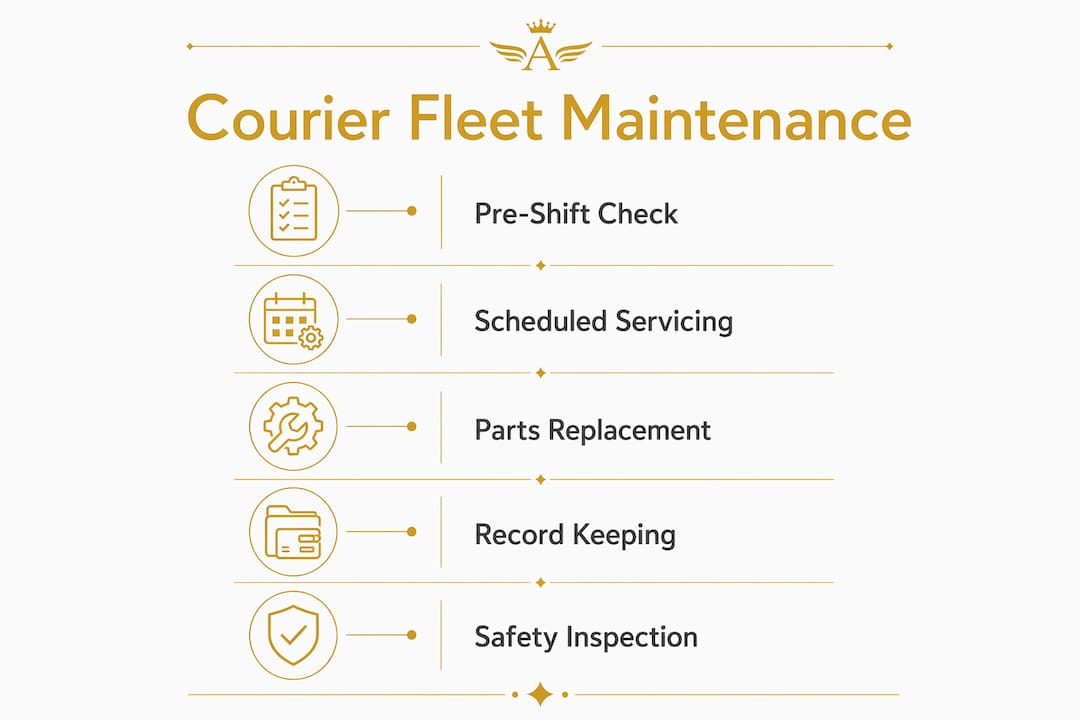
Operators bear ultimate responsibility for the roadworthiness of every vehicle in the fleet. Under UK goods vehicle operator guidance, operators holding an O-licence must have a documented planned maintenance (PM) system, retain inspection records and demonstrate that defects are repaired promptly. Even operators below the O-licence threshold carry a legal duty of care for every vehicle they put on the road.
Operator responsibilities at a glance:
- Retain DVIRs and inspection records for a minimum period aligned with DVSA expectations.
- Schedule and document all servicing, including who carried out the work and what was found.
- Ensure defects identified by drivers are actioned and the repair trail is documented.
- Maintain driver training records and evidence of briefings on vehicle checks.
Building a PM governance model:
| Element | What to define |
|---|---|
| Roles | Who books services, who signs off completed work, who reviews overdue items |
| Escalation | What triggers a vehicle ground, who authorises return to service |
| Parts provisioning | Minimum stock of consumables (oil, filters, bulbs, wiper blades) |
| Service capacity | Preferred garage slots pre-booked weekly or monthly |
| Compliance review | Monthly audit of overdue services and open defects |
Organised maintenance records are also a commercial asset. Well-kept service histories justify premium contract rates and are critical during vehicle acquisition or lease negotiations.
Pro Tip: Keep a single document folder per vehicle, labelled with the registration. Store digital copies in a cloud folder with the same naming convention. When a DVSA inspector arrives, you hand over one folder per vehicle, not a pile of loose paperwork.
## 3. What should you service, how often, and who should do it?
Courier vehicles work harder than private cars. Short urban trips, heavy stop-start duty and high annual mileage all compress the intervals at which components reach their wear limits. Following the manufacturer's calendar-based schedule alone is often insufficient for last-mile delivery work.
Key service tasks and who performs them:
- Engine oil and filter: Driver checks level daily; trained technician or authorised garage changes oil. For high-cycle delivery vans, industry guidance recommends changing oil every 5,000 miles rather than the longer intervals typical for private use.
- Brakes: Workshop inspection at every service; brake pad measurement at each oil change for urban fleets.
- Tyres: Driver checks pressure and tread daily; garage rotates and replaces as thresholds are reached.
- Suspension and steering: Authorised garage or trained technician at scheduled service intervals.
- Electrics and battery: Driver checks warning lights; technician performs load test quarterly.
- HVAC and cabin air filter: Often overlooked. Replace cabin filter per manufacturer schedule or annually, whichever comes first.
- Load restraints and anchorage points: Driver checks before every run; workshop inspects condition at service.
- Refrigeration units (if fitted): Specialist engineer per manufacturer schedule.
Frequency guidance for courier use:
Manufacturer schedules are the legal baseline, but high-mileage delivery vans typically need more aggressive intervals. Fluid checks every 10,000 miles and major services at shorter mileages than a private car equivalent are standard practice in well-run fleets. Where duty cycle demands a compressed interval, document the justification in writing so the decision is auditable.
Warranty interaction matters. Some manufacturers require dealer-performed services to maintain warranty cover. Check your vehicle's warranty terms before switching to an independent garage, particularly in the first two years of ownership.
Pro Tip: Combine an oil change with a brake inspection and tyre rotation in a single bay visit. You reduce vehicle downtime, the technician has the wheels off anyway, and you avoid booking three separate appointments.
## 4. How do you build a planned maintenance system for your fleet?
A practical PM system has four components working together: daily driver DVIRs, telematics-triggered alerts, scheduled bay time and parts provisioning. The goal is to catch degradation in the depot window, not on the roadside.
Core components:
- Daily DVIRs: The driver's inspection feeds the system. Digital DVIRs with timestamped photos auto-generate work orders and create an auditable record without manual data entry by the workshop.
- Telematics triggers: Set alerts on engine hours, stop counts and fault codes, not just mileage. Urban last-mile vans accumulate brake and oil wear far faster than mileage alone suggests.
- Scheduled bay time: Pre-book garage slots weekly or monthly so vehicles have a guaranteed service window.
- Parts and lead-time planning: Hold a minimum stock of fast-moving consumables and know the lead time for brake pads, filters and bulbs for each vehicle type in the fleet.
Example PM schedule tiers:
| Tier | Trigger | Focus areas |
|---|---|---|
| Pre-trip (daily) | Every shift | Tyres, lights, brakes feel, fluids, load security |
| Short interval | Every 5,000 miles or 250 engine hours | Oil and filter, brake pad measurement, tyre rotation |
| Quarterly | 3 months | Suspension, battery load test, alignment, brake fluid |
| Major milestone | annual | Full brake overhaul, coolant flush, belts, full electrical check |
For fleets of more than five vehicles, a Computerised Maintenance Management System (CMMS) pays back quickly. CMMS payback for high-mileage fleets is typically 2–4 months because it prevents expensive premature failures and enforces compliance automatically.
Pro Tip: Start with a spreadsheet if budget is tight. One row per vehicle, one column per service task, colour-coded by status. It is not elegant, but it is auditable and it works until you are ready to invest in a CMMS.
## 5. Daily, weekly and periodic checks — what to inspect at each cadence
The daily walkaround takes under five minutes when drivers know the sequence. Weekly and monthly checks go deeper and catch the slower-developing faults that daily checks miss.
Daily pre-trip sequence (allow 5 minutes):
- Start at the front nearside tyre and work clockwise around the vehicle.
- At each tyre: visual tread check, pressure tap, look for cuts or bulges.
- Check all exterior lights by walking around with hazards on, then brake lights with a wall or colleague.
- Open the bonnet: oil level, coolant level, screenwash.
- Sit in the cab: brake pedal pressure, warning lights, horn, wipers, mirrors.
- Check the load area: restraints secure, doors close fully.
Weekly checks (driver or supervisor):
- Record tyre pressures with a gauge and compare against the previous week's reading.
- Check battery terminals for corrosion.
- Inspect wiper blades for streaking or splitting.
- Confirm all fluid levels are within range.
Monthly and quarterly workshop checks:
- Brake pad thickness measurement (record in millimetres).
- Wheel alignment check.
- Suspension component inspection for wear or play.
- Battery load test under full electrical demand.
- Cabin air filter condition.
Pass/fail actions:
- Pass: Log the result and the date.
- Monitor: Record the measurement and set a re-check date (e.g., brake pads at 4mm, re-check in 2,000 miles).
- Ground: Brake pads at or below 2mm, tyre tread at or below 1.6mm, or any fluid leak. Vehicle off road until repaired.
Pro Tip: Schedule a supervisor spot check on a random vehicle each week. Drivers who know checks are verified complete them more carefully. Defect trends drop noticeably within a month.
## 6. Key systems explained: tyres, brakes, oil, battery and lights
Understanding what to look for in each major system lets drivers and workshop staff catch degradation before it becomes a failure.

Tyres
The legal minimum tread depth in the UK is 1.6mm across the central three-quarters of the tyre. For courier work, replace at 3mm. Urban stop-start duty wears tyres unevenly; check the inner shoulder as well as the visible outer edge. Run tyres at the manufacturer's recommended pressure for a loaded vehicle, not the unladen figure, on delivery days.
Brakes
Urban last-mile use degrades brake pads significantly faster than typical private use. Symptoms of worn pads include a grinding noise, increased stopping distance and a brake pedal that travels further than usual before resistance builds. Replace pads before they reach 2mm. Brake fluid absorbs moisture over time and is a commonly neglected item; change it per the manufacturer's schedule or every two years, whichever comes first.
Engine oil and cooling
Short trips that never reach full operating temperature cause oil to degrade faster due to moisture and contamination. Check oil level daily and look for a milky appearance (coolant contamination) or a gritty texture (metal particles). Coolant level should be checked weekly; overheating in stop-start traffic is a real risk when coolant is low or the system has air in it.
Battery and electrics
Cold weather reduces battery capacity significantly. Check terminal connections for white corrosion monthly and clean with a wire brush if found. A battery that struggles to start the vehicle on a cold morning but seems fine later in the day is approaching end of life. For electric and hybrid vans, follow the manufacturer's software update schedule as well as the mechanical checks; battery management systems require periodic calibration.
Lights and visibility
Walk around the vehicle with all lights active before every shift. Lens condition matters as much as bulb function; a cracked or yellowed lens reduces effective light output. Replace wiper blades at the first sign of streaking, particularly before the autumn and winter months.
Safety thresholds reference:
| Component | Legal minimum / action threshold | Recommended replacement point |
|---|---|---|
| Tyre tread depth | 1.6mm (legal minimum) | 3mm for courier use |
| Brake pad thickness | Replace before 2mm | 3mm for high-cycle urban fleets |
| Engine oil change | Per manufacturer schedule | Every 5,000 miles for delivery vans |
| Brake fluid | Per manufacturer or 2 years | At every major service |
Pro Tip: Brake fluid and cabin air filters are the two most commonly neglected items in courier fleets. Add both to your quarterly workshop checklist explicitly, not as a general note but as named line items with a sign-off field.
## 7. What records do you need to keep, and for how long?
Good record keeping is not just a compliance requirement; it is a business asset. Organised, auditable records support DVSA inspections, justify premium contract rates and protect operators if a vehicle is involved in an incident.
Essential records to maintain:
- DVIRs: Pre-trip and post-trip inspection reports for every shift.
- Service invoices: Every oil change, brake job, tyre replacement and repair, with date, mileage and technician details.
- MOT certificates: Current certificate plus the previous one.
- Insurance documents: Current policy schedule, accessible in the vehicle.
- Defect reports and repair trails: The original defect report, the work order and the sign-off confirming the repair is complete.
- Driver training records: Dates, content and attendees for all maintenance-related briefings.
- O-licence related records (where applicable): Inspection frequency agreements, nominated transport manager details.
Suggested retention periods:
| Document type | Recommended retention |
|---|---|
| Daily DVIRs | 15 months minimum |
| Service invoices | Life of vehicle plus 2 years |
| MOT certificates | Keep all certificates for the vehicle's life |
| Defect reports and repair trails | 15 months minimum |
| Driver training records | Duration of employment plus 3 years |
Digital folder structure: Name each folder by registration number. Within it, create subfolders: DVIRs, Services, MOT, Insurance, Defects. Every file name should include the vehicle registration, date (YYYY-MM-DD format) and a brief descriptor (e.g., AB12CDE_2026-03-15_OilChange).
Pro Tip: Add four metadata fields to every digital record: vehicle registration, date, mileage and defect code (or "nil defect"). These four fields make any record searchable in seconds and turn a folder of files into a queryable audit trail.
## 8. How should defects be reported, repaired and handled on route?
A defect that is reported but not actioned is as dangerous as one that was never reported. The repair workflow must move a defect from driver report to closed work order without gaps.
Defect reporting workflow:
- Driver identifies fault during DVIR or on route.
- Driver logs the defect with mandatory fields: vehicle registration, date, time, mileage, description and photo.
- System (or supervisor) classifies the fault: safety-critical or non-critical.
- Work order is generated and assigned to a technician or garage.
- Repair is completed and signed off by a qualified person.
- Vehicle is returned to service with the defect record closed and linked to the repair invoice.
Repair triage and SLAs:
- Safety-critical (brakes, steering, tyres, lights): Vehicle grounded immediately. Repair before next shift.
- Non-critical (minor fluid top-up, cosmetic damage): Repair within 48 hours. Vehicle may continue with supervisor sign-off.
On-route breakdown checklist:
- Pull off the road safely and activate hazard lights.
- Place warning triangle if safe to do so and conditions require it.
- Contact the operator or dispatcher immediately. Clear customer communication during a breakdown protects the relationship; see courier communication best practices for guidance on keeping clients informed.
- Call the breakdown recovery provider from the preferred supplier list.
- Complete an incident report before the end of the shift.
Pro Tip: Keep a laminated 'breakdown card' in every vehicle with the recovery provider number, the operator's emergency contact and the three steps to take in the first two minutes. Drivers under stress forget obvious steps; the card removes that risk.
## 9. Roadworthiness essentials: MOT, DVSA, tax and insurance
Every courier vehicle on UK roads must meet a set of non-negotiable legal requirements. Missing any one of them exposes the driver and operator to prohibition notices, fines and potential prosecution.
Legal essentials:
- MOT: Vehicles over three years old require a valid MOT certificate. Commercial vehicles used for hire or reward may have different testing schedules; check the DVSA guidance for your vehicle class.
- Vehicle tax: Must be current. DVLA checks are automated and roadside enforcement is immediate.
- Insurance: A valid commercial vehicle insurance policy covering courier use is mandatory. Standard private car insurance does not cover delivery work.
- Operator licence: Required for goods vehicles over 3.5 tonnes gross vehicle weight used commercially. O-licence holders must meet DVSA maintenance standards.
Common roadside fail reasons (and how daily checks catch them):
- Defective lights: caught by the daily walkaround.
- Tyre tread below 1.6mm: caught by daily tread check.
- Insecure load: caught by pre-trip load security check.
- Brake defects: caught by brake pedal check and periodic workshop inspection.
What inspectors typically ask for: Current MOT certificate, insurance schedule, vehicle tax confirmation, service records and, for O-licence holders, the maintenance inspection schedule and recent DVIRs.
Pro Tip: Run a self-audit on each vehicle every quarter using the same checklist a DVSA inspector would use. Walk around the vehicle, check the paperwork folder and note anything that would attract attention. Fix it before an inspector finds it.
## 10. How do you monitor and respond to safety recalls?
Safety recalls are time-sensitive. A recall notice that sits unread in an inbox while the vehicle continues operating creates both a safety risk and a legal liability.
Where recall notices arrive:
- Manufacturer correspondence to the registered keeper.
- Dealer bulletins sent to the servicing garage.
- DVSA vehicle recall alerts (available via GOV.UK).
- Industry association communications.
Action tiers for recall management:
- Immediate ground: Recalls affecting brakes, steering or fuel systems. Vehicle off road until the manufacturer's repair is completed.
- Repair within 7 days: Recalls affecting secondary safety systems or emissions compliance. Continue operating with a documented risk assessment and a confirmed repair booking.
- Monitored with mitigation: Minor recalls where the manufacturer provides an interim measure. Operate with the mitigation in place and book the permanent fix at the next scheduled service.
Practical steps:
- Assign one person in the operation to receive and log all recall notices.
- Record receipt date, recall reference, affected vehicles and action taken.
- Confirm repair completion with a dealer job card and file it in the vehicle's document folder.
- Inform affected customers of any service disruption caused by a recall-related ground.
Pro Tip: Register every vehicle on the DVSA's recall checker and set a calendar reminder to check it monthly. Recalls are not always communicated directly to the operator, particularly for second-hand vehicles where the registered keeper details may not have been updated.
## 11. How does driver training reduce maintenance costs and defects?
The driver is the vehicle's first line of protection. Poor driving habits accelerate brake and tyre wear, increase fuel consumption and generate defects that a better-trained driver would have avoided entirely.
Core training modules:
- Effective pre-trip checks: Practical walkthrough of the daily DVIR sequence, including what to look for and how to grade faults.
- Safe vehicle handling: Smooth braking and acceleration to reduce brake and tyre wear; anticipation techniques for stop-start urban routes.
- Load security: Correct use of straps, bars and nets; weight distribution principles.
- Basic on-route troubleshooting: What to do if a warning light appears, a tyre feels soft or the vehicle pulls to one side.
Running refresher sessions:
Short 20-minute practical sessions work better than annual classroom days. Walk drivers around a vehicle, point out a worn tyre or a corroded terminal, and ask them to find the fault. Measure impact by tracking defect report trends before and after each session. A drop in missed defects is a direct indicator of training effectiveness.
Incentive design matters. Reward accurate DVIR completion, not zero defects. A driver who reports every minor fault is doing exactly what the system needs. A driver who reports nothing is either operating a perfect vehicle or suppressing defects to avoid scrutiny. The data will tell you which.
Pro Tip: Create a short monthly 'defect of the month' briefing. Share one real defect from the fleet (anonymised), explain what it was, how it was caught and what would have happened if it had been missed. Real examples land far better than generic safety talks.
## 12. Cost-effective maintenance strategies and parts sourcing
The choice between in-house, outsourced and hybrid maintenance affects cost, quality and operational flexibility. There is no single right answer; the best model depends on fleet size, vehicle mix and the operator's technical capacity.
Comparing maintenance models:
| Model | Best for | Trade-offs |
|---|---|---|
| In-house | Fleets of 10+ vehicles with workshop space | High fixed cost; requires qualified technicians |
| Outsourced | Small fleets (1–5 vehicles) | Higher per-job cost; less control over scheduling |
| Hybrid | Mid-size fleets (5–15 vehicles) | Balances cost and control; requires supplier management |
Parts sourcing: OEM versus aftermarket:
OEM (original equipment manufacturer) parts carry the manufacturer's warranty and are the safest choice for warranty-period vehicles. For older vehicles, quality aftermarket parts from reputable suppliers offer comparable performance at lower cost. Avoid unbranded parts for safety-critical components: brakes, steering and suspension. The cost saving is rarely worth the risk.
Reactive repairs cost significantly more than planned replacements. Delaying a brake pad change until the pad destroys the rotor and caliper multiplies the repair bill several times over, and adds towing and SLA penalty costs on top. The maths consistently favour preventive replacement.
For practical van operator cost-saving approaches, van operator cost tips from the moving and logistics sector offer transferable guidance on procurement and scheduling.
Pro Tip: Negotiate a parts agreement with your preferred supplier at the start of the year. Commit to a volume estimate in exchange for a fixed price on your top ten consumables. It removes price volatility and guarantees availability during peak periods.
## 13. How to prepare for a DVSA inspection or audit
DVSA roadside checks and operator compliance inspections follow a consistent pattern. Knowing what inspectors look for lets you prepare rather than react.
What inspectors check on commercial courier vehicles:
- Tyre condition and tread depth.
- Brake performance and pad condition.
- Lights, reflectors and indicators.
- Load security and restraint systems.
- Windscreen condition and wiper function.
- Driver documentation: licence, hours records where applicable.
- Vehicle documentation: MOT, insurance, tax.
- For O-licence holders: maintenance records, DVIR retention and inspection frequency compliance.
Pre-inspection checklist:
- Confirm MOT certificate is current and in the vehicle folder.
- Confirm insurance schedule is accessible.
- Check all lights function and replace any failed bulbs.
- Verify tyre tread depth on all wheels.
- Confirm brake pad measurements are recorded and within limits.
- Ensure the last three months of DVIRs are filed and accessible.
- Check that all open defects have a closed repair trail.
Handling an enforcement finding:
If an inspector issues a prohibition notice, accept it, note the specific reason and arrange repair before the vehicle returns to service. Do not argue at the roadside. Request a copy of the inspection report and use it to update your PM system so the same fault does not recur.
## 14. Why duty-cycle maintenance outperforms calendar-only schedules
Calendar-based servicing assumes that time and mileage are the primary drivers of wear. For urban last-mile couriers, they are not. Stop counts, brake events and engine hours are far better predictors of component condition.

The evidence:
Urban delivery vans suffer wear that mileage alone does not capture. According to Oxmaint, brake pads degrade 60–80% faster in urban last-mile use, and engine oil degrades roughly 40% faster on short trips that never reach full operating temperature. A van completing 80 stops per day in a city centre accumulates brake wear equivalent to that of a much higher mileage vehicle on a motorway run.
Translating duty-cycle data into service intervals:
- Identify the primary wear drivers for your route type (stop count for urban, engine hours for mixed, mileage for motorway-heavy runs).
- Set trigger thresholds for each consumable: for example, oil change at 250 engine hours or 5,000 miles, whichever comes first.
- Configure telematics alerts or manual log triggers to fire at each threshold.
- Review trigger accuracy after three months and adjust based on actual component condition at service.
Example duty-cycle interval calculation:
| Component | Calendar trigger | Duty-cycle trigger | Recommended for urban courier |
|---|---|---|---|
| Engine oil | 12 months | 250 engine hours | Duty-cycle trigger |
| Brake pads | 12 months | — | Duty-cycle trigger |
| Tyre rotation | 10,000 miles | — | Duty-cycle trigger |
Pro Tip: If you do not yet have telematics, start with a manual stop-count log. Ask drivers to record their stop count at the end of each shift. After four weeks you will have enough data to set meaningful thresholds for your specific routes.
## 15. Environmental and emissions compliance for UK courier vehicles
UK emissions regulations directly affect which vehicles can operate in certain areas and what maintenance is required to keep them compliant.
Clean Air Zones (CAZs) and ULEZ:
London's Ultra Low Emission Zone (ULEZ) and an expanding network of Clean Air Zones across UK cities set minimum emissions standards for vehicles entering those areas. Vans that do not meet the relevant Euro standard face daily charges. Keeping emissions-related components in good condition, including the diesel particulate filter (DPF), exhaust gas recirculation (EGR) valve and catalytic converter, is both a maintenance and a compliance requirement.
DPF maintenance:
A blocked DPF is one of the most common and costly emissions-related failures in delivery vans. Short urban trips at low speed prevent the DPF from reaching the temperature needed for passive regeneration. Operators should schedule periodic motorway runs or forced regeneration cycles to clear accumulated soot. Never ignore a DPF warning light; a blocked filter can cause engine damage and will fail an MOT emissions test.
Euro standard compliance:
Check the Euro emissions standard for every vehicle in the fleet against the CAZ requirements for the areas you operate in. This information is on the vehicle's V5C logbook. If a vehicle does not meet the local standard, factor the daily charge into your operating cost or plan a replacement timeline.
Electric and hybrid vans:
Electric vans have no tailpipe emissions and are exempt from most CAZ charges, but they require specific maintenance: battery health monitoring, software updates and tyre management (EV vans are heavier, which accelerates tyre wear). Hybrid vans must meet the emissions standard of their combustion engine when operating in petrol or diesel mode.
## 16. Maintenance guidance by vehicle type: vans, motorcycles and e-bikes
Different vehicle types in a courier fleet have different maintenance profiles. A one-size-fits-all PM schedule does not work across a mixed fleet.
Vans (small, medium and large)
Vans are the workhorse of most courier fleets. The maintenance priorities are oil, brakes, tyres and load restraints, with frequency compressed for urban high-cycle use as described throughout this guide. Luton vans and long-wheelbase variants add tail-lift maintenance to the schedule; tail-lift hydraulic seals and safety locks require periodic inspection by a competent person. For small van operations, daily checks and compressed oil intervals are the highest-impact habits.
Motorcycles
Motorcycle couriers face different wear patterns. Chain tension and lubrication, tyre condition (including the rear tyre, which wears faster under acceleration), brake pad thickness and fork seal condition are the priority checks. Motorcycles used in urban courier work accumulate wear quickly; chain and sprocket replacement intervals are shorter than manufacturer schedules suggest for leisure use. Riders should check tyre pressure before every shift, as motorcycle tyre pressure has a more immediate effect on handling than it does on a van.
E-bikes and cargo bikes
E-bikes used for last-mile delivery require attention to the battery management system, motor connections, brake pads (hydraulic disc brakes wear faster under load), tyre condition and cargo frame integrity. Battery range degrades over charge cycles; monitor range per charge and replace the battery pack when range drops below a safe operational threshold for the route. Cargo frame welds and attachment points should be inspected monthly for stress cracking, particularly on heavily loaded routes.
Heavier vehicles (7.5 tonne and above)
Larger vehicles operated by Sddbyaba, including 7.5 tonne and commercial logistics vehicles, require additional attention to air brake systems, fifth-wheel coupling condition (for artics), tachograph calibration and annual safety inspections under DVSA requirements. O-licence obligations apply, and maintenance records must meet the higher standard expected for commercial goods vehicles.
Key takeaways
Courier vehicle reliability depends on combining daily driver checks with duty-cycle-triggered servicing, documented defect trails and DVSA-compliant records kept per vehicle.
| Point | Details |
|---|---|
| Daily DVIRs are non-negotiable | Complete a pre-trip and post-trip inspection every shift and log defects with photos and mileage. |
| Duty-cycle triggers beat calendar schedules | Set oil and brake service intervals on engine hours and stop counts, not just mileage, for urban fleets. |
| Reactive repairs cost far more | Preventive maintenance reduces emergency repair and towing costs compared with reactive approaches. |
| Records are a business asset | Organised service histories support DVSA audits, justify premium rates and protect operators in disputes. |
| Vehicle type changes the maintenance profile | Motorcycles, e-bikes and heavy goods vehicles each require specific checks beyond the standard van schedule. |
The case for starting small and building fast
The most common mistake operators make with maintenance programmes is waiting until the system is perfect before starting. A spreadsheet with one row per vehicle and five columns, completed every week, beats a sophisticated CMMS that nobody uses.
The operators who achieve the best uptime are not necessarily those with the largest budgets. They are the ones who made daily checks a non-negotiable habit, grounded vehicles without hesitation when defects were found and built a paper trail that could survive a DVSA inspection on any given morning.
Duty-cycle maintenance is the single biggest upgrade available to most urban courier fleets right now. The evidence is clear: Oxmaint reports brake pads wear 60–80% faster in stop-start city use, and oil degrades roughly 40% faster on short trips. Calendar-only schedules miss this entirely. Switching to stop-count and engine-hour triggers, even using a manual log, closes that gap within weeks.
The other underrated truth is that driver behaviour is a maintenance variable. A driver who brakes smoothly and reports every minor fault is extending the life of every component on the vehicle. Training and incentive design are maintenance investments, not HR activities.
For operators considering whether to outsource part of their fleet capacity during peak periods or while vehicles are off road for service, same-day courier services and dedicated courier solutions offer a practical way to maintain delivery commitments without running compromised vehicles.

Authoritative sources and official UK guidance
These are the primary sources operators and drivers should consult alongside this guide.
-
DVSA — Driver and Vehicle Standards Agency: The primary authority on vehicle roadworthiness, MOT standards, operator compliance and enforcement. Check here for current inspection standards, prohibition notice guidance and operator licence requirements.
-
GOV.UK — Being a goods vehicle operator: maintaining your vehicles: The official guidance on operator obligations for goods vehicle maintenance, inspection frequency and record keeping. Essential reading for any O-licence holder.
-
Manufacturer service schedules: Your vehicle's owner's manual and the manufacturer's published service schedule are the legal baseline for maintenance intervals. Keep a copy in the vehicle document folder and refer to it when setting PM triggers.
-
TyreSafe: The UK's leading tyre safety organisation publishes guidance on tyre tread depth standards and pressure management. Use their resources to brief drivers on tyre safety thresholds.
-
Industry preventive maintenance templates: Organisations such as the Freight Transport Association (now Logistics UK) publish PM template documents for commercial vehicle operators. These provide a practical starting point for building a documented maintenance system aligned with DVSA expectations.