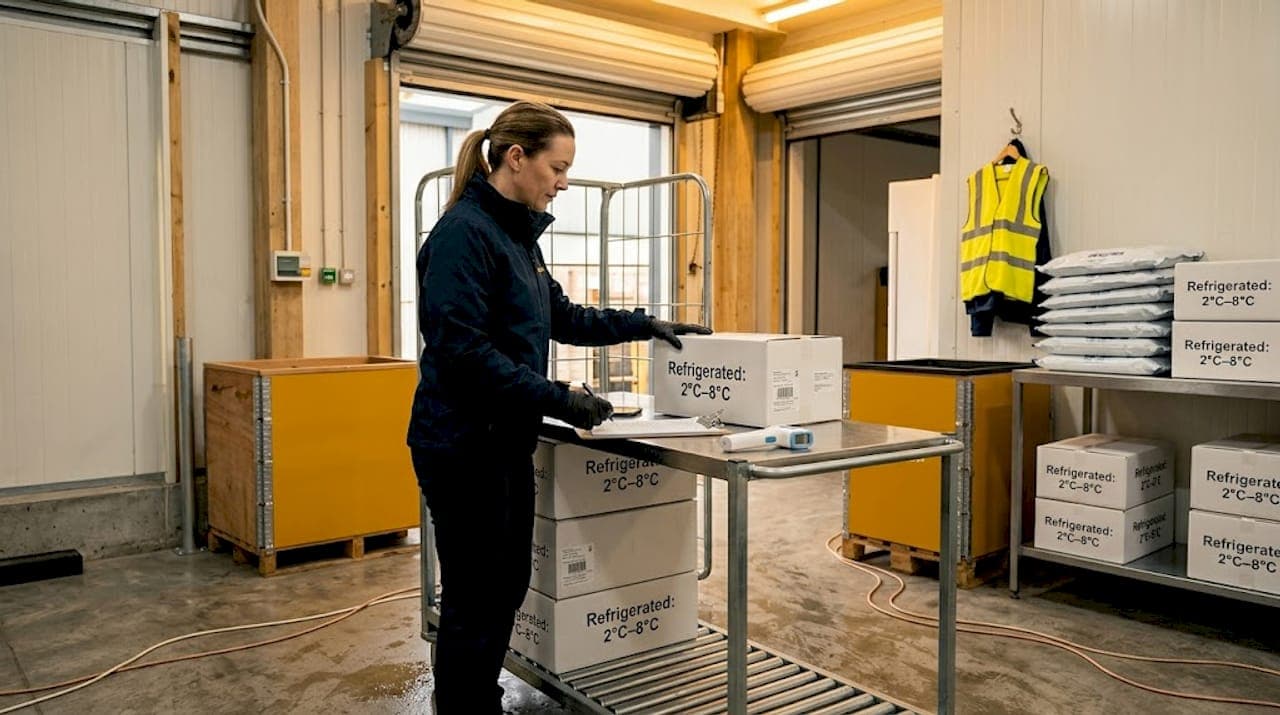
When a pharmaceutical shipment needs to reach a hospital by morning, or a food producer's refrigerated stock must cross the country before spoilage sets in, the margin for error is zero. Knowing how to handle urgent temperature-sensitive delivery correctly is not a nice-to-have skill. It is the difference between a consignment arriving in perfect condition and a costly write-off. This guide covers every stage of the process, from understanding your product's cold chain requirements through to post-delivery verification, so you can move perishable goods quickly without compromising their integrity.
Table of Contents
- Key takeaways
- Understanding temperature-sensitive goods
- Packaging and preparation for urgent shipments
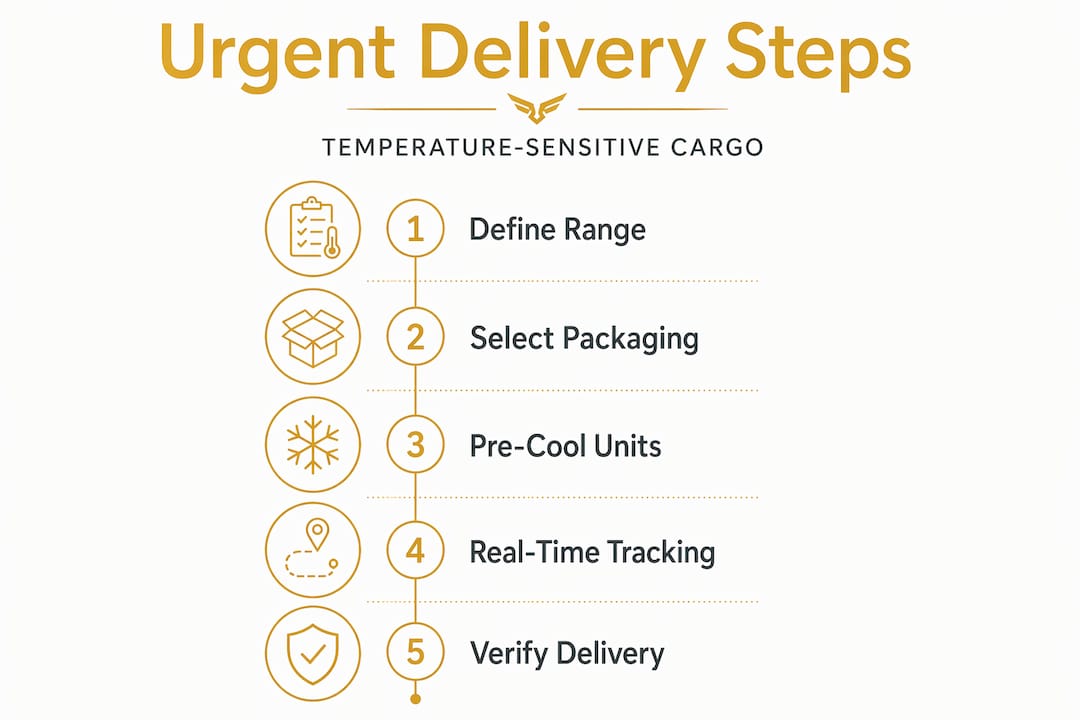
- Executing the urgent delivery: step by step
- Verification and post-delivery steps
- Common mistakes in urgent temperature delivery
- My perspective on urgent temperature logistics
- How Sddbyaba supports urgent refrigerated deliveries
- FAQ
Key takeaways
| Point | Details |
|---|---|
| Define temperature requirements early | Know your exact temperature range and transit duration before selecting packaging or booking a carrier. |
| Match packaging to the route | Lane realism means aligning insulation, coolant, and transit mode to real-world route conditions. |
| Use real-time monitoring | IoT tracking and temperature alerts allow immediate intervention during urgent transit. |
| Keep packout designs simple | Complicated packaging increases handler error; repeatable designs improve shipment reliability. |
| Document every handoff | Authorised sign-offs at each transfer point protect chain of custody and regulatory compliance. |
Understanding temperature-sensitive goods
Not all perishable goods share the same requirements, and treating them as if they do is one of the most common and costly mistakes in cold chain logistics. Temperature-sensitive goods broadly fall into several categories, each with distinct handling needs.
Pharmaceuticals and biologics typically require storage between 2°C and 8°C. Vaccines, insulin, and blood products will degrade rapidly outside this range. Fresh food and produce may need anywhere from 0°C to 8°C depending on the product. Frozen goods such as seafood, meat, and certain laboratory samples demand temperatures at or below -18°C. Controlled room temperature products, including some cosmetics and chemical compounds, must stay between 15°C and 25°C throughout transit.
The cold chain logistics market is valued at $44 billion globally in 2025 and is projected to reach $69 billion by 2034, reflecting just how critical temperature-controlled transport has become across industries.
Before you book any urgent freight for perishables, you need to define three things precisely:
| Requirement | What to confirm |
|---|---|
| Temperature range | Minimum and maximum acceptable temperatures throughout transit |
| Transit duration | Total time from packout to delivery, including any delays |
| Handling pattern | Number of handoffs, vehicle transfers, and storage stops expected |
Skipping this step is where most urgent deliveries go wrong. A shipment packed for a four-hour journey that takes eight hours due to traffic or a vehicle change will almost certainly experience a temperature excursion. Define your requirements first, then select your packaging and carrier accordingly.
Packaging and preparation for urgent shipments
Preparation is where urgent temperature-sensitive shipping is won or lost. When time is short, the temptation is to grab whatever insulated packaging is available and move fast. That approach fails more often than it succeeds.
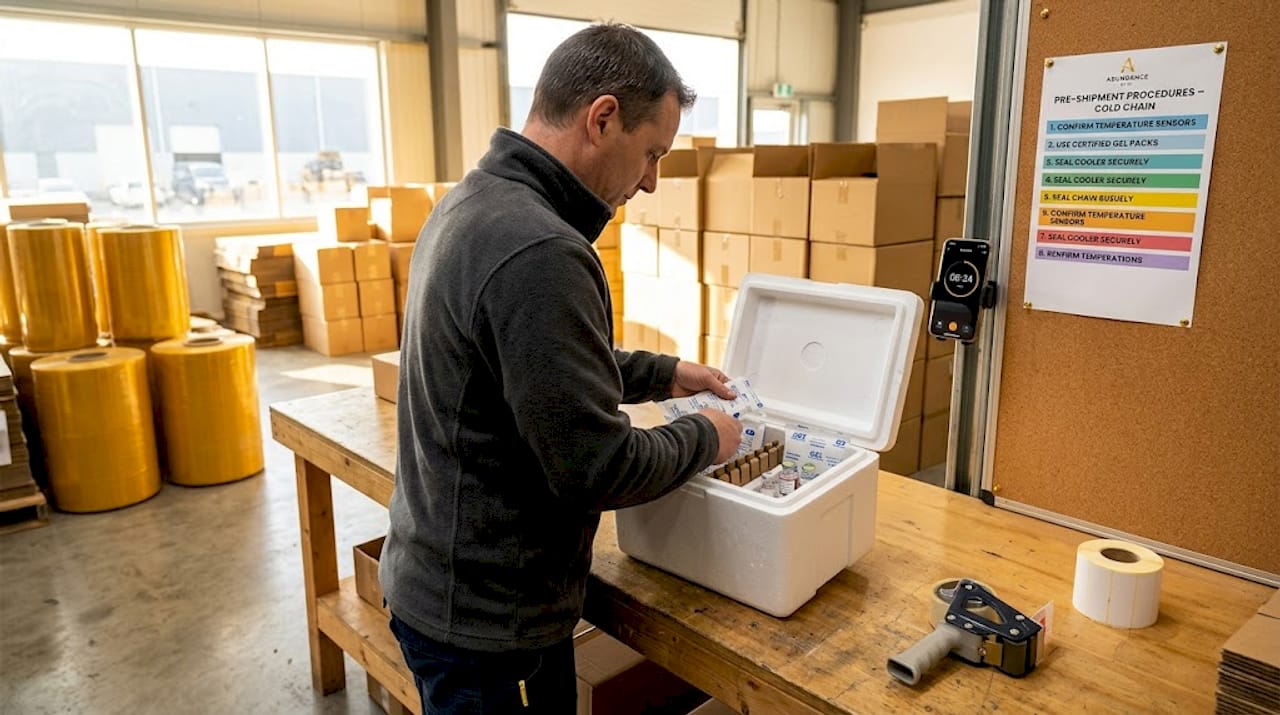
Refrigerated shipping boxes can maintain temperatures between -20°C and 25°C for anywhere from 24 to 120 hours, depending on the system design. Matching the right system to your specific payload and route is not optional. It is the foundation of a successful delivery.
Follow this sequence when preparing an urgent temperature-sensitive shipment:
- Confirm your payload temperature range and transit time. Do not estimate. Check the product specification sheet and calculate the realistic worst-case transit duration, including potential delays.
- Select your insulation and coolant type. Dry ice suits frozen payloads below -20°C. Phase change materials (PCMs) are better suited to refrigerated ranges of 2°C to 8°C. Gel packs work for short-duration controlled room temperature shipments.
- Condition your coolant correctly. Dry ice must be handled with appropriate safety measures. PCM panels must be pre-conditioned to the correct temperature before use, or they will actively warm your payload rather than protect it.
- Assemble the packaging in the correct sequence. Simple, repeatable packout designs reduce assembly errors significantly. If your packaging requires a twelve-step process to assemble correctly, it will be assembled incorrectly under pressure.
- Label clearly and completely. Include temperature range, handling instructions, and emergency contact details on the outside of every package. Handlers who do not know the contents are handling cannot protect them.
- Prepare all documentation before dispatch. This includes delivery notes, temperature specification sheets, any regulatory paperwork for pharmaceuticals or biologics, and chain-of-custody forms. Missing documentation causes delays at handoff points that directly threaten temperature integrity.
Pro Tip: Pre-build a packout checklist specific to each product type you ship regularly. Laminate it and keep it at your dispatch point. Under the pressure of an urgent shipment, a physical checklist eliminates the mental load of remembering each step.
Defining exact lane conditions before selecting packaging, including the route, expected ambient temperatures, and number of vehicle transfers, significantly improves cold chain outcomes. Do not treat packaging as a commodity purchase. Treat it as a managed system matched to your specific shipment profile.
Executing the urgent delivery: step by step
Once your shipment is prepared and documented, execution requires disciplined coordination. Speed matters, but not at the cost of the handling protocols that protect your goods.
- Contact your logistics partner before packout is complete. The earlier you engage your carrier, the better the route options available to you. Emergency delivery solutions that offer dedicated vehicles and same-day dispatch can often provide faster, more direct routing than standard services, reducing the number of handoffs your shipment experiences.
- Request a dedicated vehicle where possible. Multi-drop routes increase handling points and extend transit time. A dedicated vehicle moves your consignment directly from collection to delivery without intermediate stops.
- Install a temperature logger inside the packaging before sealing. This provides an unbroken record of the shipment's thermal history from dispatch to delivery. It is your evidence if a dispute arises and your diagnostic tool if something goes wrong.
- Activate real-time GPS and temperature monitoring. IoT monitoring and real-time alerts enable immediate intervention if a temperature excursion begins during transit. Without this, you will only discover a problem after delivery, when it is too late to act.
- Brief the driver and any handling personnel. Every person who touches the shipment must know the temperature range, the urgency, and what to do if they notice a problem. Verbal briefings backed by written handling instructions on the package are the minimum standard.
- Establish a contingency plan before dispatch. Identify what you will do if the vehicle breaks down, if the delivery address is inaccessible, or if transit time extends beyond your packaging's rated duration. Having these decisions made in advance prevents costly improvisation under pressure.
Integrated IoT monitoring in temperature-controlled cold chains reduces spoilage rates by up to 15% and improves on-time delivery performance by over 10%. Those numbers reflect the real commercial value of monitoring, not just compliance.
- Minimise handoffs wherever possible. Every transfer between vehicles or personnel is a point of risk.
- Require authorised sign-offs at each handoff. Documented chain-of-custody at transfer points is critical for compliance and accountability.
- Keep the recipient informed of the estimated arrival time so they are ready to receive and immediately store the goods.
Pro Tip: For pharmaceutical and medical shipments, prepare a pre-agreed deviation protocol with the recipient before dispatch. If a temperature excursion occurs, both parties already know the escalation steps, saving critical time.
Verification and post-delivery steps
Delivery is not the end of the process. What happens in the thirty minutes after a temperature-sensitive shipment arrives often determines whether the goods can be used or must be discarded.
- Review the temperature logger data immediately upon delivery. Do not wait until the next working day. The data tells you whether the shipment maintained its required range throughout transit.
- Conduct a recipient inspection at the point of handoff. The recipient should check the packaging condition, confirm the temperature logger is present, and sign the chain-of-custody documentation before the driver departs.
- Document any excursions or anomalies. If the logger shows a temperature deviation, record the time, duration, and magnitude. This information is required for any quality investigation and for regulatory reporting in the pharmaceutical and medical sectors.
- Initiate root-cause analysis for any failed shipments. Was the excursion caused by a packaging failure, a route delay, an improper handoff, or inadequate coolant conditioning? Identifying the root cause prevents the same failure recurring.
- Feed lessons learned back into your standard operating procedures. Urgent shipments that go wrong are expensive. Urgent shipments that go wrong repeatedly are avoidable. Every incident is data that should improve your next dispatch.
The goal of post-delivery verification is not bureaucracy. It is continuous improvement in your ability to move temperature-sensitive goods reliably, even under time pressure.
Common mistakes in urgent temperature delivery
Even experienced logistics teams make predictable errors when urgency increases pressure. Understanding these pitfalls in advance is the most efficient way to avoid them.
- Underestimating transit time variability. Road delays, vehicle changes, and access issues routinely extend transit beyond initial estimates. Always pack for the worst-case duration, not the best-case one.
- Using overly complex packaging under pressure. Complicated packout designs lead to assembly errors that compromise temperature protection from the moment the box is sealed.
- Poor communication between stakeholders. When the sender, carrier, and recipient are not aligned on handling requirements, critical instructions get missed. A single phone call or written briefing at dispatch prevents most of these failures.
- No contingency plan for delays. Booking a shipment without a pre-agreed plan for extended transit is a gamble. Managed logistics approaches that include route planning and carrier management prevent temperature excursions far more reliably than ad hoc bookings.
- Incomplete or missing documentation. Regulatory holds caused by missing paperwork can strand a temperature-sensitive shipment for hours. All documentation must be assembled and verified before the vehicle leaves your site.
"Proactive managed logistics, with continuous cold chain management, route planning, and carrier management, prevents temperature excursions better than booking individual shipments on an ad hoc basis."
The businesses that handle urgent temperature-sensitive delivery most reliably are not the ones that move fastest. They are the ones that have prepared the most thoroughly before the urgent need arises.
My perspective on urgent temperature logistics
I have worked alongside businesses managing time-critical cold chain shipments long enough to know where the real risks live. And they rarely live where people expect.
Most organisations focus their energy on packaging selection, which is correct but incomplete. In my experience, the failures that cause the most damage happen at handoff points and during the gap between dispatch and the driver's first check-in. A beautifully packaged pharmaceutical shipment can still arrive compromised if no one briefed the driver, if the recipient was not ready to receive it, or if there was no contingency when the motorway closed.
What I have found genuinely transforms outcomes is pre-planning. Not just route planning, but relationship planning. Knowing your preferred carrier partners before an urgent need arises, having your packout checklist ready, and having a deviation protocol agreed with your recipient in advance. These are the things that separate a smooth urgent delivery from a crisis.
Real-time monitoring changed the game for me in terms of problem-solving. When you can see a temperature rising in transit, you can act. You can reroute, you can call ahead, you can make a decision. Without that visibility, you are managing the problem after it has already caused damage.
The other thing I would say plainly: simple packaging wins under pressure. Every time. The most sophisticated insulated system in the world is only as good as the person assembling it at speed in a dispatch bay at 6am.
— Ayomide
How Sddbyaba supports urgent refrigerated deliveries
When your goods cannot wait and temperature cannot be compromised, Sddbyaba provides same-day dispatch with dedicated vehicles across the UK. Whether you need emergency delivery for a pharmaceutical consignment or fast refrigerated transport for perishable freight, our team coordinates directly with you to minimise handling points and keep your cold chain intact. We offer dedicated courier services with experienced drivers, real-time communication, and nationwide courier coverage for time-critical consignments of any size. For larger temperature-controlled loads, our freight haulage fleet handles the volume. Contact Sddbyaba today for a rapid response to your urgent logistics needs.
FAQ
What makes a delivery temperature-sensitive?
A delivery is temperature-sensitive when the goods it contains will degrade, spoil, or become unsafe if exposed to temperatures outside a defined range during transit. Common examples include pharmaceuticals, vaccines, fresh food, frozen products, and biological samples.
How long can insulated packaging maintain temperature?
Refrigerated shipping systems can maintain required temperatures for 24 to 120 hours depending on the insulation type, coolant used, and ambient conditions during transit.
What is cold chain logistics?
Cold chain logistics refers to the end-to-end management of temperature-controlled storage and transport, covering packaging, refrigerated vehicles, monitoring technology, and documented handoff procedures to maintain product integrity from origin to destination.
How do I prevent temperature excursions during urgent delivery?
Match your packaging and coolant to the worst-case transit duration, use real-time temperature monitoring with immediate alert capability, minimise handling points by using a dedicated vehicle, and have a pre-agreed contingency plan in place before dispatch.
Why is chain of custody important in temperature-sensitive shipping?
Authorised sign-offs at each handoff create a documented record of who handled the shipment and when, which is critical for regulatory compliance, quality investigations, and resolving disputes if a temperature excursion occurs.